
Key Takeaways:
- The Electric Vehicle (EV) market is currently experiencing a paradox: significant advancements in vehicle technology and charging infrastructure are juxtaposed with increasing federal policy hurdles.
- Congress is considering a controversial $130 annual federal fee for EV drivers, aiming to offset gas tax revenue losses, despite concerns it could deter EV adoption.
- The latest generation of EVs, exemplified by models like the Volvo EX60, BMW iX3, and Mercedes GLC EV, represents a major leap forward, offering sophisticated software integration, 800-volt architectures, enhanced performance, and competitive pricing.
- Charging speeds and infrastructure are rapidly improving, with widespread deployment of 350-kW and 400-kW fast chargers, alongside the development of future Megawatt charging solutions.
- Despite governmental roadblocks, the global automotive industry remains committed to the electric transition, with major companies continuing to invest heavily in EV innovation and infrastructure.
Unpacking the Current State of the EV Market
The electric vehicle landscape is undergoing a significant transformation, marked by both remarkable technological progress and unexpected policy challenges. While the cars themselves and the crucial charging infrastructure have reached unprecedented levels of sophistication, the prevailing sentiment within the industry suggests a challenging environment, largely influenced by governmental actions.

This dichotomy is prominently highlighted by recent developments, including legislative proposals for new fees targeting electric car owners and the emergence of advanced ‘Gen 3’ EVs such as the Volvo EX60.
Federal Policy and EV Adoption Hurdles
Federal policy decisions are increasingly seen as creating EV adoption hurdles, counteracting the rapid advancements in automotive engineering. These policy shifts introduce an element of uncertainty for consumers and manufacturers alike, despite the clear environmental benefits of electric mobility.
The current climate raises important questions about the balance between fostering innovation and ensuring equitable contributions to public infrastructure, particularly as the automotive sector pivots towards sustainable transport solutions.

The Evolution of Electric Vehicles: A Deep Dive into Gen 3 Innovation
The electric vehicle market is witnessing the advent of what industry experts are terming ‘Gen 3’ EVs, representing a monumental leap in design, engineering, and user experience. This new wave of vehicles, spearheaded by manufacturers such as Volvo, Mercedes, and BMW, addresses many of the limitations observed in their earlier electric offerings.
Initial forays into the EV market by these established brands often yielded mixed results. Early electric models were generally seen as evolutionary rather than revolutionary, lacking true software-defined vehicle capabilities and the ultra-fast charging facilitated by 800-volt architectures. Furthermore, they frequently carried a premium price tag that made them less competitive against traditional internal combustion engine (ICE) vehicles.
However, the new generation, encompassing models like the BMW iX3, the Mercedes GLC EV, and the Volvo EX60, marks a significant departure. These vehicles are engineered from the ground up to maximize the inherent advantages of electric powertrains, delivering a more integrated and efficient experience.
Key improvements include true software-defined vehicle architectures, which allow for seamless updates and advanced digital functionalities. The integration of 800-volt systems enables ultra-fast charging, drastically reducing downtime. These next-gen EVs also boast optimized packaging, superior performance, enhanced user experience, and more competitive pricing, often aligning with or even undercutting comparable plug-in hybrid models.
The Volvo EX60: A Benchmark for Next-Gen EVs
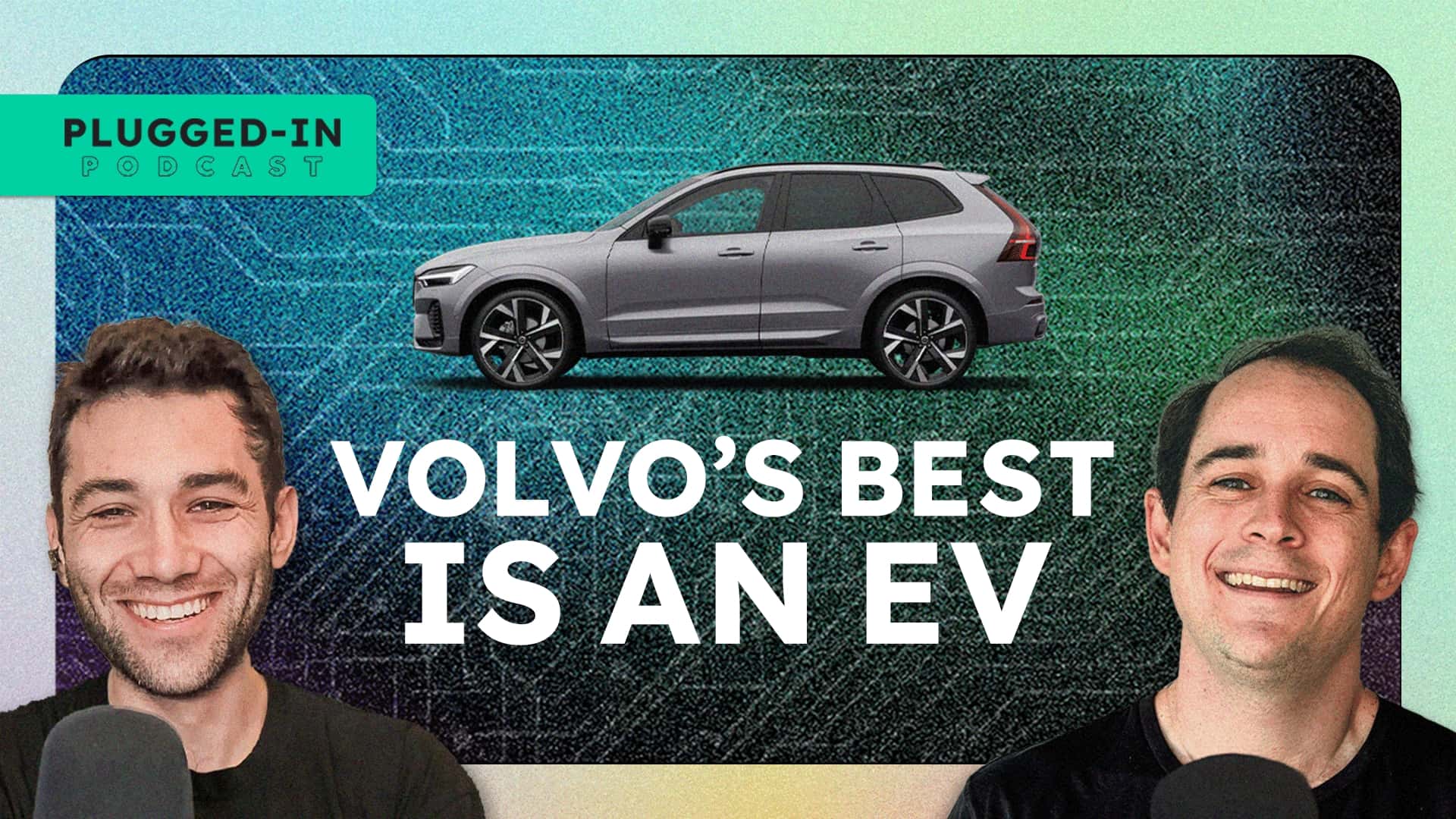
Among the latest entrants, the Volvo EX60 has garnered particular attention, demonstrating the significant strides made in ‘Gen 3’ EV development. This vehicle epitomizes the excitement surrounding the new slate of arrivals, showcasing how far electric vehicle technology has advanced.
The EX60 offers an ultra-polished user experience, characterized by intuitive interfaces and seamless connectivity. Its interior design is noted for its quality and comfort, providing a premium environment for occupants. Performance metrics are equally impressive, with excellent range specifications and quick charging speeds that enhance its practicality for everyday use and longer journeys.
Crucially, the pricing of the Volvo EX60 is on par with the plug-in hybrid XC60, making it an economically attractive option for consumers considering the transition to electric. This combination of advanced features, superior performance, and competitive pricing positions the EX60 as a “slam dunk” in the market and, according to initial reviews, potentially the best Volvo ever produced.
Advancements in Electric Vehicle Charging Infrastructure
Alongside vehicle innovation, the supporting electric vehicle charging infrastructure is experiencing its own renaissance. A few years ago, locating a fast charger capable of supporting high charging speeds, such as the EX60’s 370-kW max, was a challenge, with operational reliability also being a concern.
Today, the situation has dramatically improved. The availability of 350-kW chargers, particularly in regions like California, is becoming increasingly common and reliable. This widespread deployment significantly mitigates range anxiety, one of the primary EV adoption hurdles for many prospective buyers.
The Role of Key Industry Players
Companies like ABB are at the forefront of this charging revolution. They are actively rolling out advanced charging solutions, including 400-kW fast chargers, across the country. Retail giants like Walmart are also expanding their charging efforts, integrating these high-speed units into their extensive network of locations, thereby making charging more accessible to the public.
Looking ahead, ABB is also developing Megawatt chargers, which promise to revolutionize charging times for heavy-duty electric vehicles and potentially further reduce charging durations for passenger cars, solidifying the future of rapid electric vehicle charging infrastructure.
The $130 Federal Fee: A Point of Contention for EV Drivers
Despite the technological and infrastructure advancements, the EV market faces notable federal hurdles. Beyond a general scaling back of incentives for EV sales and reduced funding for charger development, a new proposal from Congress has stirred considerable debate: a proposed $130 annual federal fee for EV drivers.
This proposed fee is ostensibly designed to address the decreasing revenue from federal gas taxes. Gas taxes have historically been the primary funding mechanism for road construction and maintenance. As more drivers switch to electric vehicles, they no longer contribute to these taxes at the pump, leading to a perceived funding gap for federal road infrastructure projects.
The Gas Tax Conundrum and Equity Concerns
The stated goal of the $130 fee is to ensure that EV drivers pay their “fair share” towards road funding. However, critics argue that this measure is not only unfair but also counterproductive. They contend that it represents another attempt to discourage individuals from making environmentally beneficial choices, such as transitioning to electric vehicles.
The argument highlights that EV adoption directly contributes to cleaner air and is crucial for averting the most severe impacts of the climate crisis. Imposing a significant annual fee, particularly one that surpasses what the average driver pays in gas taxes, and notably, one that is set to increase while the gas tax itself has remained unchanged for decades, is seen as penalizing those who choose a more sustainable mode of transport.
This federal policy stands in stark contrast to the significant investments being made by the automotive industry in promoting and advancing electric mobility, thereby creating a complex and sometimes contradictory environment for EV market trends.
Industry Momentum Versus Policy Headwinds
The current scenario presents a clear conflict: the unwavering momentum of the global automotive industry towards electrification is clashing with restrictive government policies. While the federal government’s actions, such as proposed EV driver fees and reduced support, are perceived as roadblocks, industry leaders remain committed to the electric transition.
Manufacturers like Volvo continue to innovate with next-gen EVs, and infrastructure providers like ABB are expanding charging networks, including partnerships with major retailers like Walmart. This collective industry drive suggests that the shift to electric vehicles will continue, regardless of the policy headwinds emanating from federal channels.
The long-term trajectory of the global automotive industry remains firmly set on an electric future, driven by technological imperative and market demand, even as various EV adoption hurdles emerge.
FAQ Section
What is the proposed federal fee for EV drivers?
Congress is considering an annual federal fee of $130 for electric vehicle drivers. This charge is intended to compensate for the absence of gas tax contributions from EV owners, which traditionally fund federal road construction and repair initiatives. The proposed fee is also slated for future increases.
Why is this fee considered controversial?
The fee is controversial because critics argue it disproportionately targets EV drivers, potentially exceeding the average gas tax paid by conventional vehicle owners. Opponents also believe it acts as a deterrent to EV adoption, counteracting efforts to promote cleaner transportation and mitigate the climate crisis, especially since the gas tax has not increased in decades.
What are ‘Gen 3’ EVs?
‘Gen 3’ electric vehicles represent the latest evolution in EV technology. These models, exemplified by the Volvo EX60, BMW iX3, and Mercedes GLC EV, are characterized by true software-defined architectures, 800-volt fast-charging capabilities, improved packaging, enhanced performance, and more competitive pricing compared to earlier EV iterations.
How has EV charging infrastructure improved?
EV charging infrastructure has seen significant advancements, with the increasing availability and reliability of 350-kW and 400-kW fast chargers. Companies like ABB are deploying these units, often in partnerships with retailers such as Walmart. Future developments include Megawatt chargers, promising even faster charging speeds for various electric vehicles.
Is the government still supporting EV adoption?
According to the article, the federal government has scaled back incentives for EV sales and reduced funding for charging infrastructure. The proposed $130 annual fee for EV drivers is also seen by some as a policy that discourages, rather than supports, broader electric vehicle adoption. However, industry players continue to drive progress.
What makes the Volvo EX60 a significant ‘Gen 3’ EV?
The Volvo EX60 is highlighted for its sophisticated features, including an ultra-polished user experience, a high-quality interior, excellent range specifications, and quick charging capabilities. Its pricing, competitive with the plug-in hybrid XC60, combined with its advanced electric powertrain, positions it as a strong contender and a benchmark for new-generation EVs.