
KEY TAKEAWAYS
- Florida’s Department of Transportation (FDOT) plans to reallocate $198 million from the federal National Electric Vehicle Infrastructure (NEVI) program, originally designated for public fast EV chargers, towards infrastructure for electric air taxis (eVTOLs).
- This move would establish an ‘Aerial Highway Network’ with 32 ‘vertiports’ for eVTOLs, despite these aircraft lacking commercial Federal Aviation Administration (FAA) approvals.
- FDOT justifies the diversion by citing the existing private EV charging network, but federal NEVI funds are intended to fill gaps, especially in rural areas.
- Critics argue this prioritises a niche, high-cost technology for a wealthy demographic over expanding reliable charging for Florida’s rapidly growing base of 450,000+ electric vehicle drivers.
- The decision follows Florida’s previous criticisms of federal EV policies, even as the state has become the second-largest electric vehicle market in the U.S.
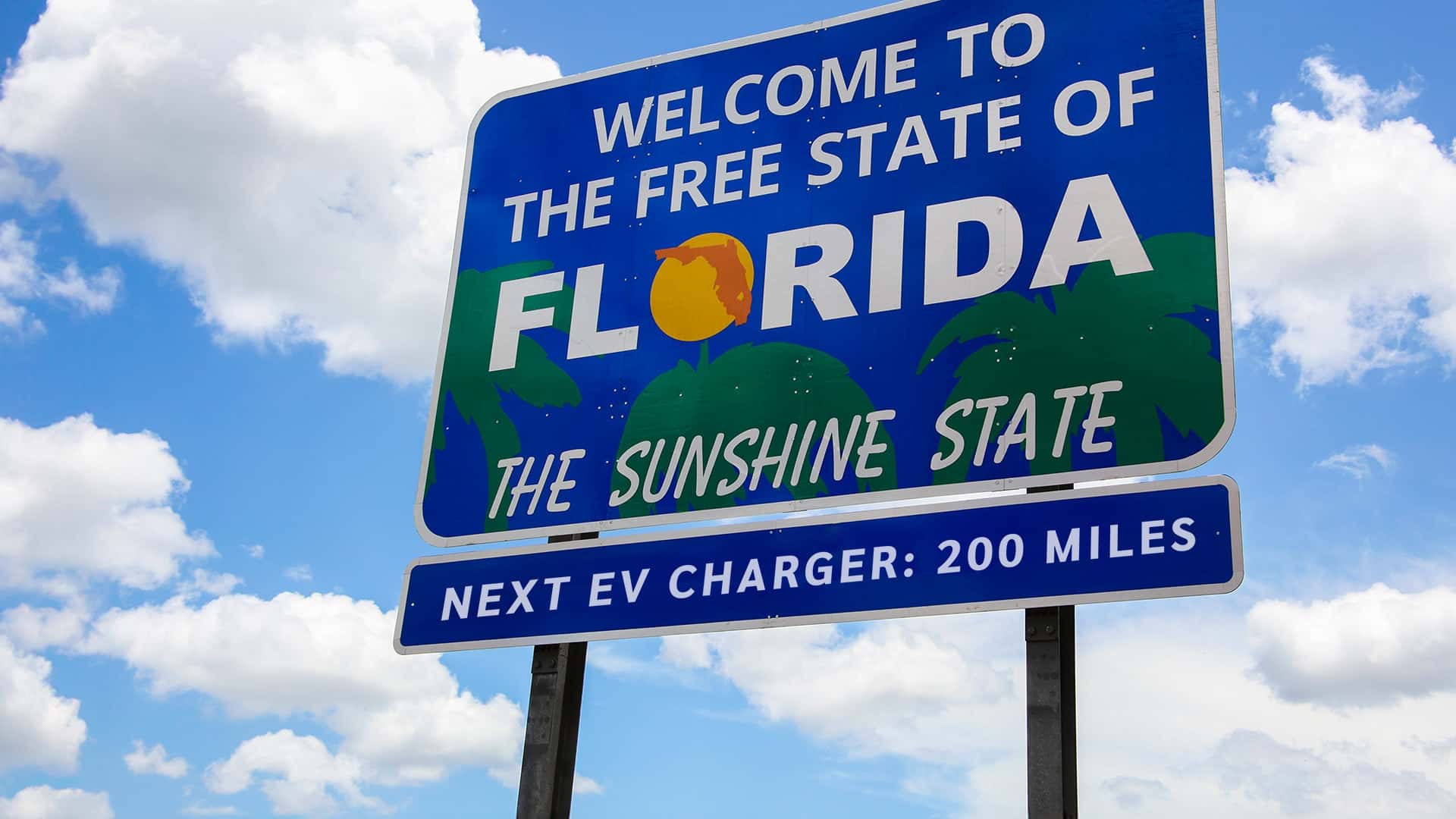
Florida is poised to reallocate nearly $200 million in federal funding, originally earmarked for expanding the state’s public electric vehicle (EV) charging infrastructure, towards developing a network for electric air taxis. This move, revealed in an investigation by the Miami Herald, could see $198 million from the Biden administration’s National Electric Vehicle Infrastructure (NEVI) program repurposed for a nascent technology, bypassing the immediate needs of ground-based electric vehicles.

The shift in strategy has raised questions regarding the state’s priorities for transportation development, particularly given the early stage of electric air taxis, formally known as electric vertical take-off and landing vehicles (eVTOLs). These aircraft have not yet received crucial commercial deployment approvals from the Federal Aviation Administration (FAA) in the U.S.
Florida’s Bold Vision: An ‘Aerial Highway Network’
The Florida Department of Transportation (FDOT) is championing the development of what it terms an ‘Aerial Highway Network.’ This ambitious initiative aims to integrate eVTOLs into the state’s existing transportation framework, with the stated goals of alleviating congestion and enhancing connectivity across Florida.
Documents obtained by the Herald outline FDOT’s proposal for charging infrastructure at 32 dedicated ‘vertiports,’ sites where these vehicles would take off and land. Each of these installations is estimated to cost approximately $5.6 million. These proposed vertiport locations include high-end residential complexes, golf courses, military installations, and existing airports.

FDOT’s Rationale for Fund Reallocation
FDOT’s justification for this significant pivot from traditional EV charging infrastructure is articulated in a document published by the Miami Herald. It states: “The Florida Department of Transportation will not waste taxpayer dollars and spend it on everyday passenger vehicles. Instead, FDOT’s proposal for implementing the NEVI Program takes an innovative and strategic approach to offer the greatest benefits to Floridians by supporting a new emerging mode of transportation that provides passenger service and fulfills the transportation needs in our state.”
The department contends that the private sector has already substantially developed America’s public fast-charging network. This holds some truth, with companies like Tesla, Electrify America, ChargePoint, and newer players such as Ionna and Walmart contributing significantly to the expansion of charging options. FDOT specifically noted that Florida’s EV charging ports have doubled over the past four years, now boasting 452 fast-charging stations.
The Intent of NEVI Funding: Bridging the Gaps
Despite FDOT’s assertion, the NEVI program was specifically designed to address market deficiencies that private enterprises might overlook. Its core purpose is to establish a comprehensive, reliable national EV charging network, particularly focusing on critical gaps such as rural communities and less profitable areas where private investment might lag.
The experience in other states highlights this critical role. In New York, for instance, NEVI-funded Evolve NY public fast-charging stations have been instrumental in establishing infrastructure in rural parts of the state previously devoid of adequate charging options. These stations have proven vital for electric vehicle drivers traversing areas like the Adirondacks and the Finger Lakes, transforming former charging deserts into accessible routes.
Regulatory Hurdles and Commercial Viability of Electric Air Taxis
While Florida proposes to fund infrastructure for electric air taxis, the technology itself remains in a developmental phase with significant regulatory hurdles. eVTOLs require stringent FAA certifications for commercial operations, which have yet to be granted. Frontrunners in this emerging sector, such as Joby Aviation—backed by Delta Air Lines—are still conducting limited test flights, as seen in New York City in April.
This means that while the infrastructure might be built, the commercial deployment of eVTOLs as passenger air taxis is not an immediate reality. The long-term timeline for widespread adoption and regulatory approval for such services is still uncertain, posing questions about the immediate utility of the proposed investment.
Florida’s Stance on EVs Amidst Market Growth
The NEVI program’s nationwide rollout faced initial delays due to federal approval processes, strict reliability mandates, and local sourcing requirements. However, projects accelerated across much of the country last year, moving from planning to active deployment. Florida, contrastingly, has largely left its allocated NEVI funds untouched until now, according to reports.
State leaders in Florida have been vocal critics of federal EV policies, often portraying electric vehicles as a politically driven agenda. The FDOT even launched a website, RoadsAreNotForPolitics.com, which describes pro-EV policies as “greenhouse gaslighting” and questions the push away from internal combustion engines, asking: “Why would the government be so insistent on getting rid of one of the greatest inventions like the combustion engine?”
The Broader Benefits of Electric Vehicles
This political rhetoric stands in stark contrast to the growing body of evidence supporting electric vehicle adoption. The Environmental Protection Agency (EPA) estimates that cleaner vehicle emissions standards could prevent approximately 40,000 premature deaths and tens of thousands of hospitalizations over time by significantly reducing transportation-related air pollution. Moreover, EVs offer long-term financial benefits for owners, typically being more cost-effective over their lifespan and less susceptible to fluctuating global oil prices. They also generally provide a quieter, smoother, and more technologically advanced driving experience.
Despite the state’s political opposition to federal EV initiatives, Florida has emerged as a significant player in the national EV market. With over 450,000 registered electric vehicles as of 2025, according to the U.S. Department of Energy, Florida ranks as America’s second-largest EV market, trailing only California. This substantial and growing EV ownership base stands to directly benefit from a more extensive and dependable fast-charging network.
Impact and Equity Concerns of the Proposed Shift
The decision to redirect federal EV infrastructure dollars towards uncertified electric air taxi technology has immediate implications for Florida’s substantial electric vehicle driving community. Instead of enhancing a fast-charging network for hundreds of thousands of existing drivers, the funds would support a future mode of transport that is years away from widespread commercial viability.
Furthermore, the proposed locations for these vertiports – luxury apartment buildings and golf courses – suggest that the initial beneficiaries of eVTOL services would likely be a narrow segment of the affluent population. This raises questions about equity and whether the federal funds, intended for public benefit, would truly serve the broader transportation needs of everyday Floridians, rather than a niche, high-cost transportation solution.
FAQ Section
What is the NEVI Program?
The National Electric Vehicle Infrastructure (NEVI) program is a federal initiative established by the Biden administration. It provides funding to states to build out a national network of convenient, reliable, and accessible public fast-charging stations for electric vehicles along designated alternative fuel corridors, aiming to fill existing charging infrastructure gaps.
How much NEVI funding did Florida receive?
Florida was allocated $198 million from the NEVI program. These funds were specifically intended to be used for the development and expansion of public fast-charging infrastructure for electric vehicles across the state, particularly to support EV drivers and encourage wider adoption.
What are electric air taxis or eVTOLs?
Electric air taxis, or eVTOLs (electric vertical take-off and landing vehicles), are advanced aircraft designed to take off and land vertically using electric propulsion. They are being developed for short-distance air travel, potentially offering solutions for urban mobility and reducing ground congestion, though they are still in early stages of development and regulatory approval.
Why does Florida want to use EV charger funds for electric air taxis?
The Florida Department of Transportation (FDOT) states that its proposal is an “innovative and strategic approach” to offer greater benefits to Floridians by supporting an “emerging mode of transportation.” FDOT argues that private companies have already significantly built out the ground-based EV charging network, making NEVI funds redundant for that purpose.
Are electric air taxis commercially available in the U.S.?
No, electric air taxis are not yet commercially available for passenger service in the U.S. These vehicles are still undergoing extensive testing and require significant certifications from the Federal Aviation Administration (FAA) before they can be deployed for commercial operations. Companies like Joby Aviation have conducted test flights, but full commercial service is still some years away.
Who would benefit from the proposed eVTOL infrastructure in Florida?
Based on the proposed locations for the “vertiports,” such as luxury apartment buildings, golf courses, and airports, the initial beneficiaries of this eVTOL infrastructure would likely be a relatively small and wealthy segment of the population, rather than the general public or everyday Floridians who rely on ground-based transportation.
How many EVs are registered in Florida?
As of 2025, Florida ranks as the second-largest electric vehicle market in the U.S., with well over 450,000 electric vehicles registered. This significant number highlights the growing demand for reliable and widespread charging infrastructure to support these drivers.