
Key Takeaways
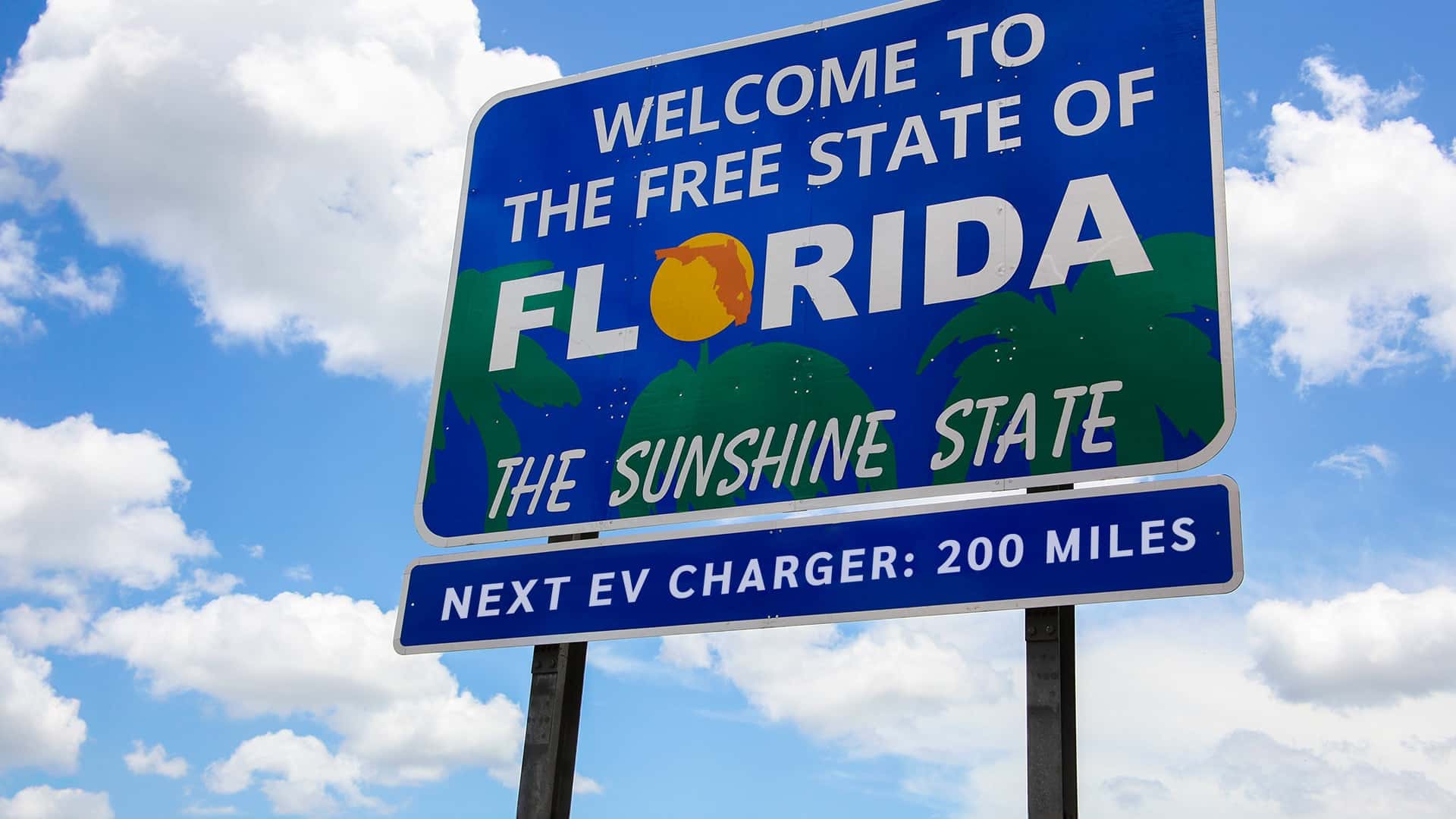
- Florida’s Department of Transportation (FDOT) plans to allocate nearly $200 million in federal funds, initially designated for public electric vehicle (EV) fast chargers, towards developing infrastructure for electric vertical take-off and landing vehicles (eVTOLs), or ‘air taxis’.
- The National Electric Vehicle Infrastructure (NEVI) program, from which Florida received $198 million, was established by the Biden administration to expand a reliable network of EV charging stations across the United States.
- FDOT’s proposal outlines an ‘Aerial Highway Network’ with 32 ‘vertiports’ for eVTOLs, despite these aircraft still being in early development stages and lacking commercial FAA approvals.
- Critics argue that diverting these funds from the crucial expansion of Florida EV charging infrastructure could disproportionately benefit a wealthy demographic, neglecting the growing needs of the state’s over 450,000 EV owners.
- While Florida cites the growth of private EV charging networks, federal NEVI funds are specifically designed to address gaps, particularly in rural and underserved areas.
A recent investigation by the Miami Herald reveals that Florida’s Department of Transportation (FDOT) intends to redirect a significant portion of federal funding, initially earmarked for electric vehicle (EV) charging infrastructure, towards developing a network for electric air taxis. This decision involves nearly $200 million allocated to the state under the Biden administration’s National Electric Vehicle Infrastructure (NEVI) program.
The federal program was designed to facilitate the widespread deployment of public fast chargers, crucial for supporting the nation’s burgeoning EV market. However, Florida’s plan proposes a shift in focus to infrastructure for electric vertical take-off and landing vehicles (eVTOLs), a technology still in its nascent stages of commercial viability.

Florida’s Ambitious Aerial Highway Network
FDOT’s vision, as outlined in documents obtained by the Herald, is to establish what it terms an ‘Aerial Highway Network’. This network would integrate eVTOLs into the state’s transportation system, aiming to alleviate congestion and enhance connectivity across Florida.
The proposed plan includes the development of 32 ‘vertiports’—facilities where these electric air taxis would take off and land. Each vertiport is estimated to cost approximately $5.6 million, and potential locations cited include luxury apartment buildings, golf courses, military bases, and existing airports.
Currently, eVTOLs are far from commercial deployment as air taxis in the U.S. While companies like Joby Aviation, supported by Delta Air Lines, have conducted limited test flights, they are yet to receive the necessary Federal Aviation Administration (FAA) approvals for commercial operations.

FDOT’s Rationale for Funding Reallocation
FDOT has publicly defended its innovative approach to utilizing the NEVI funds. A document detailing FDOT’s NEVI funding plans, published by the Herald, stated:
“The Florida Department of Transportation will not waste taxpayer dollars and spend it on everyday passenger vehicles. Instead, FDOT’s proposal for implementing the NEVI Program takes an innovative and strategic approach to offer the greatest benefits to Floridians by supporting a new emerging mode of transportation that provides passenger service and fulfills the transportation needs in our state.”
The state further justifies its decision by asserting that private companies have already significantly contributed to America’s public fast-charging network. Entities such as Tesla, Electrify America, ChargePoint, and newer entrants like Ionna and Walmart have indeed expanded the availability of EV chargers.
Florida’s statistics indicate a substantial increase in EV charging ports, which have reportedly doubled over the last four years, now totaling 452 fast-charging stations across the state.
The Purpose of National Electric Vehicle Infrastructure (NEVI) Funds
Despite the growth in private charging solutions, the NEVI program was specifically designed to address crucial gaps in the national Florida EV charging infrastructure, particularly in areas where private investment might be scarce. These often include rural communities where establishing charging stations may not yield immediate high profits for private enterprises.
In states like New York, for instance, NEVI funds have been instrumental in establishing Evolve NY public fast-charging stations in previously underserved rural regions. These stations have proven vital for EV drivers traversing areas like the Adirondacks and the Finger Lakes, which were once considered charging deserts.
The rollout of NEVI funds nationwide experienced initial delays due to complex federal approval processes, stringent reliability requirements, and local sourcing regulations. However, momentum has built up, and many states have transitioned from planning to active deployment of EV charging projects.
Florida, in contrast, has largely left its allocated NEVI funds untouched, according to the report. While the Federal Highway Administration has approved Florida’s major corridors as adequately served with charging infrastructure, allowing for redirection of leftover funds, the core intent of the NEVI program remains focused on broadening accessible and reliable EV charging for the public.
Florida’s Stance on Electric Vehicles
Florida has been a notable critic of federal EV policies, with state leaders frequently framing electric vehicles as part of a broader political agenda. This includes claims that Americans are being compelled to purchase EVs, a stance widely seen as misrepresenting the consumer-driven growth of the EV market.
The FDOT even launched a website, RoadsAreNotForPolitics.com, which characterises pro-EV policies as ‘greenhouse gaslighting.’ A section on the site questions, “Why would the government be so insistent on getting rid of one of the greatest inventions like the combustion engine?”
This political rhetoric, however, contrasts with established environmental and economic benefits. The Environmental Protection Agency projects that cleaner vehicle emissions standards could prevent approximately 40,000 premature deaths and tens of thousands of hospitalisations over time by significantly reducing transportation-related air pollution.
Furthermore, extensive evidence suggests that EVs offer long-term financial advantages for owners, including reduced operating costs and greater insulation from volatile global oil prices. They also provide a superior driving experience, characterized by quicker acceleration, smoother operation, and advanced technological features compared to traditional internal combustion engine vehicles.
Implications for Florida’s Growing EV Market
Despite the state’s political narrative, Florida has emerged as the second-largest EV market in the United States, trailing only California. As of 2025, the U.S. Department of Energy reports that Florida boasts well over 450,000 registered EVs.
This rapidly expanding base of EV drivers stands to directly benefit from a more extensive and dependable fast-charging network across the state. The proposed reallocation of federal funds from traditional Florida EV charging infrastructure to air taxi development raises questions about equity and immediate public benefit.
Given the proposed locations for these vertiports—such as luxury apartment complexes and golf courses—the initial beneficiaries of eVTOL services are likely to be a niche, affluent demographic. This contrasts sharply with the NEVI program’s aim to provide accessible charging solutions for everyday Floridians, fostering broader EV adoption and environmental advantages.
The decision to invest federal EV infrastructure dollars into a technology that currently lacks FAA certification for commercial operations signals a significant shift in priorities, with potential long-term implications for both the state’s transportation future and its commitment to sustainable mobility.
FAQ Section
What is the National Electric Vehicle Infrastructure (NEVI) program?
The NEVI program is a federal initiative by the Biden administration, providing states with funds to build out a national network of 500,000 electric vehicle (EV) charging stations along designated alternative fuel corridors, focusing on reliable public fast chargers.
How much NEVI funding did Florida receive?
Florida received approximately $198 million from the NEVI program, specifically allocated for the development and expansion of its electric vehicle charging infrastructure.
What are eVTOLs, or electric air taxis?
eVTOLs (electric vertical take-off and landing vehicles) are a new class of aircraft designed to transport passengers or cargo over short distances. They operate electrically and are envisioned as future air taxis, although they are still in early development.
Why does Florida want to use EV charger funds for air taxis?
Florida’s Department of Transportation (FDOT) argues this is an innovative approach to transportation, complementing existing systems and addressing congestion. They also state that private companies have adequately covered much of the current EV charging needs.
Are eVTOLs commercially operational in the U.S.?
No, eVTOLs are not yet commercially operational as air taxis in the U.S. They still require extensive testing and full Federal Aviation Administration (FAA) certification for commercial use, which has not yet been granted.
How many EVs are registered in Florida?
As of 2025, Florida is the second-largest EV market in the U.S., with well over 450,000 electric vehicles registered, according to data from the U.S. Department of Energy.