
Key Takeaways:
- Ford is launching a new midsize electric pickup, the Fathom, signaling a strategic recommitment to the EV market after previous adjustments.
- Production of the Fathom will utilize Ford’s innovative Universal EV Production System (UEV) at the newly converted Louisville Assembly Plant.
- The UEV system introduces an “assembly tree” concept, allowing parallel sub-assembly of vehicle sections, significantly boosting manufacturing efficiency.
- Key technologies within the UEV include LFP batteries, massive unicastings (gigacastings), and advanced zonal architecture.
- Ford anticipates a 40% faster assembly rate for the Fathom compared to current LAP products, driven by advanced automation and ergonomic improvements for workers.
- Prototype builds are slated for Q1 2027, with customer deliveries expected later the same year.
The landscape of electric vehicle (EV) manufacturing continues to evolve rapidly, marked by significant strategic shifts from traditional automakers. Ford Motor Company, a titan in the automotive industry, is once again adjusting its course in the EV segment, moving from a period of re-evaluation to a bold recommitment with the introduction of its new midsize electric pickup, the Fathom.

This strategic pivot is underpinned by a groundbreaking approach to vehicle assembly: the Universal EV Production System. This innovative manufacturing paradigm is set to redefine how Ford builds its next generation of electric vehicles, beginning with the Fathom.
It promises not only enhanced efficiency but also improved product quality and a more ergonomic production environment for workers. The company’s investment in this advanced system at its Louisville Assembly Plant signifies a long-term vision for scaling EV production and competitiveness.
Ford’s Evolving EV Strategy: From Retreat to Recommitment
Ford’s journey in the electric vehicle domain has been characterized by careful navigation and strategic adjustments. In December 2023, the automaker signaled a recalibration of its EV production plans, notably canceling the full production of its F-150 Lightning electric pickup.
This move coincided with the renaming of its Tennessee Electric Vehicle Center to the Tennessee Truck Plant, and a significant financial write-off approaching $20 billion. These actions reflected the complexities and challenges inherent in the burgeoning EV market at the time.
However, this period of strategic review has culminated in a renewed focus and a clear direction. Ford’s subsequent announcement of the Fathom midsize electric pickup marks a pivotal step in its ongoing electrification strategy.
This decision underscores a deliberate effort to leverage lessons learned and deploy advanced manufacturing techniques to ensure future EV ventures are both scalable and profitable. The Fathom represents a fresh chapter, moving beyond earlier setbacks to embrace new possibilities in the electric truck segment.
Introducing the Fathom and its Foundational Technology
The highly anticipated Ford Fathom electric pickup is poised to enter a competitive midsize truck market, distinguished not just by its electric powertrain but by the revolutionary production methods underpinning its creation. While the name Fathom may capture attention, the true innovation lies beneath the surface, within the new Universal Electric Vehicle (UEV) platform and its associated production system.
This advanced framework is designed to integrate the latest advancements in EV technology. At its core, the Universal EV Production System incorporates several cutting-edge innovations crucial for modern electric vehicle manufacturing.
These include the use of Lithium Iron Phosphate (LFP) batteries, which offer benefits in terms of cost-effectiveness and cycle life, making them increasingly attractive for mainstream EV applications. Furthermore, the system heavily relies on unicastings, a manufacturing technique that promises to streamline assembly and enhance structural integrity. Complementing these hardware innovations is an advanced zonal architecture, optimizing vehicle electronics and software integration for improved functionality and future upgrades.
Transforming Production: The Louisville Assembly Plant at the Forefront
In a strategic move that reflects Ford’s commitment to its new EV direction, the company embarked on a significant transformation of its Louisville Assembly Plant (LAP). Once a facility for traditional internal combustion engine vehicles, LAP is being meticulously converted into a “fully electric vehicle plant” specifically designed for the assembly of the new Fathom.
This extensive overhaul involved gutting the enormous factory and integrating several billions’ worth of new, purpose-built equipment tailored for the Universal EV Production System. The scale of this investment and retooling highlights Ford’s intent to produce the Fathom at a substantial scale, leveraging the efficiencies and technological advantages offered by the UEV system.
Ford’s teams are currently on schedule to commence prototype builds utilizing production-qualified parts in the first quarter of 2027. This critical phase will pave the way for customer deliveries, which are anticipated to begin later in the same year, bringing the innovative Fathom to the market.
The “Assembly Tree” Innovation
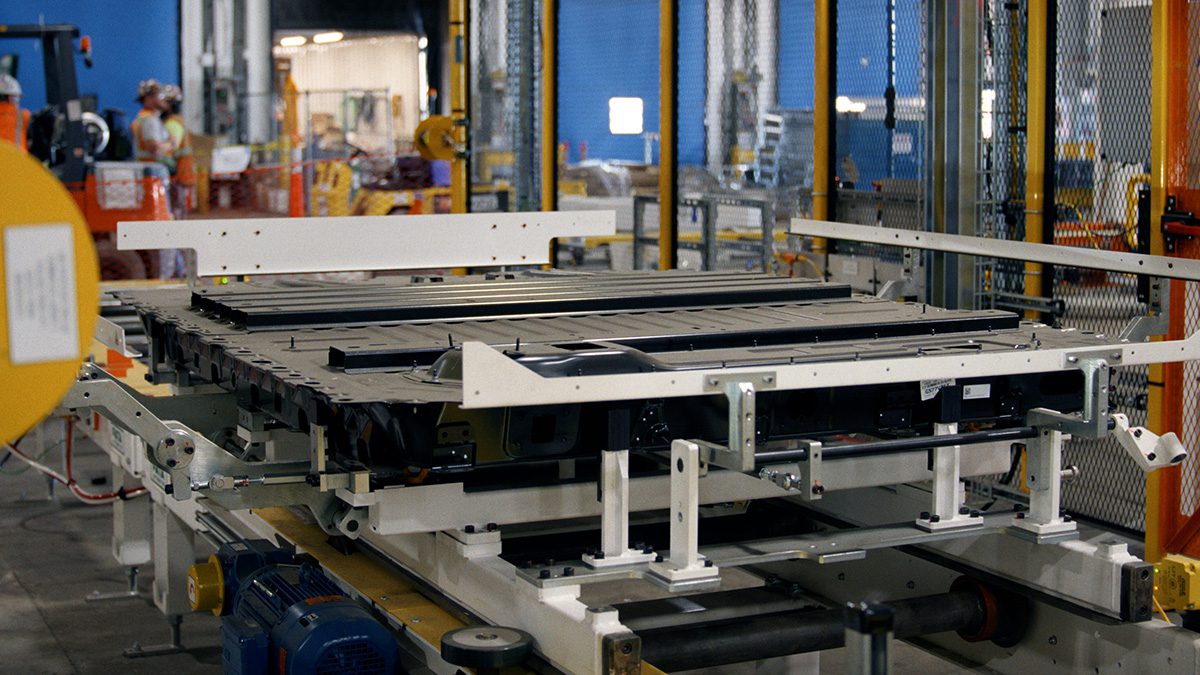
A cornerstone of the Universal EV Production System is its departure from the conventional linear assembly line. Ford’s engineers have reimagined the process into what they describe as an “assembly tree” model. This paradigm shift enables operators to construct key vehicle sections simultaneously, or in parallel, before these completed sub-assemblies converge for final integration.
This method contrasts sharply with traditional sequential manufacturing, where components are added one step at a time along a single line. The “assembly tree” concept breaks down the complex vehicle body into three primary, independently developed sections.
One dedicated sub-assembly focuses on the front of the vehicle, encompassing its structural elements and initial components. Another distinct sub-assembly is dedicated to the rear section. The third crucial sub-assembly is responsible for integrating the structural battery pack, which also serves as the vehicle’s floor, along with essential interior components like seats, consoles, and carpeting. This parallel construction methodology is a critical enabler for the enhanced speed and efficiency of the overall Universal EV Production System.
Leveraging Unicastings for Efficiency
Further enhancing the efficiency and structural integrity of the Fathom, the Universal EV Production System makes extensive use of unicastings, a manufacturing technique often referred to as “gigacastings” by other prominent automakers. These are massive aluminum castings designed to replace dozens of smaller, individually stamped and welded pieces.
By consolidating numerous components into single, large castings, Ford significantly reduces complexity in the body shop, minimizes part count, and accelerates the assembly process. These large-scale castings are instrumental in forming two of the main sections of the Fathom: the front and rear structural components.
Their application streamlines the manufacturing process by reducing the need for extensive welding and joining operations, which are traditionally time-consuming and labor-intensive. The integration of unicastings is a direct reflection of the UEV system’s focus on innovative structural design that not only saves time and cost but also contributes to the overall rigidity and safety of the electric pickup.
Integrated Design for Interior and Battery
The third key sub-assembly in Ford’s innovative Universal EV Production System revolves around an intelligent integration of the vehicle’s energy storage and interior space. In this design, the battery pack is not merely an encapsulated component but serves a dual purpose: it acts as the vehicle’s structural floor, providing foundational stability.
This approach leverages the inherent strength of the battery enclosure to contribute to the overall rigidity of the vehicle chassis, a concept central to many modern EV platforms. On top of this structural battery, the interior components are then installed. This includes the seating arrangements, central consoles, and floor carpeting.
By consolidating these elements around the battery pack as a foundational layer, Ford simplifies the interior assembly process. This integrated design not only optimizes space and weight distribution but also supports the “assembly tree” methodology, allowing for a more streamlined and efficient installation of the Fathom’s cabin elements.
Prioritizing Ergonomics and Automation
Beyond the technological advancements, Ford’s Universal EV Production System places a strong emphasis on the human element and operational efficiency. As employees at the Louisville Assembly Plant actively participate in constructing the new assembly lines, Ford is proactively gathering critical feedback from the very individuals who will be building the Fathom next year.
This collaborative approach ensures that the new production environment is optimized for worker well-being and productivity. Bryce Currie, Ford Chief Manufacturing Officer, underscored this commitment, stating, “We listened to all the things operators don’t like. Their work at Louisville Assembly Plant will be significantly more ergonomic. It’s designed to require less twisting, turning and bending. We’ve engineered an 84% reduction in reaching over the fender. The wiring harness is also more than 4,000 feet shorter and 22 pounds lighter than in our first-gen electric SUV, making it much easier to install.”
These improvements are expected to enhance worker comfort, reduce fatigue, and contribute to higher quality outputs by minimizing strain-related errors.
Significant Gains in Production Speed and Quality
The comprehensive redesign of the manufacturing process through the Universal EV Production System is projected to yield substantial operational advantages for Ford. The company anticipates assembling the Fathom approximately 40% faster than it currently produces existing products at the Louisville Assembly Plant.
This significant increase in production speed is a direct result of the “assembly tree” method, the integration of unicastings, and the optimized flow of materials and components. Furthermore, Ford has strategically reinvested some of the time saved through increased efficiency into insourcing key processes and bolstering automation across the plant.
This dual focus is aimed at enhancing quality control and optimizing production costs. Consequently, the Louisville Assembly Plant, with its cutting-edge Universal EV Production System, is set to achieve the highest level of automation in final assembly among all of Ford’s global manufacturing facilities, positioning it as a benchmark for future EV production.
Conclusion
Ford’s bold move to launch the Fathom electric pickup, powered by its innovative Universal EV Production System, signifies a decisive recommitment to its electric future. This holistic approach to EV manufacturing, integrating advanced materials, modular assembly, and a strong focus on ergonomics and automation, positions Ford to tackle the complexities and competitive pressures of the evolving automotive landscape.
The Louisville Assembly Plant’s transformation serves as a blueprint for efficient, high-quality, and scalable EV production. As the industry watches for the Fathom’s arrival in late 2027, Ford’s UEV system stands as a testament to the continuous innovation driving the global transition to electric mobility.
Frequently Asked Questions (FAQ)
What is the Ford Fathom electric pickup?
The Ford Fathom is an upcoming midsize electric pickup truck announced by Ford. It represents a new strategic vehicle in Ford’s evolving electric vehicle lineup, designed to leverage advanced manufacturing processes for efficient production and to bolster Ford’s presence in the competitive EV market.
What is Ford’s Universal EV Production System (UEV)?
The Universal EV Production System (UEV) is Ford’s innovative manufacturing platform designed for its next generation of electric vehicles. It introduces an “assembly tree” concept, allowing key vehicle sections to be built in parallel before final assembly, significantly increasing efficiency and reducing overall production time.
Which advanced technologies are integrated into the UEV system?
The UEV system incorporates several cutting-edge technologies, including Lithium Iron Phosphate (LFP) batteries for cost-effectiveness and improved cycle life, massive aluminum unicastings (gigacastings) to simplify body structure, and advanced zonal architecture for optimized vehicle electronics and software integration.
Where will the Ford Fathom be manufactured?
The Ford Fathom electric pickup will be manufactured at Ford’s Louisville Assembly Plant (LAP). This facility has undergone a multi-billion-dollar conversion to become a fully electric vehicle production plant, equipped with the new Universal EV Production System for scalable output.
When can customers expect the Ford Fathom to be available?
Ford is targeting the first quarter of 2027 for prototype builds of the Fathom using production-qualified parts. Customer deliveries of the new midsize electric pickup are anticipated to commence later in 2027, following successful testing and validation phases, bringing it to market promptly.
How does the UEV system improve manufacturing efficiency?
The UEV system improves efficiency by transforming the traditional assembly line into an “assembly tree,” enabling parallel construction of major vehicle sections. This method, combined with unicastings and high automation, allows for a projected 40% faster assembly rate compared to previous production methods at LAP.
What ergonomic improvements have been made for workers at LAP?
Ford has incorporated operator feedback into the UEV system design at LAP, resulting in significantly improved ergonomics. This includes an 84% reduction in reaching over fenders and a shorter, lighter wiring harness, all designed to reduce twisting, turning, and bending for workers and enhance their overall comfort.
What is the significance of unicastings in the Fathom’s production?
Unicastings, or gigacastings, are large aluminum castings that replace numerous smaller, individual stamped and welded parts. For the Fathom, they form major front and rear structural sections, streamlining assembly, reducing part count, and significantly enhancing both structural integrity and manufacturing speed.