
Key Takeaways (TL;DR)
- Ford is set to launch a new midsize electric pickup, the Fathom, signaling a renewed strategic focus on the EV market.
- The Fathom will be manufactured using Ford’s innovative Universal EV Production System (UEV) at its converted Louisville Assembly Plant.
- The UEV system introduces an ‘assembly tree’ approach, allowing key vehicle sections (front, rear, structural battery) to be built in parallel, enhancing efficiency.
- Key technological innovations include LFP batteries, massive unicastings (gigacastings), and advanced zonal architecture.
- The new production system is designed for 40% faster assembly, incorporating high levels of automation and significant ergonomic improvements for workers.
- Prototype builds are slated for Q1 2027, with customer deliveries expected later that year.
In a significant strategic move, Ford Motor Company is gearing up to launch a new midsize electric pickup truck, the Fathom, marking a pivotal shift in its electric vehicle (EV) production methodology. This announcement follows a period of recalibration in the automaker’s EV strategy, signaling a determined path forward with advanced manufacturing processes.
The Fathom will be built using Ford’s groundbreaking Universal EV Production System (UEV), a manufacturing paradigm designed to dramatically enhance efficiency, reduce costs, and improve working conditions. This innovative system is set to be implemented at the transformed Louisville Assembly Plant (LAP) in Kentucky, an enormous facility that has undergone a multi-billion-dollar overhaul for this purpose.

Ford’s Evolving EV Strategy: A New Chapter
The automotive industry’s journey into electrification has often been characterized by dynamic adjustments and strategic realignments. Ford, a traditional powerhouse in the truck segment, has been navigating this complex transition with a keen eye on market demands and technological advancements.
Just last December, the company had indicated a strategic pause in certain EV endeavors, notably canceling the production of its F-150 Lightning electric pickup and repurposing its Tennessee Electric Vehicle Center into the Tennessee Truck Plant. This move, which involved substantial write-offs, reflected a cautious approach amid fluctuating market dynamics.
However, the announcement of the Fathom electric pickup represents a renewed and strategic commitment to the electric truck segment. This initiative underscores Ford’s continuous adaptation to the evolving EV landscape, leveraging lessons learned from its initial forays into electric mobility.
Introducing the Fathom and the Universal EV Production System
While the name ‘Fathom’ might spark curiosity, the true innovation lies beneath the surface in the sophisticated manufacturing techniques Ford is deploying. The midsize electric pickup will be the first vehicle to benefit from the Universal EV Production System, a testament to Ford’s dedication to modernizing its assembly processes.
This system is not merely an incremental upgrade but a comprehensive reimagining of vehicle manufacturing. It integrates several cutting-edge innovations that are rapidly becoming industry benchmarks, including the use of Lithium Iron Phosphate (LFP) batteries, advanced unicastings, and a sophisticated zonal architecture.
These elements are crucial for optimizing vehicle performance, structural integrity, and manufacturing efficiency. The Louisville Assembly Plant, after extensive gutting and the installation of billions of dollars worth of purpose-built equipment, is being readied to bring the Fathom to scale.
Blueprint for Efficiency: The Assembly Tree Model
At the core of the Universal EV Production System is its transformative ‘assembly tree’ model. This paradigm fundamentally alters the traditional linear assembly line, creating a more flexible and efficient production environment. Ford explains that this innovative approach enables operators to build key vehicle sections in parallel, significantly streamlining the overall assembly process.
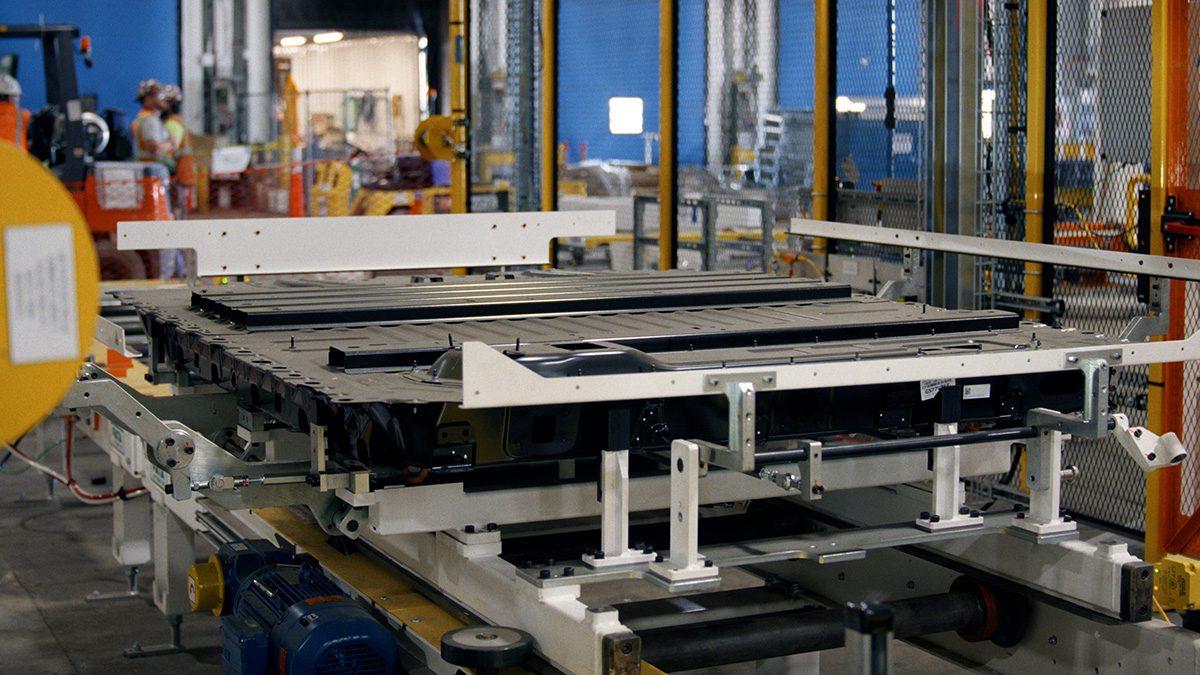
Instead of a single, continuous flow where each component is added sequentially, the assembly tree allows for three primary sub-assemblies to progress simultaneously. One dedicated section focuses on the front of the vehicle, another on the rear, and a third critical sub-assembly integrates the structural battery, seating components, consoles, and carpeting.
This parallel processing means that a substantial portion of the vehicle’s components can be pre-installed within these individual sections. The three main body sections then converge and are assembled together only when the bulk of their respective components are already in place, leading to a more efficient and less constrained workflow than traditional methods.
Innovations Driving Production: Unicastings and Zonal Architecture
A key enabler of this parallel assembly approach is the strategic utilization of unicastings, often referred to as ‘gigacastings’ by other leading EV manufacturers. These are massive aluminum castings that consolidate numerous smaller, individually stamped and welded pieces into a single, large structural component. In the Fathom’s production, unicastings will form critical parts of the front and rear sections of the vehicle.
The adoption of unicastings offers manifold benefits. It drastically reduces the number of parts required, simplifying the supply chain, lowering production costs, and decreasing the overall weight of the vehicle. Furthermore, these large castings contribute to enhanced structural integrity and can significantly accelerate the assembly process by eliminating numerous welding and joining steps.
Complementing unicastings is the implementation of zonal architecture. This advanced electrical and software design approach organizes a vehicle’s wiring and electronic control units into distinct physical zones. By consolidating wiring harnesses and computing power into localized zones, the complexity of the vehicle’s electrical system is reduced, simplifying manufacturing, diagnostics, and future software updates.
Powering the Future: LFP Battery Integration
The Fathom electric pickup will also integrate Lithium Iron Phosphate (LFP) batteries. LFP chemistry offers several advantages pertinent to high-volume EV production. They are known for their enhanced safety characteristics, longer cycle life, and often lower material costs compared to other lithium-ion chemistries.
Furthermore, LFP batteries typically exhibit greater thermal stability, contributing to overall vehicle reliability. In the UEV Production System, the structural battery pack is ingeniously designed to serve as the vehicle’s floor. This not only provides crucial structural stability but also creates a flat, robust base upon which interior components can be efficiently installed, further optimizing the assembly process.
Prioritizing Workforce Well-being: Ergonomics and Automation
Ford’s commitment to innovation extends beyond technology to its workforce. As employees at the Louisville Assembly Plant build the new assembly lines, the company is actively soliciting and integrating feedback from the very individuals who will be constructing the Fathom next year. This collaborative approach aims to create a superior working environment.
Bryce Currie, Ford’s Chief Manufacturing Officer, highlighted the significant improvements in worker conditions. “We listened to all the things operators don’t like,” Currie stated. “Their work at Louisville Assembly Plant will be significantly more ergonomic. It’s designed to require less twisting, turning and bending. We’ve engineered an 84% reduction in reaching over the fender. The wiring harness is also more than 4,000 feet shorter and 22 pounds lighter than in our first-gen electric SUV, making it much easier to install.”
These ergonomic enhancements are crucial for employee health, safety, and job satisfaction, ultimately contributing to higher quality output and reduced turnover. The UEV Production System is projected to enable the assembly of the Fathom 40% faster than the plant’s current products. This saved time is being strategically reinvested into insourcing certain components and increasing automation, further enhancing quality control and reducing production costs.
Indeed, Ford asserts that the Louisville Assembly Plant will boast the highest level of automation in final assembly among all its facilities, underscoring a commitment to advanced, precise, and efficient manufacturing practices.
The Road Ahead: Production Timeline and Market Impact
With the Louisville Assembly Plant undergoing its massive transformation, Ford’s teams are on track for significant milestones. Prototype builds, utilizing production-qualified parts, are scheduled to commence in the first quarter of 2027. This crucial phase will allow for extensive testing and refinement of both the vehicle and the manufacturing process.
Following successful prototype validation, customer deliveries for the Fathom electric pickup are anticipated to begin later in 2027. This timeline positions Ford to re-enter the competitive electric truck market with a technologically advanced product backed by a highly efficient and innovative production system.
The Fathom, coupled with the Universal EV Production System, signifies Ford’s strategic dedication to solidifying its position in the evolving electric vehicle landscape, promising a new era of efficient and sustainable automotive manufacturing. (Source: Ford)
Frequently Asked Questions (FAQ)
What is the Ford Fathom?
The Ford Fathom is a new midsize electric pickup truck announced by Ford Motor Company. It represents a key component of Ford’s renewed strategy in the electric vehicle market, leveraging advanced manufacturing techniques for its production.
What is the Universal EV Production System (UEV)?
The Universal EV Production System (UEV) is Ford’s innovative manufacturing process designed to build the Fathom electric pickup. It transforms traditional assembly lines into an ‘assembly tree,’ allowing parallel construction of major vehicle sections for enhanced efficiency and speed.
Where will the Ford Fathom be manufactured?
The Ford Fathom will be manufactured at the Louisville Assembly Plant (LAP) in Kentucky. This enormous factory has been extensively reconfigured and equipped with billions of dollars worth of new machinery to accommodate the UEV Production System.
What key innovations are part of the UEV Production System?
The UEV Production System integrates several advanced innovations, including LFP (Lithium Iron Phosphate) batteries, large unicastings (also known as gigacastings), and a sophisticated zonal architecture for electrical systems. These technologies aim to improve efficiency, cost, and vehicle integrity.
How does the ‘assembly tree’ concept work?
The ‘assembly tree’ system enables operators to build three main sections of the vehicle – the front, the rear, and the structural battery/interior platform – simultaneously and in parallel. These pre-assembled modules are then brought together for final integration, which significantly speeds up the production process.
What are the benefits of unicastings in EV manufacturing?
Unicastings are massive aluminum castings that replace dozens of smaller stamped and welded parts. They reduce part count, lower manufacturing costs, decrease vehicle weight, enhance structural integrity, and accelerate the assembly process by minimizing complex joining procedures.
When is the Ford Fathom expected to begin production and deliveries?
Ford anticipates starting prototype builds with production-qualified parts in the first quarter of 2027. Customer deliveries for the new Fathom electric pickup are projected to commence later in the year, following successful testing and validation.