
Key Takeaways / TL;DR
Cruise line Viking has deployed its inaugural fully electric motor coach in Vienna, marking a significant step towards sustainable guest transportation. This 49-passenger, zero-emission vehicle supports Viking’s shore excursion program, with plans for a broader European rollout. The initiative builds on Viking’s long-standing commitment to environmental responsibility, which includes previous investments in hybrid ship technologies and onboard solar panels since 2009.

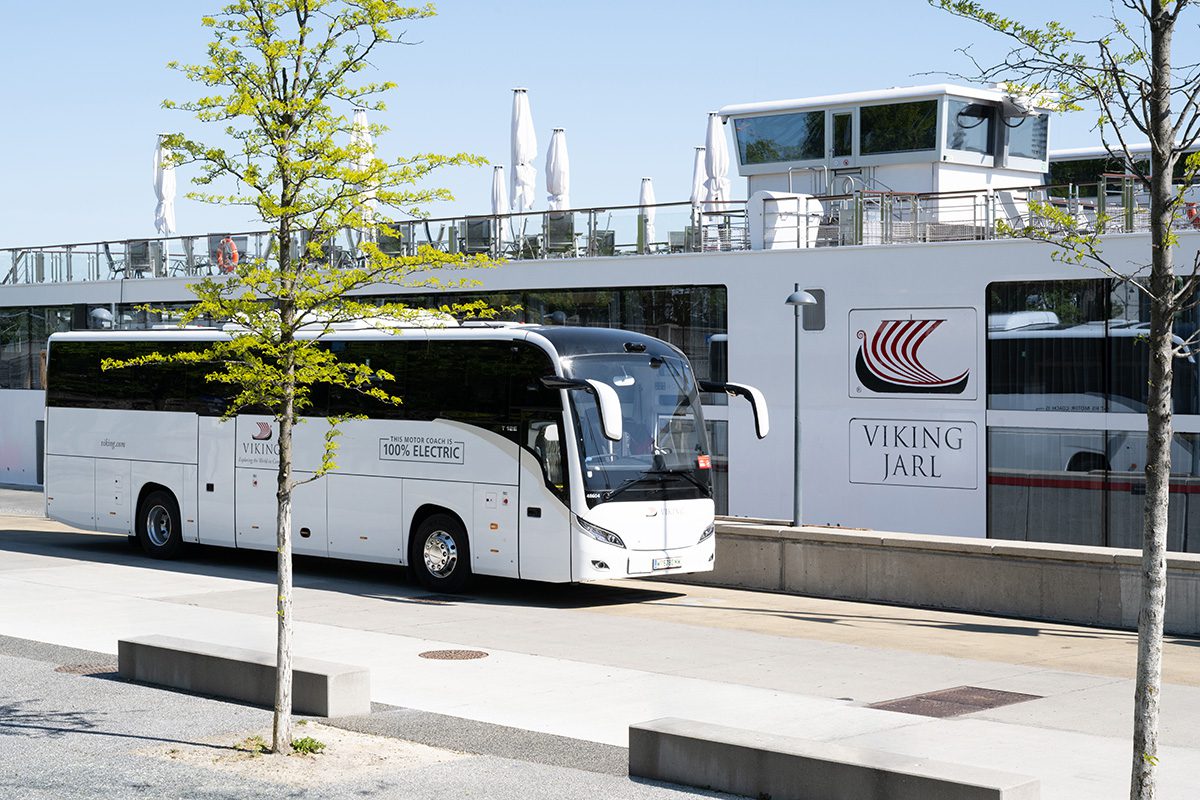
In a significant move towards decarbonizing its operations, luxury cruise line Viking has introduced its first fully electric motor coach. The state-of-the-art vehicle, capable of accommodating up to 49 passengers, is now actively servicing Viking guests in the historic city of Vienna, Austria. This initiative underscores the company’s escalating commitment to environmental stewardship within the tourism sector.
The introduction of this electric motor coach marks a new chapter in Viking’s efforts to offer more sustainable travel experiences. Operating exclusively for Viking guests, the new coach seamlessly integrates into the company’s existing transportation fleet, which supports its extensive shore excursion program in Vienna.
Viking’s Inaugural Electric Motor Coach Takes to Vienna’s Streets
The new electric motor coach represents a tangible stride in the travel industry’s broader movement towards environmental responsibility. Its deployment in Vienna ensures that Viking guests can enjoy their exploration of the city with a significantly reduced environmental footprint.

This zero-emission vehicle contributes directly to improved urban air quality and reduced noise pollution, enhancing the experience for both passengers and the local community. The choice of Vienna as the launch city highlights the importance of preserving the pristine environments of popular tourist destinations.
Viking has ambitious plans to expand this green transportation model. The company has announced intentions to introduce additional electric coaches across its European operations “in the coming years,” signaling a systemic shift in its ground transportation strategy.
A Green Evolution in Guest Transportation
The current deployment is not an isolated effort but a continuation of Viking’s long-standing dedication to environmental sustainability. The company has a documented history of integrating eco-friendly technologies into its fleet, dating back over a decade.
As early as 2009, Viking pioneered the adoption of hybrid diesel-electric engines on some of its vessels. This commitment was further demonstrated through the installation of onboard solar panels, designed to harness renewable energy and further reduce fuel consumption across its ships.
Torstein Hagen, Chairman and CEO of Viking, articulated the company’s foundational philosophy. “We have always been concerned about the environment, which is why we design our ships thoughtfully to reduce fuel consumption,” Hagen stated.
He further elaborated on the benefits of the new initiative: “Electric motor coaches are quieter and offer a zero-emission solution, and we look forward to operating them in many more Viking destinations in the coming months and years.” This statement reinforces the dual benefit of enhanced environmental performance and improved guest experience.
Electrification as a Pillar of Sustainable Tourism
The global tourism industry is under increasing pressure to mitigate its environmental impact. Travelers are becoming more eco-conscious, demanding sustainable options from tour operators and cruise lines alike. The introduction of an electric motor coach directly addresses these evolving consumer and regulatory expectations.
Addressing the Environmental Footprint of Travel
Transportation, both air and ground, constitutes a significant portion of the travel industry’s carbon emissions. Companies like Viking that operate vast logistical networks are increasingly exploring ways to decarbonize their fleets to align with international climate goals and reduce their overall environmental footprint.
This transition to electric vehicles for shore excursions plays a crucial role in reducing emissions at destination sites. It represents a commitment to local environments, ensuring that tourism benefits local economies without compromising air quality or increasing noise levels in historical and residential areas.
The Advantages of Zero-Emission Vehicles
Electric motor coaches offer a multitude of benefits beyond merely reducing carbon dioxide emissions. They significantly cut down on particulate matter and nitrogen oxides, improving urban air quality and public health in densely populated tourist areas.
Moreover, the quieter operation of these vehicles enhances the overall passenger experience, allowing for more serene journeys through scenic routes and bustling cityscapes. This quietness also minimizes disruption to local communities, fostering a more harmonious relationship between tourism and residential life.
The Strategic Shift Towards Fleet Electrification
Viking’s investment in an electric motor coach fleet signals a strategic shift that many in the travel and transportation sectors are undertaking. It reflects a growing understanding that sustainability is not just a marketing buzzword, but a fundamental operational imperative.
Enhancing the Passenger Experience and Local Impact
For passengers, an electric motor coach provides a smooth, quiet, and comfortable ride, often perceived as a premium experience. This aligns with the luxury segment that Viking caters to, where attention to detail and environmental responsibility are increasingly valued.
From the perspective of host cities, electric transportation fleets are welcomed for their contribution to urban sustainability goals. They support efforts to create greener, healthier, and more enjoyable environments for both residents and visitors, reinforcing the appeal of destinations like Vienna.
Industry-Wide Drive for Decarbonization
The broader travel industry is witnessing a significant drive towards decarbonization across various segments, from airlines exploring sustainable aviation fuels to hotels adopting renewable energy sources. Viking’s step into electric ground transportation aligns with this overarching industry trend.
It demonstrates how cruise lines, often scrutinized for their environmental impact, are expanding their green initiatives beyond their ships to encompass their entire operational ecosystem. This holistic approach is critical for achieving meaningful progress towards climate action.
Paving the Way for Future Green Initiatives
Viking’s plan to roll out additional electric coaches across Europe in the coming years suggests a long-term vision for a fully electrified ground transportation network. This commitment will necessitate investments not only in vehicles but also in charging infrastructure at various ports and destinations.
The successful integration of these electric motor coaches will serve as a model for other travel companies operating in Europe and globally. It highlights the feasibility and benefits of transitioning to zero-emission solutions even for large-scale passenger transportation.
Such initiatives contribute significantly to raising awareness about sustainable travel practices among a broad base of consumers. As more travelers experience the benefits of electric transport, demand for such options is likely to grow, further accelerating the industry’s green transition.
FAQ Section
What is the significance of Viking’s new electric motor coach?
Viking’s new electric motor coach signifies a major step towards sustainable travel in the cruise industry. It introduces a zero-emission transportation option for guests during shore excursions, reducing environmental impact in popular European destinations like Vienna.
Where is Viking’s first electric motor coach operating?
Viking’s inaugural fully electric motor coach has been deployed and is currently operating in Vienna, Austria. It is used exclusively for transporting Viking guests as part of their shore excursion programs in the city.
What is the capacity of Viking’s electric motor coach?
The new electric motor coach introduced by Viking is designed to accommodate up to 49 passengers comfortably. This capacity allows for efficient and environmentally friendly transportation of a significant number of guests for various tours and activities.
How does this align with Viking’s past environmental efforts?
This initiative is a continuation of Viking’s long-standing commitment to environmental responsibility. The company previously introduced hybrid diesel-electric engines and onboard solar panels on some of its vessels starting in 2009, demonstrating a consistent focus on reducing its ecological footprint.
What are the benefits of electric motor coaches for tourism?
Electric motor coaches offer several benefits, including zero tailpipe emissions that improve urban air quality, reduced noise pollution for a quieter passenger experience and local environment, and a contribution to the overall decarbonization goals of the travel industry.
Does Viking plan to introduce more electric coaches?
Yes, Viking has announced plans to expand its fleet of electric motor coaches. The company intends to introduce additional electric coaches across various destinations in Europe “in the coming years,” indicating a broader commitment to sustainable ground transportation.