
Key Takeaways
- Ford operates a dedicated “battery abuse” team focused on understanding and preventing battery cell failures from the initial design phase.
- The automaker employs a multi-layered approach to EV battery safety, including advanced analytical modeling for cell behavior and thousands of quality checks during manufacturing.
- Innovative testing protocols, such as feeding “red rabbits” (intentionally damaged components) into production and using hydraulic shakers, validate the robustness of both manufacturing processes and finished battery packs.
- Despite past challenges with specific EV battery components, Ford is intensifying its focus on battery quality as it launches the crucial Fathom pickup and expands its electric vehicle portfolio.
Electric vehicles (EVs) are rapidly transforming the automotive landscape, but their widespread adoption hinges significantly on the reliability and safety of their power source: the battery. Unlike the batteries in consumer electronics, EV batteries endure relentless conditions, from extreme temperatures and diverse climates to constant vibrations and potential impacts from road debris.
Recognizing these unique challenges, Ford has established a highly specialized team dedicated solely to EV battery safety. This proactive approach underscores the automaker’s commitment to ensuring its electric vehicle batteries are not only powerful and efficient but also exceptionally durable and safe for everyday use.

The Imperative of EV Battery Safety
For any electric vehicle manufacturer, engineering for battery durability stands as a paramount priority, alongside achieving optimal energy density and rapid charging speeds. The demanding environment in which these large-format lithium-ion batteries operate necessitates an exhaustive understanding of potential failure modes and robust prevention strategies.
To meticulously address these concerns, Ford maintains a dedicated unit focused on understanding precisely how battery cells fail. Their mission is to mitigate risks throughout the entire product lifecycle, from initial concept to vehicle deployment.
Ford’s Dedicated “Battery Abuse” Team
At the heart of Ford’s commitment to EV battery safety is its specialized battery abuse team. This unit is not merely reactive; it is deeply embedded in the design and development process for every new battery technology.

Wesley Thibault, Ford’s global chief engineer of battery product development, articulated the team’s precise mandate during a recent media roundtable at the automaker’s new BlueOval Battery Park Michigan. He stated, “That team is 100% focused on battery abuse, design, and testing as a function.”
This dedicated focus ensures that potential issues are identified and addressed long before batteries ever reach the production line or, more importantly, a customer’s vehicle. Their expertise is crucial for developing robust battery systems.
Designing for Resilience: Understanding Cell Failure
The work of Ford’s battery abuse team commences at the earliest stages of battery development. Their role extends beyond merely testing completed components; they actively contribute to the fundamental design to inherently enhance EV battery safety.
According to Thibault, the team aims to delve into the foundational physics of battery operation. “They want to understand down to the physics level, how a cell fails and why, and when it does fail, how we can prevent it from creating harm to the occupants,” he explained.
This in-depth understanding is critical for preempting severe issues like thermal runaway, a condition where an uncontrolled chemical reaction leads to extreme heat and potential fire. By comprehending the root causes of failure, engineers can design protective measures into the battery architecture itself.
Mastering Cell Venting
A prime example of this analytical rigor is the team’s meticulous study of cell venting. Venting is a controlled release of gases that occurs when a battery cell overheats, a vital process to prevent catastrophic failure or damage to the battery pack.
When internal temperatures climb too high, the electrolyte, a liquid chemical essential for shuttling electrons between the anode and cathode, begins to heat up and release gases. If these gases become trapped, they can lead to short circuits or trigger thermal runaway.
Ford’s team employs advanced analytical methods, including sophisticated computer models, to precisely measure and predict how cells vent under various conditions. This capability allows them to optimize battery designs for safe gas expulsion, long before any physical cells are validated for mass production.
Comprehensive Quality Checks in Manufacturing
Once the design principles are established, the focus shifts to ensuring every battery cell produced adheres to the highest standards of EV battery safety and quality. The manufacturing process at Ford’s new BlueOval Battery Park Michigan, which recently began producing lithium iron phosphate (LFP) battery packs, incorporates extensive scrutiny.
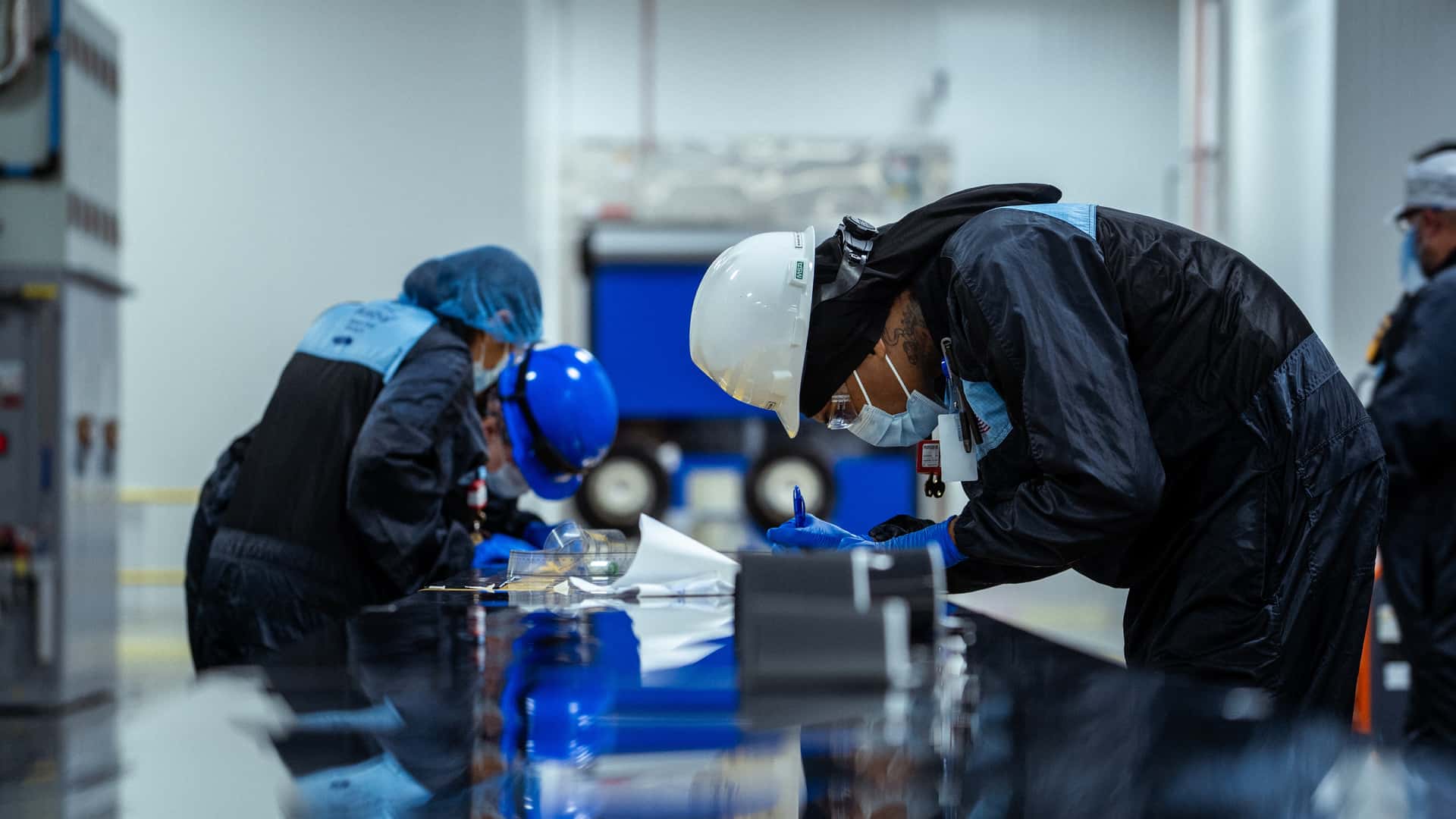
Ford engineers highlight that materials within the cell, as well as the finished cells themselves, undergo thousands of quality checks at various production stages. These include cutting-edge techniques such as CT scans, X-ray machines, lasers, camera inspections, and advanced AI systems.
For instance, when the anode slurry is applied to a copper foil, every millimeter is meticulously scanned by lasers to detect any wrinkles, imperfections, or other anomalies. This granular level of inspection ensures material integrity from the outset.
Traceability and Employee Empowerment
Beyond technological inspection, human oversight plays a critical role. All employees at the battery plant are empowered with the ability to pause production instantly if they identify any potential problems. This immediate intervention capability prevents defective components from proceeding further in the assembly line.
In the event of an issue, affected cells from a specific production period are promptly quarantined. Furthermore, Ford boasts a robust traceability system, allowing impacted components to be tracked from their point of manufacture all the way to the specific vehicle they are installed in. This level of control is vital for quality assurance and potential recall management.
While strict quality checks are standard practice among leading battery manufacturers globally – all striving to minimize costly scrap rates and maximize salable material – Ford’s comprehensive integration of technology and human expertise underscores its commitment to robust EV battery safety.
Rigorous Validation and Real-World Simulation
Ford’s commitment to EV battery safety extends to extensive validation testing designed to simulate the toughest real-world conditions. This includes both manufacturing process verification and end-product stress tests.
“Red Rabbits” and Production Integrity
To continuously test the efficacy of its quality systems, Ford engineers intentionally introduce damaged components and cells, humorously referred to as “red rabbits,” into the production machinery. This deliberate injection of faulty parts serves a critical purpose.
By monitoring whether the automated and human quality control systems successfully detect and reject these “red rabbits,” Ford can confirm that its inspection mechanisms are functioning as intended and are capable of catching genuine defects.
Extreme Environmental and Mechanical Testing
As battery cells near completion, they undergo further stringent tests, such as being blasted with helium gas to detect even microscopic leaks that could compromise their long-term integrity. Once an entire battery pack is assembled, it faces perhaps its most arduous challenge: the hydraulic shaker.
This specialized equipment simulates thousands of miles and years of real-world road use in a condensed timeframe. The shaker can replicate every conceivable movement a car experiences—twisting, diving, squatting, contorting, and yawing—subjecting the battery pack to the full spectrum of stresses it would encounter during its operational life. This ensures the pack’s structural integrity and internal component resilience under extreme conditions, validating overall EV battery safety.
Performance, Past Challenges, and Future Outlook
Ford’s proactive approach to EV battery safety has largely yielded positive results. Data released by the company this month indicated that high-mileage Mach-Es, with odometers showing 100,000 or even 200,000 miles, exhibit minimal range loss compared to their original capacity. This suggests robust long-term durability in everyday operation.
However, the company has also faced challenges that highlight the complexities of scaling EV production. In recent years, Ford has grappled with elevated warranty costs. Specific issues related to high-voltage batteries have also emerged.
For example, some early Mustang Mach-Es were recalled due to battery contactors overheating during DC fast-charging. Additionally, a small number of F-150 Lightnings were recalled in 2023 due to the discovery of defective battery cells. These incidents underscore the critical need for continuous improvement in EV battery safety and manufacturing quality.
The Road Ahead: The Ford Fathom
The rigorous focus on battery quality and design integrity is especially crucial as Ford prepares to launch the high-stakes Fathom pickup. The Fathom, which the automaker anticipates will enter production towards the end of next year, is poised to inaugurate a new generation of more efficient and profitable EVs for Ford.
The LFP battery packs for the Fathom are being produced at the BlueOval Battery Park Michigan, utilizing technology licensed from China’s CATL, the world’s largest battery maker. Despite the licensing agreement, Ford officials emphasize their deep involvement in the battery’s development from its inception, with a primary focus on durability and EV battery safety.
As Ford aims for a significant electric comeback, avoiding any quality issues with the Fathom’s battery system is paramount. While the true real-world performance of the Fathom’s batteries will only be evident in the coming years, Ford’s comprehensive, multi-faceted strategy signifies an unwavering commitment to ensuring top-tier EV battery safety and reliability for its next-generation electric vehicles.
Frequently Asked Questions About Ford’s EV Battery Safety
What is Ford’s “battery abuse” team?
Ford’s “battery abuse” team is a specialized unit dedicated to understanding, predicting, and preventing battery cell failures. They are involved from the initial design phase, focusing on how and why cells fail to ensure occupant safety and prevent damage.
How does Ford ensure EV battery safety during design?
During design, Ford’s battery abuse team studies the physics of cell failure, using analytical tools and computer models to predict behavior, such as cell venting. This allows them to incorporate safety measures into the battery’s architecture before physical prototypes are built.
What quality checks are performed during battery production?
Battery production involves thousands of quality checks using CT scans, X-rays, lasers, camera inspections, and AI systems. Every millimeter of components, like anode slurry coatings, is scanned for anomalies. Employees can also pause production if issues are spotted.
What are “red rabbits” in battery manufacturing?
“Red rabbits” are intentionally damaged components or cells fed into the production machinery. This practice validates that Ford’s quality control systems, both automated and human-led, are effectively detecting and quarantining defective parts as intended.
How are Ford’s finished EV battery packs tested?
Finished battery packs are tested for leaks using helium gas. They are then mounted on a hydraulic shaker that simulates thousands of miles and years of real-world road use, replicating various driving movements to confirm the pack’s durability and structural integrity.
How have Ford’s EV batteries performed historically?
Ford’s high-mileage Mach-Es have shown minimal range loss, indicating good long-term durability. However, the company has experienced past challenges, including a recall for Mach-E battery contactor overheating and a 2023 recall for defective F-150 Lightning battery cells.
Why is EV battery safety crucial for Ford’s Fathom pickup?
The Fathom pickup is a strategic new EV for Ford, expected to significantly impact its electric vehicle future. Ensuring impeccable EV battery safety and reliability for the Fathom is critical to avoid quality issues, build consumer confidence, and support the company’s broader electric vehicle expansion goals.