
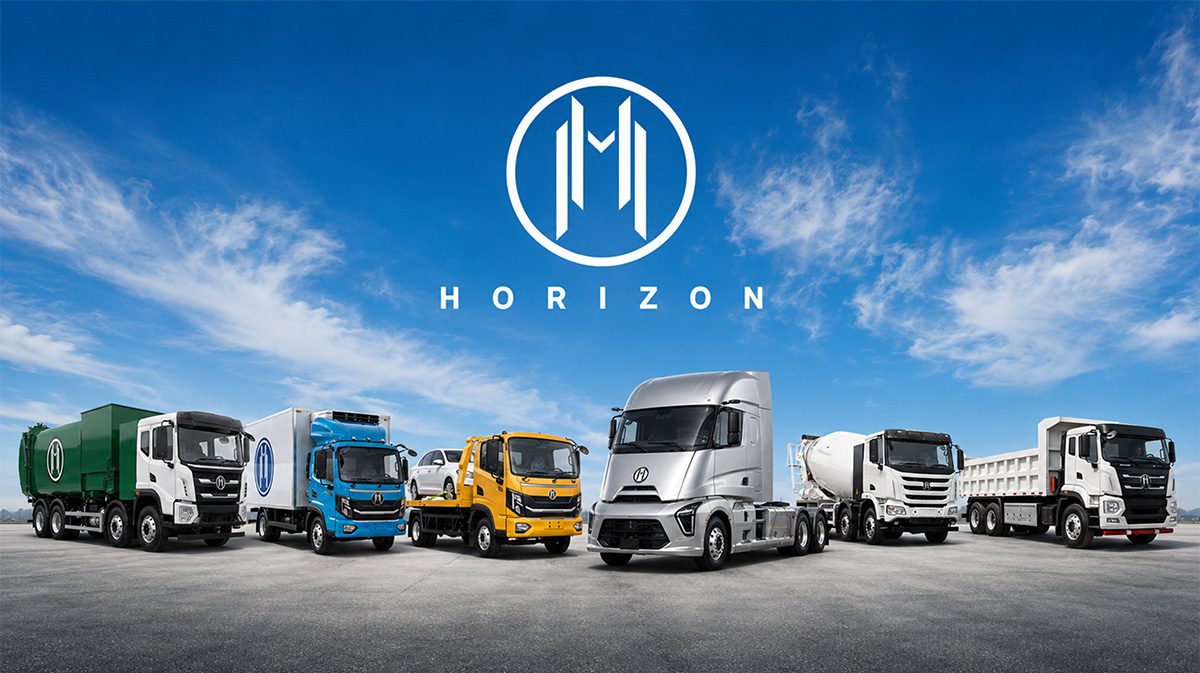
Key Takeaways
- Horizon Motor, a new startup, has debuted a Class 8 electric semi-truck aimed at directly competing with the Tesla Semi.
- The new electric Class 8 truck features a 350-mile range and a curb weight of 29,000 pounds, with initial units slated for real-world fleet testing in California.
- Horizon CEO Sean Jones highlights the significant return on investment (ROI) for electric trucks, citing 60-80% fuel savings compared to diesel.
- The company plans to transition to solid-state batteries, potentially doubling range or halving battery weight due to their increased energy density.
- While optimistic about EV adoption, Jones acknowledges limitations for long-haul routes, attributing them to insufficient infrastructure and economic viability.
- Horizon Motor previously explored hydrogen fuel cell technology but found it overly complex, unreliable, and cost-ineffective for customers.
The landscape of commercial freight is undergoing a significant transformation, with new players continually entering the burgeoning electric vehicle market. Amidst this evolving scenario, Horizon Motor, a fresh startup, has officially unveiled its Class 8 electric semi-truck, positioning itself as a formidable competitor to established and emerging electric truck manufacturers alike. This strategic move signals a deepening rivalry in the heavy-duty vehicle sector as the push for electrification gains momentum.

While industry stalwarts such as Volvo, Daimler Truck, and Traton continue their presence, their engagement in the electric truck market is often perceived as cautious, sometimes leaning towards lobbying efforts that could potentially decelerate the broader EV transition. In contrast, agile newcomers like Tesla and Windrose are already making inroads by offering Class 8 trucks at competitive price points, thereby intensifying the market’s competitive dynamics.
Horizon Motor’s Entry into the Electric Commercial Vehicle Space
Horizon Motor’s debut of its Class 8 electric semi-truck marks a pivotal moment, drawing considerable attention from industry observers. The vehicle was showcased at the recent ACT Expo 2026, where Clean Trucking Senior Editor Jay Traugott had the opportunity to examine the new e-truck firsthand and engage in a detailed discussion with Horizon CEO Sean Jones.
The newly unveiled tractor unit boasts a practical two-seat half-sleeper cab design, optimized for efficiency and driver comfort. It is equipped with a dual-plug CCS1 charging system, facilitating robust and relatively quick recharging capabilities. The truck’s curb weight stands at 29,000 pounds, a competitive figure within its segment, and Horizon Motor asserts that it delivers a substantial 350-mile range on a single charge.

From Prototype to Pavement: Testing and Production Outlook
The Class 8 electric truck witnessed by Jay Traugott is not merely a concept but the company’s first production unit. This significant milestone underscores Horizon Motor’s progress and commitment to bringing its vision to reality. This inaugural unit is scheduled for deployment with a California fleet customer, where it will undergo rigorous real-world testing. This practical application will provide invaluable data and feedback, crucial for refining future production models and ensuring optimal performance under various operational conditions.
Horizon Motor is gearing up to commence taking orders for its new electric semi-truck in the near future. The company has articulated an ambitious, yet achievable, delivery timeline of 120-150 days from order placement. This relatively swift turnaround is designed to meet market demand efficiently and establish Horizon Motor as a reliable supplier in the rapidly expanding Class 8 electric truck segment.
Revolutionizing Range: The Promise of Solid-State Batteries
Looking ahead, Horizon Motor is not resting on its current battery technology. The company has articulated clear plans for a future transition to advanced solid-state batteries, a technology widely considered to be a game-changer in the electric vehicle industry. CEO Sean Jones informed Clean Trucking that Horizon Motor has already secured a crucial agreement to procure up to one gigawatt worth of these innovative batteries.
The adoption of solid-state batteries is expected to yield transformative benefits. Jones highlighted that these next-generation batteries possess twice the energy density of the company’s current battery technology. This significant enhancement translates into compelling options for fleet operators: “When that agreement goes through, we should be able to start swapping our vehicles over to the new solid-state batteries, so we have the choice of either dropping half the battery weight or doubling range,” Jones stated. This flexibility could significantly impact operational efficiency and cost-effectiveness for future Horizon Motor Class 8 electric trucks.
The Economic Case for Electric: Surpassing Diesel’s ROI
Sean Jones is a strong advocate for the economic superiority of electric vehicles in many trucking applications. He firmly believes that electric propulsion will largely supplant diesel in the foreseeable future, especially when considering the return on investment. “It’s by far the best ROI you have,” Jones declared to Jay Traugott.
He further elaborated on the substantial financial benefits: “You’re talking about normally like 60 percent fuel savings and right now almost 80 percent fuel savings.” Beyond the direct cost savings on fuel, Jones underscored the inherent simplicity of electric vehicles compared to their diesel counterparts. “And these things are such simple vehicles compared with diesel. You’ve got a battery, you’ve got a motor, you’ve got some controllers.” This contrasts sharply with the increasing mechanical complexity of modern diesel trucks, which often incorporate numerous systems to meet stringent efficiency and emission standards. “I was at some presentations about the new diesel trucks and what they’re doing to try and make them more efficient. Basically they’re just adding a lot more complexity,” Jones observed, emphasizing the operational advantages of simpler electric drivetrains.
Navigating the Long Haul: Infrastructure and Practical Limitations
Despite his fervent enthusiasm for electric vehicle technology, Jones maintains a pragmatic perspective regarding its current limitations, particularly concerning long-haul routes. He readily acknowledges that electric vehicles may not be a viable replacement for diesel in all scenarios, especially for extensive thousand-mile trips in the immediate future.
“It’s not going to work for long-haul thousand-mile trips,” Jones admitted. The primary impediment, he explained, is the still-developing charging infrastructure required to support such demanding operations. “The infrastructure isn’t there. There are places where diesel is going to be around for a long, long time.” This candid assessment reflects a realistic view of the current state of EV adoption in heavy-duty transport, emphasizing that while electrification is progressing rapidly, certain logistical challenges, particularly in charging networks, still need to be addressed for universal applicability across all freight segments.
Why Hydrogen Fuel Cells Lost the Race for Horizon Motor
Horizon Motor’s journey into alternative fuels is not limited to pure battery-electric solutions. The company previously ventured into hydrogen fuel cell technology, providing a valuable historical context to its current focus. Jones revealed that Horizon Motor had constructed a hydrogen fuel cell truck as early as 2019.
However, this experience proved challenging. Jones articulated several significant hurdles that made hydrogen fuel cells an unviable option for the company’s commercial strategy. “And just the complexity of those things and trying to get the fuel cells not to fail after 60,000 miles—and the testing that you have to do on the tanks regularly,” he detailed, highlighting concerns about reliability and maintenance. Furthermore, the economic equation for hydrogen presented a stark challenge: “Even with diesel at the current price, hydrogen’s best case is about three times the cost per mile. We just could not figure out a way our customers could make money with it.” This comprehensive assessment led Horizon Motor to definitively pivot towards battery-electric technology, emphasizing the practical and financial considerations that guide their product development.
The Evolving Competitive Landscape for Class 8 Electric Trucks
Horizon Motor’s entry into the Class 8 electric truck market intensifies an already dynamic competitive environment. While legacy original equipment manufacturers (OEMs) like Volvo, Daimler Truck, and Traton have their own electric truck offerings, their market approach has been viewed by some as cautious, often involving lobbying efforts to manage the pace of the EV transition rather than aggressive direct competition in the electric sector.
In contrast, upstart companies such as Tesla with its Semi, and Windrose, have been more aggressive, introducing Class 8 electric trucks with compelling features and often at lower price points. Horizon Motor’s direct challenge to the Tesla Semi underscores a growing trend where agility and innovation from new entrants are pushing the boundaries and accelerating the adoption of electric heavy-duty vehicles. This competitive pressure is ultimately beneficial for the industry, driving innovation and offering more choices for fleets looking to electrify their operations.
Conclusion: A New Player in the Electrification Drive
Horizon Motor’s debut of its Class 8 electric truck signifies more than just the arrival of a new vehicle; it represents another critical step in the broad electrification of the commercial trucking sector. With ambitious plans for advanced battery technology, a clear economic argument against diesel, and a pragmatic view of market challenges, Horizon Motor aims to carve out a significant niche. As the industry moves forward, the competition among electric truck manufacturers promises to accelerate innovation, reduce costs, and ultimately pave the way for a more sustainable future for freight transport.
Frequently Asked Questions (FAQ)
What is Horizon Motor’s new electric truck?
Horizon Motor has launched a new Class 8 electric semi-truck, designed to directly compete with existing electric heavy-duty vehicles like the Tesla Semi. It features a two-seat half-sleeper cab and a dual-plug CCS1 charging system.
What is the range and weight of the Horizon Class 8 electric truck?
The new Horizon Motor electric truck offers an impressive 350-mile range on a single charge. Its curb weight is reported to be 29,000 pounds, making it a competitive option in the heavy-duty electric segment.
When will Horizon Motor’s electric trucks be available for order?
Horizon Motor plans to begin taking orders for its Class 8 electric semi-trucks soon. The company anticipates a delivery timeline of approximately 120-150 days from the point of order placement.
What are Horizon Motor’s plans for future battery technology?
The company intends to transition to solid-state batteries in the future, having signed an agreement for up to one gigawatt of these advanced cells. Solid-state batteries promise double the energy density, allowing for either reduced battery weight or extended range.
Why does Horizon Motor believe electric trucks offer a better ROI than diesel?
CEO Sean Jones highlights that electric trucks offer significantly better fuel savings, ranging from 60% to 80% compared to diesel. He also points to the simpler mechanical design of EVs, which results in lower maintenance complexity and potentially higher reliability.
Will Horizon Motor’s electric trucks work for long-haul routes?
Sean Jones acknowledges that current electric truck technology and infrastructure are not yet suitable for long-haul, thousand-mile trips. He emphasizes that the necessary charging infrastructure is still developing, and diesel will remain prevalent for such routes for a considerable time.
Did Horizon Motor consider hydrogen fuel cell trucks?
Yes, Horizon Motor built a hydrogen fuel cell truck in 2019. However, they concluded it was too complex, prone to failures after 60,000 miles, and economically unviable for customers due to high operating costs, estimated at three times that of diesel per mile.