
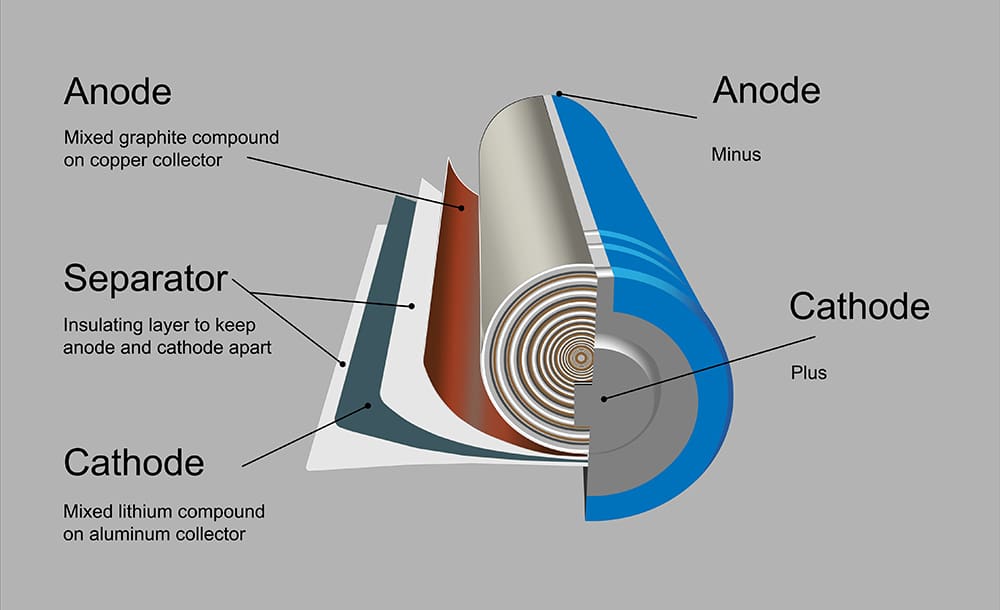
Key Takeaways:
- Graphite One has secured a prime site in Conneaut, Ohio, for its Active Anode Materials facility, strategically positioned with access to Lake Erie, Great Lakes shipping, multi-line CN rail, and an existing substation.
- The facility aims for a Phase One production of 10,000 tonnes per year by Q4 2027, focusing on energy storage, fast-charging, and high-energy-density materials for lithium-ion batteries. A Phase Two expansion targets 25,000 tonnes per year by Q3 2028.
- This development is pivotal in addressing the United States’ 100% import dependence for natural graphite, leveraging Graphite One’s vertically integrated supply chain from Alaska’s Graphite Creek deposit.
- The company has delivered commercial-grade anode material samples to major EV manufacturers and battery companies, signaling progress towards critical offtake agreements to bolster the domestic electric vehicle supply chain.
Graphite One Inc. has announced a significant step forward in bolstering the domestic supply chain for critical minerals, confirming the acquisition of a strategic site in Conneaut, Ohio. This location is earmarked for the company’s planned Active Anode Materials facility, a cornerstone project designed to produce essential components for lithium-ion batteries used in electric vehicles (EVs) and grid storage solutions.

The establishment of this processing hub marks a crucial advancement for the United States, which currently relies entirely on imports for its natural graphite needs. Graphite One’s initiative seeks to create a secure, domestic source of high-purity battery anode materials, integral to the nation’s energy transition and economic security.
Strategic Hub: Conneaut, Ohio’s Pivotal Role
The selected site in Conneaut, Ohio, boasts unparalleled logistical advantages, making it an ideal location for a large-scale materials processing facility. Its direct access to Lake Erie and the broader Great Lakes shipping corridor offers cost-effective and environmentally efficient transportation routes for raw materials and finished products.
Further enhancing its strategic value, the site provides multi-line CN rail connectivity, facilitating efficient overland transport across North America. The presence of an existing on-site substation ensures a reliable and robust power supply, critical for the energy-intensive processes involved in producing battery anode materials.
These integrated infrastructure benefits are expected to significantly streamline operations, reduce logistical complexities, and contribute to the overall efficiency of the graphite processing workflow. The site’s attributes position it as a key node in America’s emerging critical minerals infrastructure.
Charting Production Growth: Phased Expansion of Battery Anode Materials
Graphite One has outlined an ambitious timeline for the facility’s development and production. The company aims to complete the initial construction phases by the fourth quarter of 2027, paving the way for the commencement of commercial operations.
Phase One production is projected at an annual capacity of 10,000 tonnes of active anode material. This output will be strategically diversified to meet various market demands within the lithium-ion battery sector.
Specifically, the initial production will be split into 4,000 tonnes of energy storage material, 3,000 tonnes of fast-charging material, and 3,000 tonnes of high-energy-density material. These specialized battery anode materials are crucial for different applications, ranging from long-range electric vehicles to stationary grid storage systems and consumer electronics.
Following the successful launch of Phase One, Graphite One plans a significant Phase Two expansion, targeting an impressive 25,000 tonnes per year of graphitization capacity. This expansion is slated for the third quarter of 2028, underscoring the company’s long-term vision for scaling domestic battery material production.
Pioneering Domestic Supply: Reducing US Graphite Dependence
A central impetus for Graphite One’s vertically integrated strategy is the pressing need to mitigate the United States’ complete reliance on imported natural graphite. This critical mineral, foundational to virtually all lithium-ion batteries, currently presents a significant supply chain vulnerability for the nation.
The absence of domestic graphite production capacity leaves US industries, particularly the burgeoning electric vehicle manufacturing sector, exposed to geopolitical risks and market fluctuations. Developing a secure, internal supply chain for battery anode materials is therefore a matter of economic and national security.
From Alaska’s Rich Deposits to Ohio’s Processing Power
Graphite One’s vertically integrated model provides a comprehensive solution to this challenge. The process begins at the Graphite Creek deposit in Alaska, which the U.S. Geological Survey (USGS) has identified as the largest graphite deposit in the country. This Alaskan resource forms the upstream foundation of the entire supply chain.
Raw graphite ore from the Graphite Creek deposit will be transported via the Port of Nome, leveraging maritime routes for efficient transfer. From there, it will journey to the Conneaut, Ohio, facility for advanced processing into high-value active anode materials. This integrated approach ensures full control over the supply chain, from mine to finished product, minimizing external dependencies.
Industry Engagement and Future Collaborations
In anticipation of future production, Graphite One has already initiated critical engagement with potential customers. The company has successfully delivered commercial-grade anode material samples, in quantities of up to 20 kg, to three major electric vehicle manufacturers and three prominent battery companies.
These industry leaders are currently conducting rigorous specification testing on the provided samples, a standard and essential step in qualifying new material suppliers. The thoroughness of this testing phase underscores the commitment to quality and performance required in the demanding EV and energy storage sectors.
Significantly, Graphite One has entered into binding offtake discussions with participants from this esteemed group. While no definitive agreements have been publicly signed as of yet, these discussions signal advanced stages of commercial interest and potential long-term partnerships, crucial for securing future demand for the Ohio facility’s output.
The Broader Implications for US Energy Security
The establishment of a robust domestic supply chain for battery anode materials carries profound implications beyond the immediate commercial success of Graphite One. It directly contributes to the United States’ broader goals of energy independence, clean energy transition, and bolstering its strategic minerals ecosystem.
Critical minerals like graphite are indispensable for modern technologies, yet their supply chains are often concentrated in a few geopolitical regions. Diversifying these sources and building domestic processing capabilities are vital for national resilience and competitiveness in the global economy.
Fueling the Electric Vehicle Revolution
A reliable domestic supply of high-performance battery anode materials is paramount for the rapidly expanding electric vehicle industry in the US. As more automakers establish manufacturing plants and scale EV production within the country, the demand for locally sourced components will intensify.
Graphite One’s Ohio facility will provide a foundational element, supporting the entire EV ecosystem, from battery cell manufacturers to vehicle assemblers. This localization effort reduces reliance on overseas suppliers, streamlines logistics, and enhances the overall sustainability of EV manufacturing in North America.
Bolstering Grid Stability and Renewable Integration
Beyond electric vehicles, the battery anode materials produced in Ohio will also play a critical role in large-scale grid storage applications. As renewable energy sources like solar and wind become more prevalent, robust energy storage solutions are essential for grid stability and reliability.
Lithium-ion batteries, powered by advanced graphite anodes, enable the efficient storage of intermittent renewable energy, ensuring consistent power delivery even when the sun isn’t shining or the wind isn’t blowing. A domestic supply chain strengthens this vital infrastructure for a cleaner energy future.
A Vision for the Future: Timeline and Long-Term Impact
With construction anticipated to be completed in Q4 2027 and Phase One production commencing shortly thereafter, Graphite One is on a clear trajectory to become a leading domestic producer of battery anode materials. The planned Phase Two expansion by Q3 2028 further solidifies this commitment to scalable production.
This initiative represents more than just a new manufacturing plant; it symbolizes a strategic reorientation of the US industrial base towards self-sufficiency in critical minerals. By integrating vast Alaskan resources with advanced Ohio processing capabilities, Graphite One is helping to forge a resilient and secure future for America’s clean energy ambitions.
Frequently Asked Questions About Graphite One’s Ohio Facility
What is the primary purpose of Graphite One’s new facility in Ohio?
The facility is designed to produce active anode materials for lithium-ion batteries. These materials are crucial components for electric vehicles (EVs) and grid-scale energy storage systems, aiming to establish a domestic supply chain for critical graphite.
Where is the new Active Anode Materials facility located?
The facility will be located in Conneaut, Ohio. This site was chosen for its strategic advantages, including direct access to Lake Erie, multi-line CN rail connectivity, and an existing electrical substation.
What is the planned production capacity of the Ohio facility?
Phase One production, expected by Q4 2027, is planned for 10,000 tonnes per year, split across energy storage, fast-charging, and high-energy-density materials. A Phase Two expansion targets 25,000 tonnes per year by Q3 2028.
How does this facility address US import dependence for graphite?
The United States is currently 100% import-dependent for natural graphite. This facility, part of Graphite One’s vertically integrated model from the Alaskan Graphite Creek deposit, aims to create a secure, domestic supply chain, reducing reliance on foreign sources.
Has Graphite One engaged with potential customers for its materials?
Yes, Graphite One has delivered commercial-grade anode material samples to three major EV manufacturers and three battery companies. These entities are currently conducting specification testing, and binding offtake discussions are underway.
What types of batteries will benefit from these anode materials?
The anode materials produced will cater to various lithium-ion battery applications. This includes batteries for electric vehicles (EVs), requiring fast-charging and high-energy-density capabilities, and large-scale energy storage systems for grid stability.
What is the significance of the Graphite Creek deposit in Alaska?
The Graphite Creek deposit, identified by the USGS as the largest graphite deposit in the US, is the upstream source of raw material for the Ohio processing facility. It forms a critical part of Graphite One’s strategy for a fully domestic supply chain.