
Key Takeaways:
- Hanon Systems has launched a highly integrated thermal management module, the HICE, specifically designed for electric vehicles.
- The module consolidates seven critical refrigerant-circuit components into a single 16 kg assembly, enhancing efficiency and reducing complexity.
- Deployed in BMW’s fully electric iX3 SUV, this innovation addresses the multifaceted thermal demands of EV batteries, powertrain, and cabin.
- By dynamically regulating refrigerant flow, the HICE module optimises performance during fast charging, high-performance driving, and extreme weather.
- This advanced EV thermal management solution is crucial for extending driving range, improving energy utilisation, and ensuring battery longevity.
Pioneering Integrated EV Thermal Management
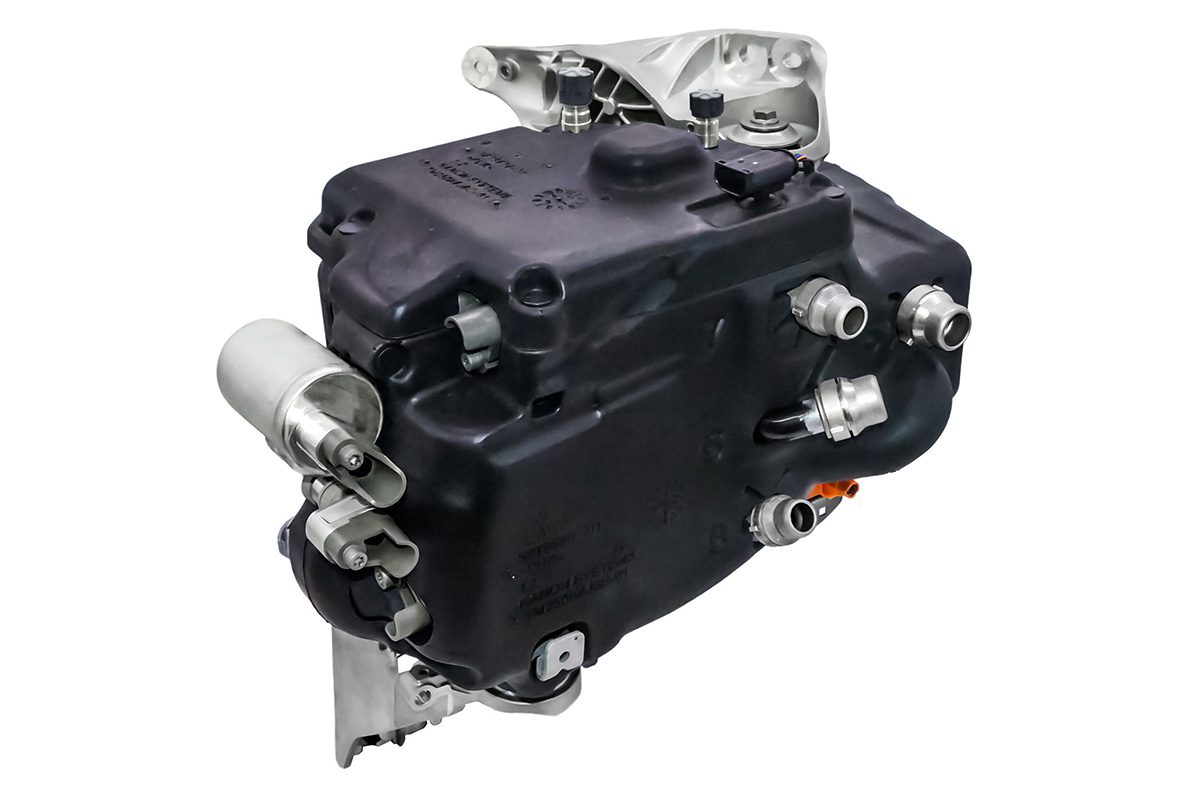
Hanon Systems, a global leader in automotive thermal and energy management solutions, has unveiled a groundbreaking highly integrated thermal management module for electric vehicles (EVs). This innovative unit, weighing a mere 16 kilograms (approximately 35 pounds), consolidates seven essential refrigerant-circuit components into a single, compact assembly, marking a significant advancement in EV engineering.

The state-of-the-art module has already found its application in a prominent fully electric vehicle: BMW’s iX3 SUV. Its deployment underscores a growing industry focus on optimising energy efficiency, extending driving range, and enhancing overall performance in the rapidly expanding electric mobility sector. Effective EV thermal management is paramount for these goals.
Understanding the Multifaceted Demands of EV Thermal Management
Unlike conventional internal combustion engine (ICE) vehicles, electric vehicles present a uniquely complex set of thermal management challenges. The primary difference lies in the introduction of the battery as a critical third thermal system, operating in conjunction with the established requirements for cabin comfort and powertrain cooling.
These three systems—battery, cabin, and powertrain—are intrinsically interconnected, with thermal fluctuations in one directly impacting the others. For instance, high-power scenarios such as fast charging or aggressive driving generate substantial heat within the battery pack. This heat must be efficiently dissipated by the refrigerant circuit to prevent performance degradation and ensure battery longevity.

Conversely, in cold weather conditions, the battery requires efficient heating to operate optimally and prevent range reduction. Balancing these dynamic thermal demands without excessively draining the vehicle’s electrical power is a continuous engineering challenge for superior EV thermal management.
The Interplay of Core Components
Hanon Systems’ integrated module addresses these intricate demands by unifying several critical components into a cohesive system. The unit ingeniously integrates an eCompressor, an electronic expansion valve block, a water-cooled condenser, an internal heat exchanger, a chiller, A/C lines, and an array of pressure and temperature sensors.
This holistic design allows the system to dynamically regulate refrigerant flow and temperature across multiple vehicle subsystems simultaneously. Whether the vehicle is undergoing a rapid charge, navigating challenging terrains, or operating in extreme ambient temperatures, the module ensures optimal thermal conditions for all vital components.
How Integration Enhances Performance and Efficiency
The strategic consolidation of these components into one package offers several key advantages. Primarily, it significantly reduces overall system complexity, simplifying manufacturing processes and streamlining vehicle assembly. This integration also leads to decreased packaging requirements, freeing up valuable space within the vehicle chassis for other components or improved design flexibility.
Crucially, the module improves thermal performance and energy utilisation. By optimising heat transfer and management across the various subsystems, it directly contributes to an extended driving range—a critical factor for consumer adoption of EVs. Furthermore, the reduction in the number of physical connections, each a potential point for refrigerant leakage, inherently boosts system reliability and durability.
Driving Range and Battery Health: The Core Benefits
Effective EV thermal management plays an indispensable role in safeguarding the battery’s health and maximising the vehicle’s driving range. An optimally managed battery operates within its ideal temperature window, which is crucial for preventing accelerated degradation and ensuring consistent power delivery.
During fast charging, the module actively manages the heat generated, allowing for quicker charging times without compromising battery integrity. Similarly, in extreme cold, it provides efficient heating to bring the battery up to its operational temperature, mitigating the typical range reduction associated with low temperatures. This proactive approach to temperature control directly translates into a more reliable and enjoyable EV ownership experience.
Reduced Complexity, Enhanced Reliability
One of the less visible yet profound advantages of Hanon Systems’ integrated approach is the tangible reduction in system complexity. Traditional EV thermal management architectures often involve numerous discrete components, each requiring separate mounting, plumbing, and electrical connections. This distributed setup can be intricate, increasing the potential for installation errors and long-term maintenance issues.
By bringing these elements into a single, compact module, Hanon Systems not only streamlines the design and manufacturing processes but also inherently enhances reliability. Fewer connections mean fewer potential leak points for refrigerants, a common concern in HVAC systems. This consolidation simplifies troubleshooting and maintenance, ultimately contributing to a more robust and dependable electric vehicle.
An Expert Perspective on the Innovation
Soo Il Lee, CEO of Hanon Systems, highlighted the transformative nature of this development. He stated, “Our solution transforms thermal management into an efficient and intelligent system. By unifying all critical refrigerant thermal management functions into one exceptionally compact module, we achieve savings in both packaging and materials.”
This statement underscores the dual impact of the HICE module: not only does it deliver superior performance and efficiency, but it also optimises resources through intelligent design. Such advancements are vital as the automotive industry continues its rapid transition towards electrification, demanding solutions that are both high-performing and sustainable.
The Broader Impact on Electric Vehicle Engineering
The introduction of highly integrated components like Hanon’s HICE module signifies a broader trend in electric vehicle engineering—a shift towards more compact, efficient, and interconnected systems. This approach is critical for overcoming inherent challenges in EV design, such as packaging constraints due to large battery packs and the need for optimal aerodynamic efficiency to maximise range.
By offering a consolidated solution for EV thermal management, Hanon Systems is not just providing a component; it is enabling automotive manufacturers like BMW to design more streamlined, lighter, and more energy-efficient vehicles. These innovations are fundamental to making electric vehicles more accessible, practical, and appealing to a wider global audience, accelerating the transition to sustainable mobility.
Frequently Asked Questions About EV Thermal Management
What is EV thermal management?
EV thermal management is the system responsible for maintaining optimal operating temperatures for an electric vehicle’s battery, powertrain, and passenger cabin. Unlike traditional vehicles, EVs require precise temperature control for their high-voltage battery packs, which directly impacts performance, range, charging speed, and overall battery lifespan.
Why is thermal management more complex in EVs than in ICE vehicles?
EVs introduce a third major thermal system—the battery—alongside the cabin and powertrain, all of which interact. Fast charging and aggressive driving generate significant heat in the battery, while cold weather requires efficient battery heating. Managing these dynamic and interconnected thermal demands without excessive energy consumption makes it inherently more complex.
What components are typically included in an integrated thermal module like Hanon’s HICE?
Hanon’s HICE module integrates seven key refrigerant-circuit components: an eCompressor, an electronic expansion valve block, a water-cooled condenser, an internal heat exchanger, a chiller, A/C lines, and pressure and temperature sensors. This consolidation simplifies the system while enhancing its ability to manage diverse thermal demands.
How does improved EV thermal management affect driving range?
Effective EV thermal management directly extends driving range by ensuring the battery operates at its optimal temperature. This prevents energy loss due to overheating or undercooling, which can reduce efficiency. It also enables more efficient fast charging and minimises range degradation in extreme weather conditions, crucial for long-distance travel.
What role does the e-compressor play in EV thermal management?
The e-compressor is a crucial component in EV thermal management, responsible for circulating the refrigerant in the system. Unlike mechanical compressors in ICE vehicles, the e-compressor is electrically driven, allowing for precise and independent control of cooling and heating functions, vital for battery temperature regulation and cabin climate control.
What benefits does component consolidation offer for EV design?
Component consolidation, as seen in Hanon’s 16 kg module, significantly reduces system complexity, packaging requirements, and the number of potential leak points. This leads to improved thermal performance, enhanced energy utilisation, increased system reliability, and greater design flexibility for automotive manufacturers, ultimately benefiting the end-user.