
Key Takeaways (TL;DR)
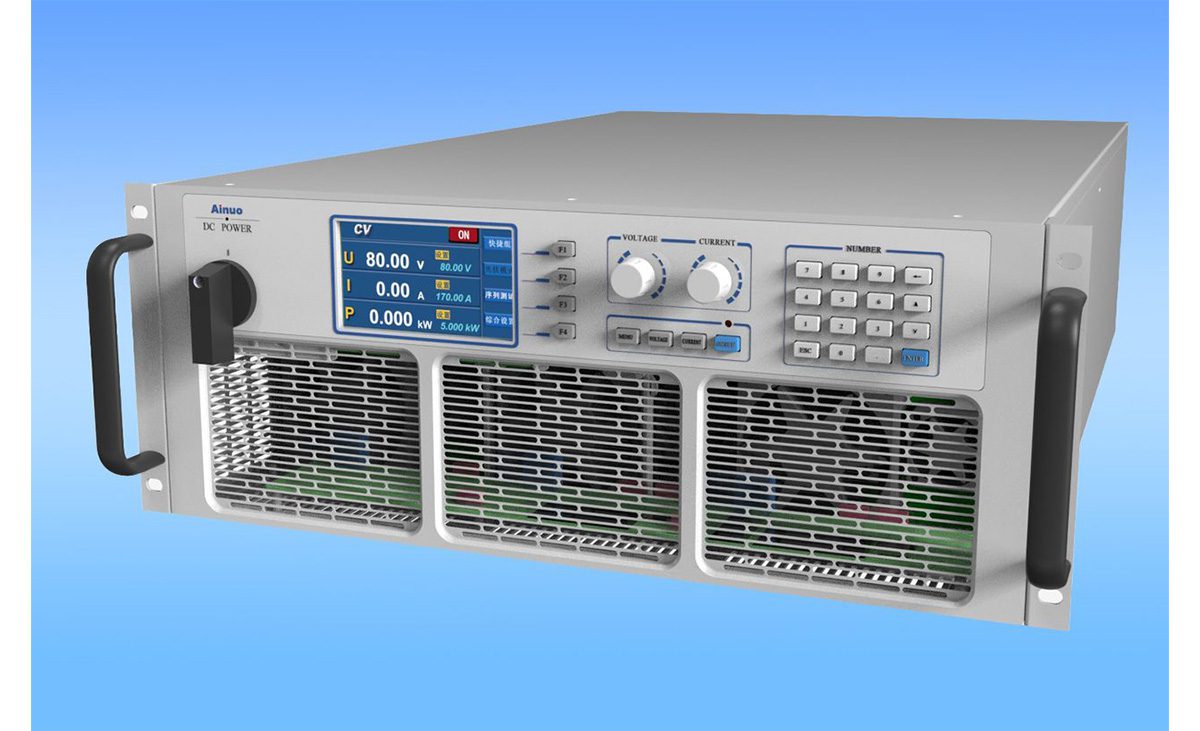
- Intepro Systems has launched the Aniuo ANEVH(F) Series, a sophisticated bidirectional programmable DC power supply and regenerative load.
- This innovative unit delivers up to 50 kW in a compact 4U rack-mounted chassis, functioning as both a precise power source and an energy-recuperating load.
- A standout feature is its regenerative capability, which efficiently returns absorbed energy to the electrical grid, significantly reducing heat dissipation and recovering valuable test energy.
- The series boasts fast dynamic response, integrated function generators, and an arbitrary waveform generator for complex test scenarios, all seamlessly integrating with Intepro’s intuitive PowerStar software.
- It is a crucial tool for modern EV battery, powertrain, and charger test benches, driving enhanced efficiency, reduced operational costs, and accelerated development in electric vehicle technology.
- The ANEVH(F) Series offers extensive scalability, supporting power configurations up to 1 MW and voltage ranges reaching 2,250 V.
In a significant development for the burgeoning electric vehicle (EV) sector, Intepro Systems has introduced its Aniuo ANEVH(F) Series. This new line of bidirectional programmable DC power supplies and regenerative loads is engineered to meet the rigorous demands of advanced EV engineering testing, offering unparalleled efficiency and versatility within a compact form factor. Delivering up to 50 kW of power from a single 4U rack-mounted chassis, the ANEVH(F) Series marks a pivotal advancement in test equipment, crucial for the ongoing evolution of electric mobility.
The introduction of such high-performance equipment is critical for companies engaged in EV engineering news and development, as it directly impacts the speed and accuracy with which new electric vehicle components and systems can be brought to market. As the automotive industry rapidly electrifies, the need for robust, efficient, and scalable testing solutions becomes paramount.

Dual Functionality: Powering and Recovering Energy
At its core, the Aniuo ANEVH(F) Series is designed for dual-role operation, serving simultaneously as a programmable source that meticulously delivers power to a connected device and a sophisticated sink that intelligently absorbs power. Crucially, when acting as a sink, it engages its regenerative capabilities, feeding the absorbed energy back into the electrical grid instead of dissipating it wastefully as heat. This unique bidirectional functionality allows for seamless and automatic switching between sourcing and sinking modes, facilitating complex and dynamic test cycles essential for electric vehicle components.
This integrated approach significantly streamlines test setups, eliminating the need for separate power supplies and traditional, heat-generating load banks. For professionals following EV engineering news, the efficiency gains from such integrated systems are substantial, promising both environmental benefits through energy recovery and operational advantages by reducing cooling requirements and equipment footprint.
Scalability and Broad Voltage Capabilities for Diverse EV Applications
The ANEVH(F) Series demonstrates remarkable flexibility, with power ratings ranging from 5 kW to 30 kW in a compact 3U package, extending up to 50 kW in the slightly larger 4U configuration. This modularity allows for precise selection based on specific testing needs, from individual battery cells to full powertrain assemblies. Furthermore, the series provides an expansive spectrum of seven voltage ranges, spanning from 0 V up to an impressive 2,250 V.

This wide voltage capability ensures compatibility with a vast array of high-voltage EV components, including battery packs, inverters, and high-power charging systems. For large-scale testing requirements, multiple units can be seamlessly paralleled, creating comprehensive test systems capable of delivering up to an astounding 1 MW of power. This scalability is a key differentiator, providing engineers with the necessary tools to validate next-generation EV platforms, a critical aspect often highlighted in EV engineering news reports.
The Efficiency Advantage: Embracing Regenerative Load Technology
One of the most compelling features of the ANEVH(F) Series is its advanced regenerative load functionality. Unlike conventional electronic loads that convert absorbed energy into heat, which then requires additional cooling infrastructure, Intepro’s solution actively returns this energy to the grid. This not only dramatically reduces energy consumption during testing but also alleviates the thermal management challenges within test environments.
The consolidation of both source and regenerative load capabilities within a single chassis offers significant benefits in terms of space utilization. Test labs can achieve higher power density, freeing up valuable rack space and minimizing the physical footprint of testing apparatus. According to Intepro Systems, this integration and energy recovery translate into industry-leading power density and substantial operational cost savings, making it a sustainable choice for forward-thinking EV engineering teams.
Advanced Control and Software Integration for Enhanced Testing
Precision and responsiveness are paramount in EV component validation. The ANEVH(F) Series delivers with fast dynamic response times, crucial for accurately simulating real-world driving cycles and rapid load changes encountered in electric powertrains. Enhancing its versatility, the units come equipped with built-in function generators, a suite of standard test curves, and an arbitrary waveform generator. These features empower engineers to generate highly customized waveforms, mimicking complex electrical profiles required for thorough component characterization and stress testing.
Complementing its hardware capabilities, the ANEVH(F) Series integrates seamlessly with PowerStar, Intepro’s intuitive test-development software. This powerful software platform simplifies the creation of intricate test programs, allowing engineers to configure complex sequences by merely filling in fields, thereby eliminating the need for extensive coding or the cumbersome assembly of graphical components. This user-friendly interface accelerates the test development process, empowering engineering teams to focus more on analysis and less on programming, a critical advantage in the fast-paced world of EV engineering news and innovation.
Indispensable for Core EV Test Benches
Bidirectional power supplies with regenerative load capabilities, such as the Aniuo ANEVH(F) Series, have become fundamental components in modern EV battery, powertrain, and charger test benches. In these environments, the meticulous cycling of battery packs—involving both charging and discharging phases—generates significant amounts of energy. Traditionally, the energy extracted during discharge would be converted into heat and wasted.
However, with regenerative technology, this energy is efficiently fed back into the grid, closing the loop on energy usage within the test facility. This principle applies equally to powertrain testing, where simulating vehicle acceleration and regenerative braking cycles demands dynamic power sourcing and sinking with energy recovery. For the continuous stream of EV engineering news, such efficiency-driven test solutions represent a vital step towards sustainable and cost-effective product development.
Availability and Market Impact
The Intepro Systems Aniuo ANEVH(F) Series is now available, with starting prices for the units set at $8,730. Customers can expect a lead time of approximately six to eight weeks. This timely introduction of advanced test equipment is poised to significantly impact the efficiency and sustainability of electric vehicle development cycles globally. As the demand for electric vehicles continues its steep ascent, the infrastructure supporting their rigorous testing must evolve in parallel.
Tools like the ANEVH(F) Series offer a tangible solution for manufacturers and research institutions aiming to accelerate innovation, reduce operational costs, and uphold the highest standards of quality and reliability in electric vehicle components. Its capabilities underscore the ongoing advancements in test and measurement technology that underpin much of the positive EV engineering news circulating today, ensuring that future electric vehicles are not only powerful but also impeccably engineered and thoroughly validated.
Frequently Asked Questions (FAQs)
What is the primary function of Intepro’s ANEVH(F) Series?
The ANEVH(F) Series serves as a bidirectional programmable DC power supply and a regenerative load. It can precisely deliver power to a device (source) and efficiently absorb power, returning it to the grid (sink), all within a single, compact unit crucial for modern EV engineering news.
How does the regenerative load feature benefit EV testing?
The regenerative load feature prevents absorbed test energy from being wasted as heat. Instead, it returns this energy to the grid, leading to significant energy savings, reduced cooling requirements in test labs, and a smaller environmental footprint for EV component validation.
What power and voltage ranges does the ANEVH(F) Series support?
The series offers power ratings from 5 kW to 50 kW in single units (3U/4U chassis) and can be scaled up to 1 MW by paralleling multiple units. It also provides versatile voltage ranges, from 0 V to an impressive 2,250 V, accommodating diverse high-voltage EV components.
Is the ANEVH(F) Series compatible with existing test software?
Yes, the ANEVH(F) Series integrates seamlessly with Intepro’s PowerStar test-development software. This integration simplifies test program creation, allowing engineers to build complex sequences through field inputs rather than requiring extensive coding or graphical component assembly.
What specific EV components can be tested using this supply?
The ANEVH(F) Series is a staple for EV battery, powertrain, and charger test benches. It’s ideal for lifecycle testing of battery packs, simulating dynamic driving cycles for electric powertrains, and evaluating the efficiency and performance of EV charging systems.
What makes the ANEVH(F) Series suitable for advanced EV engineering?
Its combination of high power density, wide voltage range, fast dynamic response, integrated function generators, and regenerative capabilities makes it highly suitable. These features enable comprehensive, efficient, and realistic simulation of various operating conditions for cutting-edge EV engineering applications.
What is the significance of the unit’s fast dynamic response?
A fast dynamic response is critical for accurately simulating the rapid changes in power demand and supply that occur during real-world EV operation, such as acceleration, deceleration, and regenerative braking. This precision is essential for robust and reliable component validation in EV engineering news.