
Key Takeaways
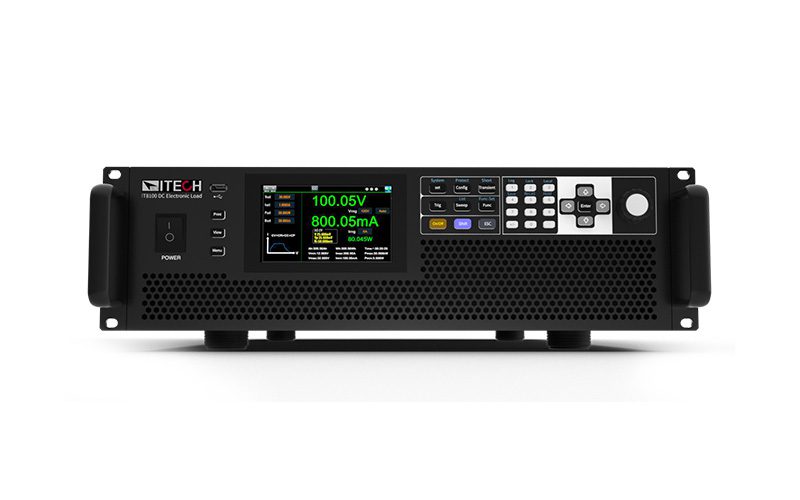
- ITECH has launched the IT8100A/E Series DC electronic loads, designed for high-power applications.
- The series offers parallel capacity up to 1.8 MW and a rapid dynamic slew rate of 150 A/µs.
- Targeted applications include electric vehicle (EV) charging station validation, power battery testing, fuel cell testing, and evaluation of advanced AI power supplies.
- It features a 1.5× short-term over-power capability and voltage levels up to 1200 V, crucial for next-generation 800V EV architectures.
- A specialized high-current variant (60 V / 2400 A / 6 kW) addresses the specific demands of AI GPU and computing power supply testing.
In a significant development for the power electronics and electric vehicle industries, ITECH has officially released its IT8100A/E Series DC electronic loads. This new line of high-power test platforms is engineered to meet the stringent demands of modern energy storage, conversion, and high-performance computing applications, offering unparalleled scalability and dynamic response capabilities.
The IT8100A/E Series stands out with its robust design, offering a remarkable parallel capacity that can scale single units into comprehensive systems capable of reaching up to 1.8 megawatts (MW). This substantial power handling capability positions the series as a critical tool for large-scale industrial and research environments.

Revolutionising EV Charging Station Validation and Battery Testing
The burgeoning electric vehicle (EV) market demands rigorous testing protocols for its charging infrastructure and battery technologies. The ITECH IT8100A/E Series is specifically designed to address these complex validation needs, providing a flexible and powerful solution for manufacturers and testing facilities.
Validating EV charging stations requires simulating diverse load conditions, from standard charging to rapid and ultra-fast charging scenarios. The ability of the IT8100A/E Series to handle high power and dynamic transients ensures that charging systems can be thoroughly tested under real-world operational stresses, verifying their reliability and efficiency before deployment.
Similarly, power battery testing is a cornerstone of EV development. Modern EV battery packs are sophisticated energy storage systems that undergo extensive charge and discharge cycle testing, performance evaluation, and safety assessments. The high-power density and precise control offered by these DC electronic loads facilitate comprehensive testing of battery performance, endurance, and thermal management under various load profiles, mimicking the demands of diverse driving conditions and charging cycles.
Advanced Capabilities for Fuel Cell and AI Power Supply Evaluation
Beyond the EV sector, the IT8100A/E Series extends its utility to crucial emerging technologies such as fuel cell testing and the evaluation of power supplies for artificial intelligence (AI) and high-performance computing (HPC) applications.
Fuel cells, particularly those used in automotive and stationary power generation, require dynamic load testing to simulate fluctuating power demands and ensure stable operation. The series’ exceptional dynamic slew rate of 150 A/µs is engineered precisely for this purpose. This rapid response capability allows the loads to accurately reproduce swift current transients, which are characteristic of real-time power fluctuations in fuel cell systems, enabling engineers to gain precise insights into their performance and responsiveness.
The rise of AI and HPC has introduced new challenges for power supply designers. Next-generation AI Graphics Processing Units (GPUs) and computing systems operate at increasingly low supply voltages but demand significantly high currents, coupled with rapid and often unpredictable current changes. To cater to these specific requirements, ITECH has introduced a dedicated high-current variant within the series, offering 60 V / 2400 A / 6 kW. This specialized load is critical for accurately evaluating the stability, efficiency, and transient response of power supplies feeding these demanding AI infrastructures.
Technical Specifications and Architectural Flexibility
The IT8100A/E Series boasts an impressive array of technical specifications designed to offer maximum versatility and performance across various testing scenarios.
With a power density of 7.2 kilowatts (kW) per 3U rack unit, the system can scale efficiently, reaching up to 86.4 kW within a standard 37U cabinet. This high-density design optimises laboratory space while providing substantial testing capacity.
A critical feature is the 1.5× short-term over-power capability. This functionality allows the electronic loads to momentarily handle peak load conditions that exceed their nominal rating without necessitating an oversized or more expensive test configuration. This provides flexibility for stress testing and ensures the equipment can manage short bursts of high demand, common in dynamic power systems.
Voltage Versatility for Evolving Architectures
The series offers a broad range of voltage levels, including 60 V, 150 V, 600 V, and 1200 V. This extensive voltage coverage is particularly vital for the rapidly evolving EV landscape.
The 1200 V ceiling is a forward-looking capability, specifically addressing the testing requirements for next-generation 800V EV charging architectures. As vehicle manufacturers move towards higher voltage platforms to enable faster charging and improved efficiency, DC link voltages at the load can often surpass the levels seen in conventional 400 V infrastructure. The IT8100A/E Series ensures that testing facilities are equipped to validate these advanced systems with ample headroom.
Modular Design for Customised Test Platforms
The IT8100A Series, IT8100E Series, and the dedicated high-current load variant are designed for flexible parallel configurations. This modular approach allows engineers to build customized test platforms ranging from compact benchtop setups for research and development to expansive, megawatt-class systems for large-scale production testing and validation.
This modularity is crucial for accommodating diverse testing needs, from component-level verification to full-system integration tests. It enables users to scale their testing capabilities precisely according to their project requirements, ensuring cost-effectiveness and adaptability.
Availability and Market Impact
The IT8100A/E Series DC electronic loads are now available, marking a significant advancement in high-power testing solutions. This launch from ITECH is poised to have a substantial impact on industries reliant on robust and precise power supply and energy conversion testing, particularly in the rapidly expanding sectors of electric vehicles, renewable energy, and artificial intelligence.
By providing tools that can accurately simulate real-world dynamic conditions and scale to immense power levels, ITECH is enabling faster innovation and ensuring the reliability and safety of critical technologies that underpin modern infrastructure.
Source: ITECH
Frequently Asked Questions (FAQ)
What are the primary applications of the ITECH IT8100A/E Series DC electronic loads?
The IT8100A/E Series is primarily designed for high-power testing across several key sectors. Its main applications include electric vehicle (EV) charging station validation, comprehensive testing of power batteries, evaluation of fuel cell systems, and the rigorous assessment of power supplies for advanced artificial intelligence (AI) and high-performance computing platforms.
What is the maximum parallel capacity of the IT8100A/E Series?
The ITECH IT8100A/E Series DC electronic loads offer impressive scalability. Starting from individual units, the system can be configured in parallel to achieve a substantial maximum capacity of 1.8 megawatts (MW). This capability makes it suitable for large-scale industrial testing and research environments that require significant power handling.
Why is the 150 A/µs dynamic slew rate important?
A dynamic slew rate of 150 A/µs is crucial for accurately simulating rapid current transients. This allows the electronic loads to reproduce fast changes in current, which are common in switching power supplies, dynamic EV charging systems, and fluctuating fuel cell loads. It ensures precise and realistic testing of how power systems respond to sudden variations in demand.
How does the IT8100A/E Series support 800V EV charging architectures?
The IT8100A/E Series supports next-generation 800V EV charging architectures by offering voltage levels up to 1200 V. As EV technology advances, DC link voltages in these high-power charging systems can exceed traditional 400V levels. The 1200V ceiling ensures that the electronic loads can safely and effectively test these higher voltage, faster-charging electric vehicle platforms.
What is the purpose of the dedicated high-current variant?
The dedicated high-current variant (60 V / 2400 A / 6 kW) is specifically designed to meet the unique demands of next-generation AI GPU and computing power supply testing. These advanced computing systems operate at very low voltages but require extremely high currents, often with rapid transient changes. This specialized load ensures accurate and stable evaluation of these critical power supplies.
What is the significance of the 1.5× short-term over-power capability?
The 1.5× short-term over-power capability allows the IT8100A/E Series to temporarily handle peak load conditions that are 1.5 times its nominal power rating. This feature provides greater flexibility in testing, allowing engineers to conduct stress tests and simulate maximum demand scenarios without needing to procure an oversized test configuration, thereby optimizing equipment usage and reducing costs.