
Key Takeaways:
- Kalmar has secured orders for four next-generation electric reach stackers from customers across Inner Mongolia, Tianjin, Shanghai, and Hong Kong.
- These machines, manufactured at Kalmar’s expanded Shanghai plant, are set for delivery by the end of 2026.
- They feature Kalmar’s pioneering lithium-ion battery technology, offering enhanced energy capacity, thermal stability, and predictable performance.
- Native GB/T fast charging capabilities will allow direct connection to China’s robust local power grid, boosting operational efficiency.
- The orders underscore a significant acceleration in the adoption of electrified heavy machinery and green logistics solutions across China.
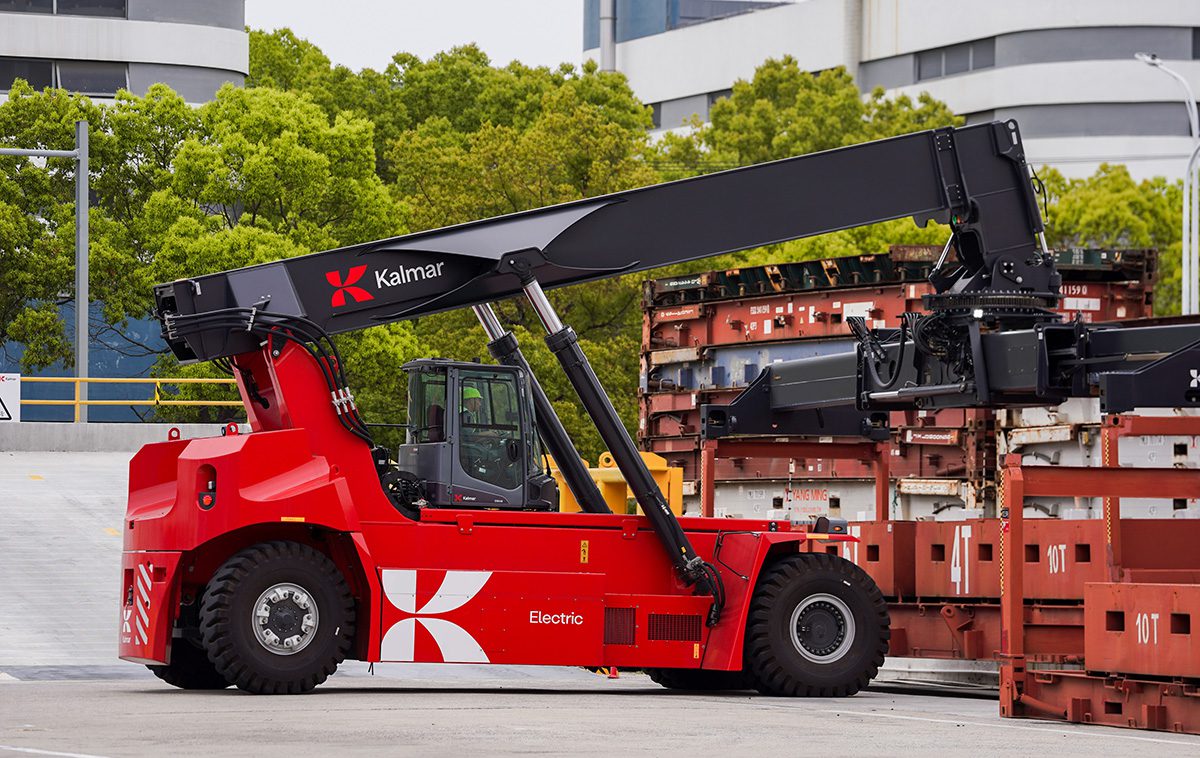
Shanghai, China – Kalmar, a global leader in cargo-handling machinery, has announced the conclusion of agreements with various customers in China for the supply of four advanced electric reach stackers. These strategic orders, originating from key logistics hubs including Inner Mongolia, Tianjin, Shanghai, and Hong Kong, signify a notable stride in China’s embrace of sustainable and efficient cargo operations.

The highly anticipated electric reach stackers are being manufactured at Kalmar’s state-of-the-art facility in Shanghai, a plant that recently underwent a significant expansion to bolster its production capabilities. Deliveries of these cutting-edge machines are slated to be completed by the close of 2026, marking a pivotal moment for electrified heavy machinery in the region.
Introducing Next-Generation Battery Technology and Fast Charging
A defining feature of these four electric reach stackers is the integration of Kalmar’s revolutionary next-generation lithium-ion battery technology. This innovative power solution is engineered to deliver superior energy capacity, ensuring longer operational cycles and reduced downtime for critical logistics tasks.
Beyond extended endurance, the new battery technology boasts improved thermal stability. This enhancement is crucial for maintaining optimal performance and safety across a diverse array of operating environments, from extreme temperatures to demanding duty cycles. Furthermore, it promises a more predictable performance curve, allowing operators to rely on consistent power delivery throughout their shifts.

Crucially, these machines are equipped with native GB/T fast charging capabilities. GB/T represents the predominant electric vehicle (EV) charging standard in China, ensuring seamless compatibility with the country’s extensive charging infrastructure. This direct connection to the local power grid facilitates rapid recharging, significantly enhancing the operational efficiency of the machines and minimizing interruptions to workflow.
Strategic Local Manufacturing and Market Responsiveness
The manufacturing of these electric reach stackers at Kalmar’s Shanghai plant highlights the company’s commitment to localizing its production and strengthening its presence within the Chinese market. The recent expansion of the facility was specifically aimed at increasing production capacity, a strategic move to meet the escalating demand for fully electric cargo-handling equipment.
John Zhang, Managing Director, Kalmar Shanghai Plant, emphasized the broader implications of these orders. He stated, “These orders reflect the accelerating adoption of electrified heavy machinery across China. They also highlight the strategic importance of our recently expanded Shanghai plant, which strengthens our local manufacturing capabilities and our ability to respond to growing demand in the Chinese market for fully electric cargo-handling equipment.” His remarks underscore the synergy between local production capabilities and market trends.
Surging Demand for Electrified Solutions in China
The orders come at a time when China’s logistics and industrial sectors are increasingly prioritizing sustainability and operational efficiency. There is a palpable shift towards greener technologies, driven by environmental mandates and the economic benefits of electric machinery.
Alex Tang, Vice President, Kalmar Greater China, corroborated this trend, noting the significant market evolution. He commented, “We have witnessed a surge in demand across China for electrified cargo-handling equipment as companies across a wide range of industries seek to achieve higher operational efficiency alongside reduced carbon emissions.” This demand spans various industrial sectors, all looking for advanced solutions to meet modern operational challenges.
Driving Environmental Sustainability and Operational Gains
The adoption of electric reach stackers plays a critical role in reducing the carbon footprint of cargo handling operations. By replacing traditional diesel-powered machines, these electric counterparts eliminate tailpipe emissions, contributing to cleaner air and a healthier environment within ports, terminals, and logistics centers.
Beyond environmental benefits, the operational advantages are substantial. Electric machines often boast lower noise levels, contributing to a better working environment for operators and surrounding communities. Reduced vibration and simplified maintenance requirements, due to fewer moving parts compared to internal combustion engines, also translate into lower operating costs and increased uptime for customers.
The predictable performance curve afforded by the new battery technology, combined with the convenience of fast charging, further enhances the overall efficiency and reliability of these essential pieces of equipment, solidifying their value proposition in demanding logistics environments.
Kalmar’s Role in China’s Green Logistics Transformation
Kalmar’s consistent innovation in electric cargo-handling solutions positions it as a key enabler of China’s transition towards green logistics. By providing state-of-the-art electric reach stackers that meet stringent performance and environmental criteria, Kalmar is actively supporting its customers in achieving their sustainability goals while maintaining high levels of productivity.
The geographical spread of these orders – from the northern region of Inner Mongolia to the southern metropolis of Hong Kong, encompassing major economic zones like Tianjin and Shanghai – illustrates the widespread and diverse need for advanced electric solutions across China’s vast and dynamic logistics landscape. As global supply chains continue to evolve, the shift towards electrified heavy machinery is becoming an imperative, and Kalmar remains at the forefront of this transformation.
Frequently Asked Questions (FAQ)
What types of customers placed these orders?
Customers located in key regions across China, including Inner Mongolia, Tianjin, Shanghai, and Hong Kong, have placed orders for these electric reach stackers. These areas represent significant logistical and industrial hubs, indicating a broad industry shift towards electrified cargo handling solutions.
When are the electric reach stackers expected to be delivered?
The four electric reach stackers are scheduled for delivery to their respective customers in China by the end of 2026. This timeline allows for the finalization of manufacturing processes at Kalmar’s expanded Shanghai plant and logistical arrangements for distribution.
What makes Kalmar’s new battery technology significant?
Kalmar’s next-generation lithium-ion battery technology offers increased energy capacity for longer operation, improved thermal stability for reliable performance in varied conditions, and a more predictable performance curve. These advancements ensure greater efficiency, safety, and consistent power delivery for heavy machinery.
What is GB/T fast charging and why is it important?
GB/T is the most common electric vehicle (EV) charging standard in China. The integration of native GB/T fast charging allows Kalmar’s reach stackers to connect directly to the local power grid for rapid recharging, significantly minimizing downtime and boosting overall operational efficiency in busy logistics environments.
How does Kalmar’s Shanghai plant expansion contribute to these orders?
The recently expanded Shanghai plant has increased Kalmar’s local manufacturing capabilities. This strategic enhancement enables the company to more effectively respond to the growing demand for fully electric cargo-handling equipment within the Chinese market, ensuring timely production and delivery of advanced machinery like the electric reach stackers.
What is the broader trend indicated by these orders in China?
These orders reflect an accelerating adoption of electrified heavy machinery and a surge in demand for green logistics solutions across China. Companies are increasingly seeking to achieve higher operational efficiency while simultaneously reducing their carbon emissions, aligning with national sustainability goals and modern business imperatives.