
Key Takeaways
- Next-generation electric vehicles (EVs) require advanced, faster, and more autonomous battery isolation strategies due to increasing voltages and energy densities.
- Traditional single-method isolation approaches are insufficient for severe fault conditions, necessitating a re-evaluation of protection systems.
- Combining active and passive isolation strategies creates robust architectures, addressing complex real-world fault scenarios and improving overall EV battery safety.
- Designers must assess the trade-offs between active, passive, and hybrid approaches, considering their impact on safety, redundancy, validation, and system resilience.
- Layered isolation strategies are crucial for strengthening protection, identifying potential safety gaps, and ensuring the robustness of modern EV battery systems.
As the electric vehicle (EV) market rapidly expands, the underlying battery systems are undergoing significant evolution. These advancements, marked by increasingly higher voltages, greater energy density, and more stringent safety requirements, present unique engineering challenges. Traditional isolation approaches, once considered adequate, are now struggling to cope effectively during severe fault events, demanding a paradigm shift in how EV battery safety is conceived and implemented.
The imperative for robust protection systems cannot be overstated. In situations such as short circuits, vehicle crashes, or critical control system failures, protection mechanisms must react with exceptional speed—often in milliseconds—to prevent potential risks from escalating. This critical need is driving the exploration of advanced solutions that combine various isolation strategies to fortify EV battery protection architectures.

The Evolution of EV Battery Systems and Safety Imperatives
Modern electric vehicles are designed for enhanced performance, longer range, and faster charging capabilities. These improvements are inherently linked to higher battery voltages and increased energy storage capacity. While beneficial for consumers, these characteristics amplify the potential hazards associated with fault conditions within the battery system. Consequently, the demands on EV battery safety systems have escalated dramatically.
Conventional isolation methods, typically relying on a single protection layer, can prove inadequate when confronted with the complexity and severity of faults in high-power battery packs. A momentary short circuit, a high-impact collision, or an unexpected software glitch can quickly compromise system integrity if the protective measures are not swift, comprehensive, and inherently redundant.
Challenges to Traditional Isolation Approaches
The speed at which a fault can propagate through a high-voltage battery system is a primary concern. Traditional circuit breakers or fuses, while effective in certain scenarios, might not always offer the sub-millisecond response times required to prevent thermal runaway or other catastrophic failures in an evolving EV architecture. Moreover, the reliability of these components under extreme mechanical stress, such as that experienced during a crash, becomes a significant factor.

Another challenge stems from the increasing complexity of battery management systems (BMS). While a sophisticated BMS is vital for monitoring and controlling battery operations, a failure within the control system itself can negate the effectiveness of purely software-dependent protection mechanisms. This highlights the need for a multi-faceted approach that does not solely rely on a single point of failure.
Active and Passive Isolation Strategies: A Detailed Look
To address these challenges, engineers are increasingly turning to a combination of active and passive isolation strategies. Each approach offers distinct advantages and limitations, and understanding their individual characteristics is crucial for designing a truly robust EV battery safety system.
Understanding Active Isolation Methods
Active isolation strategies involve dynamic components that respond to detected fault conditions by physically disconnecting power or energy flow. These often include contactors, relays, and other switchable devices that can be controlled by the vehicle’s electronic systems. The primary advantage of active isolation is its speed and reusability; a contactor can open and close multiple times, restoring functionality once a transient fault is resolved.
However, active systems rely heavily on sensors, control logic, and actuators, introducing potential points of failure if any of these components malfunction. Their effectiveness is intrinsically tied to the accuracy and speed of fault detection algorithms and the reliability of the electronic control unit. Furthermore, their operation requires power, meaning they could be compromised in a complete power loss scenario.
Exploring Passive Isolation Methods
Passive isolation strategies, in contrast, are generally simpler and operate without external control input. These typically involve fuses, insulation materials, and physical barriers designed to prevent current flow or contain energy release during a fault. The strength of passive methods lies in their inherent reliability and robustness; they are often ‘fail-safe’ and do not require power to operate.
Despite their reliability, passive elements like fuses are typically single-use devices, requiring replacement after activation. They might also have slower response times compared to active systems, depending on the fault current and fuse characteristics. Additionally, while insulation prevents unintended current paths, it can be compromised under severe mechanical stress or extreme thermal conditions, revealing potential safety gaps.
The Synergy of Hybrid Isolation Approaches
The most promising path forward lies in hybrid isolation approaches, which judiciously combine the strengths of both active and passive methods. This layered strategy aims to create a more comprehensive and resilient protection architecture, mitigating the limitations inherent in relying on a single isolation technique.
For instance, an active contactor might provide rapid, autonomous isolation for high-frequency events, backed by a passive fuse that offers ultimate protection against catastrophic overcurrents even if the active system fails. Similarly, robust physical insulation can provide a foundational layer of protection, while intelligent active monitoring systems ensure immediate detection and response to minor anomalies before they escalate.
Evaluating Trade-offs and System Resilience
Designing a hybrid system involves careful consideration of trade-offs. Engineers must evaluate the impact of different combinations on overall EV battery safety, redundancy, and system resilience. Redundancy ensures that if one protection mechanism fails, another is immediately available to take over, preventing a critical safety breach.
The validation effort for such complex systems is also significant, requiring extensive testing under various simulated and real-world fault conditions. A resilient system is one that can withstand a wide range of external stresses and internal failures while maintaining its fundamental safety functions, a benchmark increasingly demanded by industry standards and regulatory bodies.
Emerging Design Principles for Enhanced EV Battery Safety
The ongoing evolution of EV technology is driving the development of new design principles focused on autonomous and faster battery isolation. This includes integrating more intelligent fault detection algorithms directly into battery modules, enabling localized and rapid responses without relying solely on the central BMS.
These emerging principles also emphasize a system-level perspective, recognizing that EV battery safety is not just about the battery pack itself but its interaction with the entire vehicle architecture. This holistic view ensures that protection strategies are integrated seamlessly, from the cell level to the vehicle’s high-voltage bus, strengthening protection across a broader range of real-world fault scenarios.
Addressing Potential Safety Gaps
Relying on a singular isolation method inherently creates potential safety gaps. For example, a system solely dependent on an active contactor might fail if the control signal is lost or corrupted. Conversely, a system relying only on passive fuses might not respond quickly enough to prevent initial damage or might require frequent maintenance if fuses blow prematurely due to transient conditions.
By implementing layered isolation, designers can effectively close these gaps. Each layer acts as a safeguard for the others, providing a robust defense against various failure modes. This multi-layered approach enhances the overall system robustness, ensuring that critical safety functions remain operational even under extreme conditions.
Looking Ahead: Advancements in Battery Isolation Strategies
The imperative to improve EV battery safety is a continuous journey. As battery technology continues to push boundaries in terms of power and energy density, the methods for isolating and protecting these systems must evolve in tandem. The future of EV battery safety lies in increasingly intelligent, autonomous, and multi-layered protection architectures that can respond instantaneously and reliably to any threat.
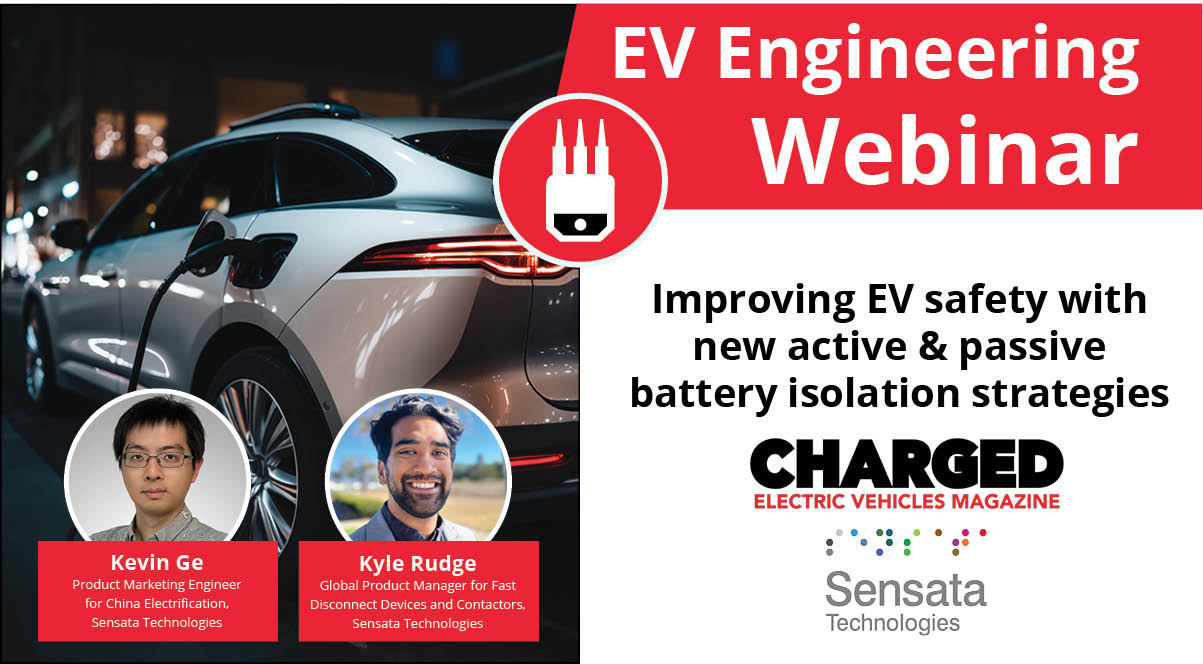
Industry experts and innovators are actively engaged in developing these next-generation solutions. For those seeking deeper insights into these critical developments, a forthcoming webinar, hosted by Sensata, will delve into these advanced concepts. Scheduled for Tuesday, July 14th at 10:30 am EDT, this free session offers a valuable opportunity to understand why next-generation EV architectures demand faster, more autonomous battery isolation strategies. Attendees will learn to evaluate the strengths and limitations of active, passive, and hybrid approaches under severe fault conditions and identify potential safety gaps. The webinar will also explore emerging design principles for improving battery safety, redundancy, and system robustness, providing a system-level perspective on how layered isolation strategies can enhance protection across real-world fault scenarios. Interested professionals can register now to gain practical insights into these essential EV battery safety design principles.
Frequently Asked Questions About EV Battery Safety and Isolation
What are the primary challenges to EV battery safety?
The main challenges stem from increasing battery voltages and energy densities. These factors heighten the risks associated with fault events like short circuits, crashes, or control system failures, demanding faster and more robust protection mechanisms than traditional single-layer isolation methods can provide.
Why are traditional isolation approaches insufficient for modern EVs?
Traditional methods often lack the speed (sub-millisecond response) and comprehensive protection required for high-voltage, high-energy EV battery systems. They may also be vulnerable to single points of failure, making them less effective against the complex and rapid propagation of severe fault conditions.
What is the difference between active and passive battery isolation?
Active isolation involves dynamic, controllable components (e.g., contactors) that respond to detected faults. Passive isolation uses inherent, non-controllable elements (e.g., fuses, insulation) that operate automatically without external input. Active systems are faster and reusable, while passive systems are inherently reliable and fail-safe.
How do hybrid isolation strategies improve EV battery safety?
Hybrid strategies combine active and passive methods to leverage their respective strengths and mitigate their weaknesses. This creates layered protection, where different mechanisms provide redundancy and ensure system resilience against a wider range of fault scenarios, enhancing overall EV battery safety.
What are ‘safety gaps’ in EV battery protection?
Safety gaps refer to vulnerabilities that arise when protection systems rely on a single isolation method. For example, a purely active system could fail if its control system malfunctions, while a purely passive system might have a slower response. Layered strategies aim to eliminate these gaps by providing multiple lines of defense.
Why is redundancy critical for EV battery protection systems?
Redundancy ensures that if one safety mechanism fails or is compromised during a fault event, another independent mechanism is available to take over its function. This crucial aspect prevents a single point of failure from leading to a catastrophic safety incident, significantly improving system robustness and reliability.