
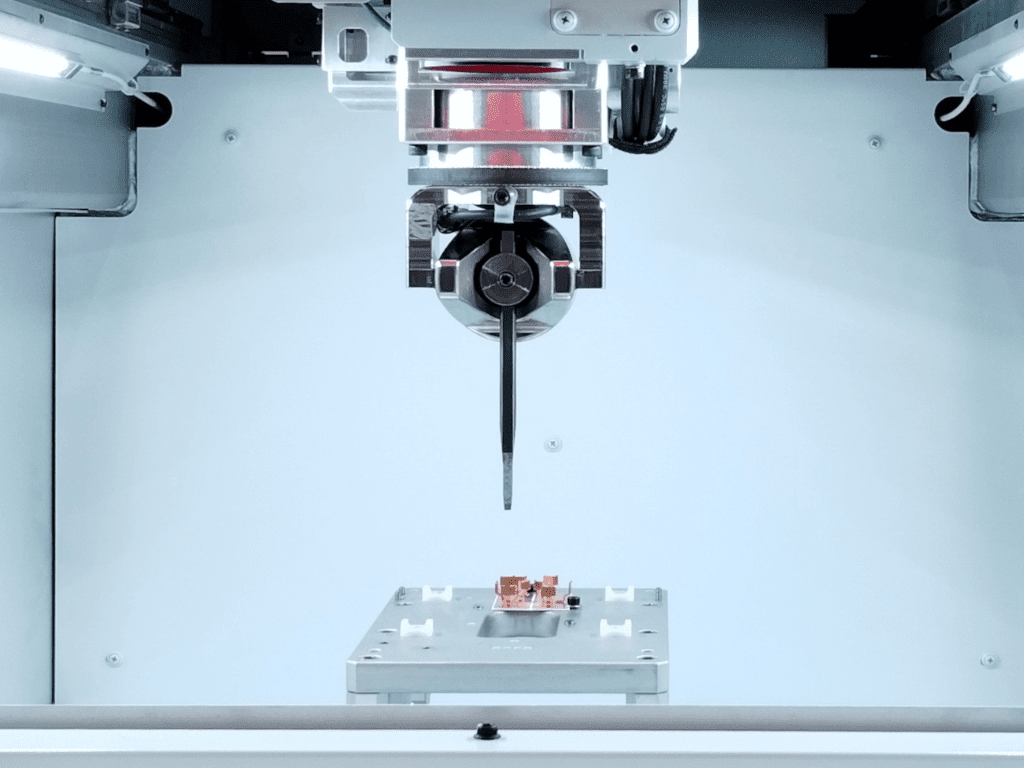
In a significant development for advanced electronics manufacturing, Kulicke & Soffa (K&S) has introduced ASTERION-TW, an innovative ultrasonic terminal welding system. This new system is specifically engineered to enhance next-generation power module manufacturing, expanding the capabilities of the company’s well-established ASTERION platform by offering another robust solid-state interconnect option.
The ASTERION-TW is poised to address critical demands in high-reliability applications across diverse sectors. Its design fundamentally deviates from conventional heat-based joining methods, offering a novel approach to bonding crucial power module components. This introduction marks a pivotal step in enabling more efficient, reliable, and environmentally conscious production processes for complex electronic assemblies.

Advancing Power Module Manufacturing with Precision
The system is meticulously designed to meet the stringent requirements of key markets, including transportation, renewable energy, and data centers. These industries increasingly rely on power modules that demand exceptional durability and performance, where traditional mass-reflow processes often present limitations due to their reliance on high temperatures and potential for thermal stress.
Kulicke & Soffa highlights that the ASTERION-TW employs ultrasonic welding, a distinct advantage over conventional heat-based joining techniques. This method allows for the secure bonding of copper terminals up to 2 mm thick without the necessity of external heat sources, adhesives, consumables, or chemical byproducts. This not only streamlines the manufacturing process but also contributes to enhanced product integrity and longevity.
The Innovation of Ultrasonic Terminal Welding
The increasing interest in ultrasonic terminal welding within power electronics stems from its fundamental nature as a solid-state joining process. Unlike reflow soldering, which involves melting the bulk interface of materials, ultrasonic welding joins materials without inducing melting. This distinction carries profound implications for the manufacturing landscape.
By avoiding melting, the process inherently helps to reduce thermal exposure to sensitive components, a critical factor in maintaining the performance and reliability of power modules. Furthermore, this solid-state approach simplifies the materials stack required for module assembly, offering manufacturers greater flexibility. It also makes it considerably easier to adapt interconnect schemes as power module designs evolve and new specifications emerge, supporting rapid innovation in the field.
Precision Engineering for Demanding Applications
The technical prowess of the ASTERION-TW is evident in its advanced motion system. It features a high-resolution linear motor positioning system, which is crucial for achieving precise and consistent weld placements. This system boasts an impressive weld placement repeatability of ±40 µm (3σ), ensuring high accuracy even in high-volume production environments.
Operational flexibility is another hallmark of the ASTERION-TW. The system supports a ±180° weld head rotation, allowing for intricate positioning and access to challenging areas within a module. Its generous 150 mm vertical stroke is particularly beneficial for reaching into deep cavities, accommodating a wide array of power module designs. Additionally, a substantial 300 mm x 300 mm work area provides ample space for various module sizes and configurations.
For manufacturers seeking to further optimize their production lines, an optional material-handling package is available. This package integrates an inline pallet conveyor equipped with high-force clamping mechanisms, ensuring stable and secure material transfer. An integrated cleaning station within this package further enhances process efficiency and final product quality, making the ASTERION-TW a comprehensive solution for modern manufacturing challenges.
Addressing Key Market Needs
The strategic focus of ASTERION-TW on high-reliability applications underscores the growing need for robust power module solutions across critical infrastructure and emerging technologies. In the transportation sector, particularly for electric vehicles, power modules are central to drivetrain efficiency and battery management. The system’s ability to create durable, heat-resistant bonds without thermal stress is vital for the longevity and safety of these components.
Similarly, the renewable energy sector, encompassing solar inverters and wind turbine converters, demands power electronics that can withstand harsh operating conditions and deliver consistent performance over decades. The enhanced reliability afforded by ultrasonic terminal welding contributes directly to the stability and efficiency of renewable energy systems. Data centers, with their insatiable demand for power and uncompromising uptime requirements, also benefit immensely from power modules assembled with superior interconnect integrity, minimizing failure points and improving overall system resilience.
A Greener Path to Production
Beyond its technical merits, ultrasonic terminal welding represents a more sustainable manufacturing alternative. Kulicke & Soffa emphasizes that this process is a greener option due to several key factors. It consumes less energy compared to heat-intensive methods, contributing to reduced operational costs and a lower carbon footprint for manufacturers.
The absence of consumables, adhesives, and chemical byproducts during the welding process means zero emissions are produced directly from the joining operation. This not only creates a safer work environment but also simplifies waste management and disposal. Furthermore, the solid-state nature of the bonds can improve the recyclability of assembled components, aligning with global efforts towards circular economy principles in electronics manufacturing.
Expanding the ASTERION Interconnect Ecosystem
ASTERION-TW is the latest addition to Kulicke & Soffa’s expansive power interconnect lineup, reinforcing the company’s commitment to providing comprehensive solutions. This ecosystem already includes the AVALINE clip attach systems, designed for efficient and reliable clip bonding, crucial for many power module architectures.
The foundational ASTERION platform, known for its wire and ribbon wedge bonding capabilities, continues to serve as a versatile base for various interconnect applications. Complementing these is ASTERION-PW for pin welding, offering specialized solutions for different types of power connections. The integration of ASTERION-TW further solidifies K&S’s position as a leader in providing advanced, interconnected manufacturing solutions for the power electronics industry.
Kulicke & Soffa’s Vision for Interconnect Solutions
Kulicke & Soffa’s strategic focus on developing advanced interconnect technologies is underscored by the introduction of the ASTERION-TW. As Ivy Qin, General Manager of Ball & Wedge Bonding at Kulicke & Soffa, stated, “ASTERION-TW reflects our commitment to deliver high performance interconnect solutions through engineering excellence and close collaboration with our customers.”
This statement highlights the company’s dual emphasis on cutting-edge technological development and a customer-centric approach. By working closely with manufacturers, Kulicke & Soffa aims to anticipate and address the evolving challenges in power module assembly, driving innovation that directly impacts product quality, reliability, and manufacturing efficiency across the global electronics industry.
Conclusion
The introduction of the ASTERION-TW system by Kulicke & Soffa signifies a notable advancement in power module manufacturing. By leveraging ultrasonic terminal welding, the system offers a heat-free, highly precise, and environmentally friendly method for bonding critical components. Its ability to serve demanding sectors like transportation, renewable energy, and data centers, coupled with its integration into a broader family of interconnect solutions, positions ASTERION-TW as a crucial tool for the future of high-reliability power electronics production.