
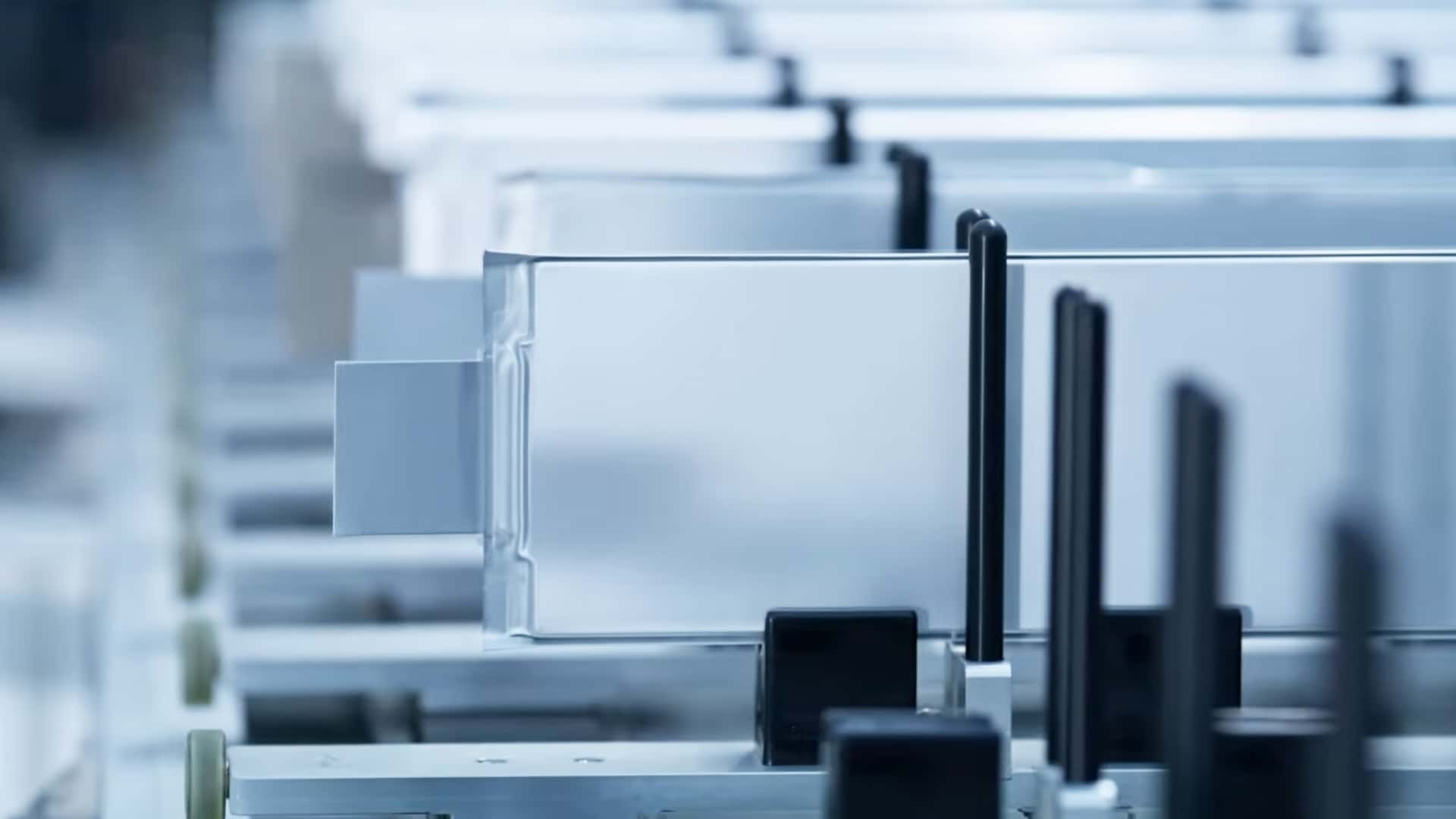
In a significant development poised to transform the electric vehicle (EV) landscape, Taiwan-based ProLogium, a company backed by automotive giant Mercedes-Benz, has announced the commencement of mass production for its all-solid-state battery cells. This milestone marks a critical step forward in the quest for safer, higher-performing, and faster-charging energy storage solutions for electric vehicles, moving beyond mere promises to tangible manufacturing.
Key Takeaways
- ProLogium has officially begun mass-producing its all-solid-state battery cells at its Taoyuan facility in Taiwan.
- The initial rollout features large-format pouch cells from its advanced Lithium Ceramic Battery (LCB) Generation 3.5.
- Independent tests by TÜV and UL Solutions confirm exceptional energy density (381 Wh/kg) and adherence to strict all-solid-state criteria.
- These advanced solid-state batteries promise significantly longer EV driving ranges, remarkably faster charging times, and superior safety compared to conventional lithium-ion technologies.
- ProLogium has outlined ambitious expansion plans, including doubling production in Taiwan by 2030 and establishing a large-scale European gigafactory in France with up to 44 GWh capacity.
The Dawn of Mass-Produced Solid-State Batteries
The global race to commercialize solid-state batteries has reached a pivotal juncture. ProLogium’s announcement distinguishes itself from previous claims made by other startups, such as Finland’s Donut Lab, by presenting concrete evidence and significant industry backing. The company, which counts Mercedes-Benz among its key investors, is now rolling out its advanced battery cells from a gigawatt-capable facility in Taoyuan, Taiwan.

This commencement of mass production is not merely a technical achievement; it represents a major industry shift. For years, solid-state batteries have been considered the ‘holy grail’ of EV battery technology, promising to overcome many limitations of current lithium-ion cells. ProLogium’s ability to transition from development to large-scale manufacturing signals a new era for electric mobility, paving the way for a new generation of electric vehicles with enhanced capabilities.
Unpacking ProLogium’s Lithium Ceramic Battery (LCB) Technology
At the heart of this breakthrough is ProLogium’s Generation 3.5 large-format 185.4 ampere-hour Lithium Ceramic Battery (LCB) cell. These solid-state battery cells have undergone rigorous testing, with impressive results that underscore their potential to redefine EV performance. Germany’s TÜV, a respected independent testing body, confirmed a gravimetric energy density of 381 watt-hours per kilogram (Wh/kg) and a volumetric energy density of 903 watt-hours per liter (Wh/L).
To put these figures into perspective, these measurements represent a substantial improvement of approximately 30 percent over the mainstream nickel-manganese-cobalt (NMC) cells commonly found in many electric cars today, which typically achieve around 300 Wh/kg at the cell level. More cost-effective lithium-iron-phosphate (LFP) cells, increasingly prevalent in EVs globally, offer a gravimetric energy density ranging between 150 and 200 Wh/kg. The significantly higher energy density of ProLogium’s solid-state batteries translates directly into longer driving ranges for electric vehicles, addressing a key concern for potential EV adopters.

Validating the “All-Solid-State” Claim
Beyond impressive performance metrics, the credibility of ProLogium’s claims has been independently verified. UL Solutions, a global leader in safety science and certification, subjected ProLogium’s large-format cell to China’s new GB/T 43568-2026 methodology. Introduced in July, this standard is specifically designed to differentiate genuine all-solid-state cells from hybrid units that still incorporate some form of liquid electrolyte.
During the stringent test, the solid-state battery cell was held in a vacuum for six hours at a constant temperature of 248°F (120°C). The recorded weight loss was less than 0.05 percent, a figure well below the 0.5 percent maximum threshold required for products to be legitimately labeled as all-solid-state batteries. This rigorous validation from a reputable third party reinforces the trustworthiness and scientific integrity of ProLogium’s manufacturing process and the composition of its innovative solid-state battery technology.
The Gen 3.5 cell architecture features a composite solid electrolyte and a ceramic separator. This is coupled with a proprietary edge-frame structure designed to isolate potential burrs effectively while ensuring optimal sealing and insulation. These design elements are crucial for the stability and long-term performance of the solid-state batteries.
Enhanced Safety and Performance Benchmarks
Safety has always been a paramount concern in battery technology, especially for high-energy density applications like electric vehicles. ProLogium’s previous Generation 3 cell has already demonstrated remarkable safety characteristics. The company asserts that this iteration can fast-charge from 5 percent to 80 percent state of charge in a mere eight and a half minutes, a performance metric that significantly reduces charging anxiety for EV users.
Furthermore, ProLogium has put its solid-state battery cells through extreme safety tests. The Gen 3 cell demonstrated robust resistance to ignition, even when subjected to bullet impacts, when exposed to temperatures as high as 338°F (170°C), and under conditions of overcharging at twice its rated voltage. These safety attributes are critical for consumer confidence and broader adoption of electric vehicles, effectively addressing potential fire risks associated with traditional liquid-electrolyte batteries.
Strategic Expansion and Future Prospects
While the initial production capacity of ProLogium’s Taoyuan facility for Gen 3.5 large-format pouch cells stands at 0.5 gigawatt-hours (GWh), this represents a foundational step. This capacity is sufficient to produce approximately 6,000 EV battery packs, assuming each pack has an 80 kWh capacity. Although this is modest compared to traditional lithium-ion EV battery plants, it is crucial for a new technology’s initial market entry and scaling.
ProLogium has ambitious expansion plans in motion. The Taiwanese facility is projected to double its solid-state battery production capacity by 2030. More significantly, a second, larger production facility is planned for Dunkirk, France. This European gigafactory is designed for an initial annual output of 4 GWh, with a maximum scalable capacity of an impressive 44 GWh. The French factory is slated to become operational in 2028, with production steadily ramping up through 2030. Such strategic global expansion underscores ProLogium’s commitment to meeting the anticipated demand for solid-state batteries in the rapidly growing electric vehicle market.
The Next Frontier: ProLogium’s Gen 4 Battery
Looking ahead, ProLogium is already signaling the imminent arrival of its Generation 4 battery cell. This next-gen solid-state battery technology promises to elevate performance even further. Featuring a fully inorganic superfluidized electrolyte system, the Gen 4 battery is expected to deliver even faster charging times and superior performance in low-temperature environments, addressing another critical concern for EV owners in diverse climates.
Crucially, the upgrade path from Gen 3.5 to Gen 4 is designed to be highly cost-effective. ProLogium indicates that factories configured for Gen 3.5 cells will require only about a 10 percent modification of their existing line equipment to commence assembling Gen 4 cells. This minimal capital expenditure for upgrades ensures that the transition to more advanced solid-state batteries can be managed efficiently, helping to keep production costs down and accelerate market readiness.
The Broader Impact on Electric Mobility
The successful mass production of genuine solid-state batteries by ProLogium holds profound implications for the entire electric vehicle industry and sustainable transportation at large. By delivering significantly higher energy density, these solid-state batteries enable EVs to achieve much longer driving ranges on a single charge, effectively mitigating range anxiety, a major barrier to EV adoption.
Coupled with rapid charging capabilities and inherently superior safety characteristics, this breakthrough solid-state battery technology has the potential to make electric vehicles an even more compelling and practical choice for consumers worldwide. As companies like ProLogium scale up their production and integrate these advanced solid-state batteries into mainstream EV models, the automotive sector will witness a transformative acceleration towards a fully electric future, driven by innovation, enhanced performance, and increased reliability.
FAQ Section
What are solid-state batteries?
Solid-state batteries are a type of battery technology that uses a solid electrolyte instead of the liquid or gel polymer electrolytes found in conventional lithium-ion batteries. This solid material allows for higher energy density, faster charging, and significantly improved safety, as it eliminates the risk of leakage or flammability associated with liquid electrolytes.
How do ProLogium’s solid-state batteries compare to current EV batteries?
ProLogium’s Generation 3.5 Lithium Ceramic Battery (LCB) cells offer a gravimetric energy density of 381 Wh/kg. This is approximately 30% higher than typical NMC (nickel-manganese-cobalt) lithium-ion cells, which usually achieve around 300 Wh/kg. This higher energy density translates to longer driving ranges for electric vehicles.
What makes ProLogium’s mass production announcement significant?
This announcement is significant because it moves solid-state battery technology from research and development into actual mass production. Many companies have promised solid-state batteries, but ProLogium, with its Mercedes-Benz backing and independent validation, appears to be the first to achieve this critical manufacturing milestone for large-format cells.
What safety features do these solid-state batteries offer?
ProLogium’s solid-state batteries exhibit enhanced safety. The Gen 3 cells have been shown not to catch fire even when shot with a bullet, exposed to high temperatures (up to 338°F or 170°C), or overcharged at twice their rated voltage. This inherent safety is a key advantage over traditional liquid-electrolyte batteries, reducing thermal runaway risks.
What are ProLogium’s future production plans?
ProLogium plans to expand significantly. Its Taoyuan facility in Taiwan will double production by 2030. Additionally, a new gigafactory in Dunkirk, France, is scheduled to go online in 2028 with an initial capacity of 4 GWh, eventually scaling up to 44 GWh. These expansions are crucial for meeting anticipated global demand for solid-state batteries.