
Key Takeaways
- Taiwanese firm ProLogium has initiated mass production of all-solid-state battery cells.
- Backed by Mercedes-Benz, the company is producing large-format pouch cells at its Taoyuan facility.
- The Lithium Ceramic Battery (LCB) Generation 3.5 boasts 381 Wh/kg energy density and promises rapid charging.
- Independent tests by TÜV and UL Solutions confirm the cells’ performance and “all-solid-state” designation.
- ProLogium plans significant expansion, including a new 44 GWh facility in France by 2028.
In a significant development for the electric vehicle (EV) industry, Taiwan’s ProLogium, a company notably backed by automotive giant Mercedes-Benz, has announced the commencement of mass production for its all-solid-state battery cells. This milestone marks a crucial step in the long-anticipated transition towards next-generation battery technology, promising enhanced performance and safety for future EVs.
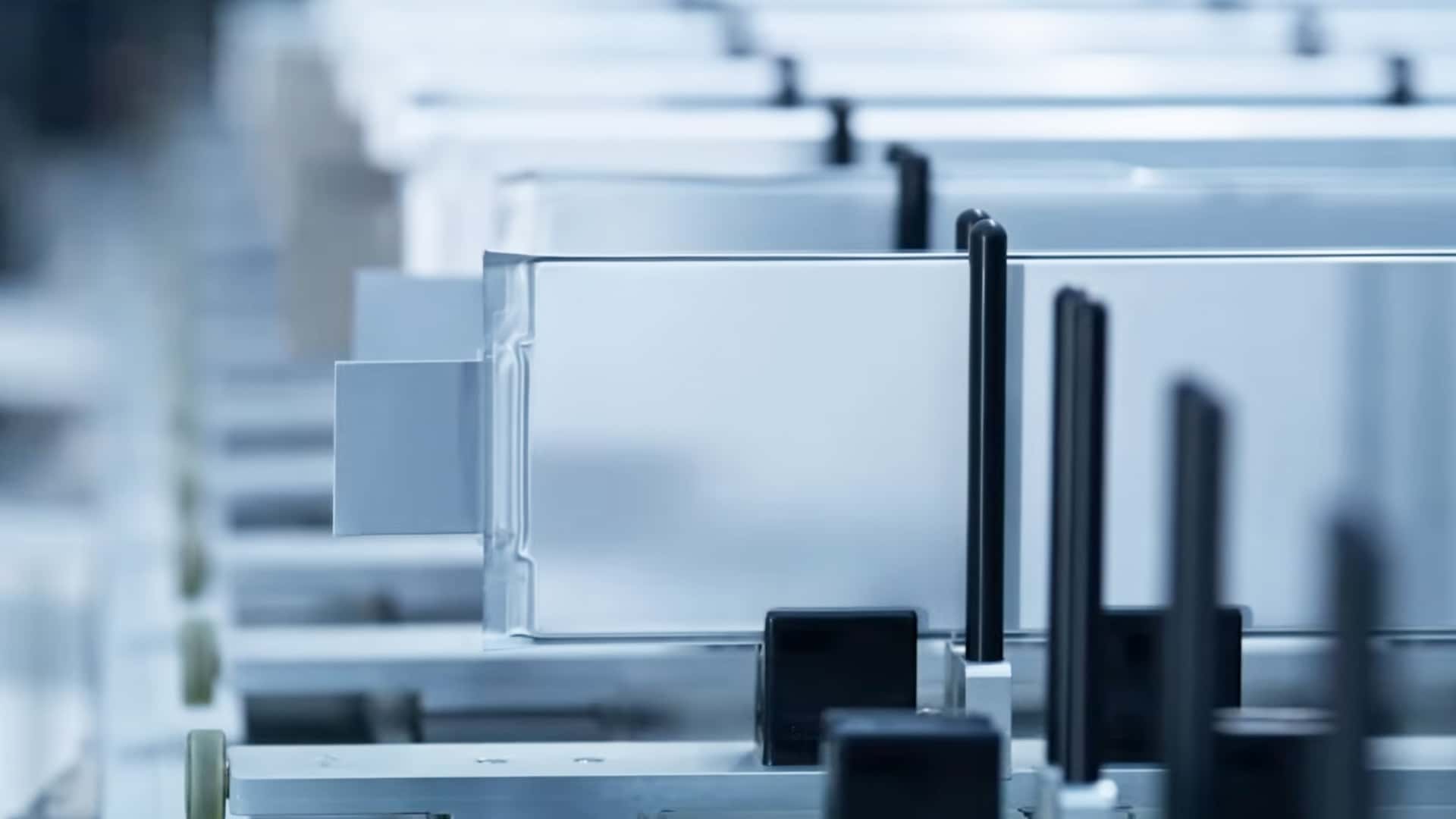
The first large-format pouch cells are now rolling off the assembly line at ProLogium’s gigawatt-capable facility in Taoyuan, Taiwan. This move signals a tangible shift from laboratory prototypes to commercial scalability, potentially accelerating the widespread adoption of solid-state battery technology across the global automotive landscape.

The Promise of Solid-State Battery Technology
Solid-state batteries are widely regarded as a ‘holy grail’ in energy storage, offering substantial improvements over conventional lithium-ion batteries. Their fundamental difference lies in replacing the liquid or gel electrolyte with a solid material, which inherently enhances safety, energy density, and charging speeds.
This innovative design minimizes the risk of thermal runaway, a common concern with liquid electrolytes, thereby improving overall battery safety. Furthermore, solid-state batteries are projected to deliver longer driving ranges and significantly reduced charging times, addressing two primary points of consumer apprehension regarding electric vehicles.
ProLogium’s Breakthrough: Gen 3.5 Lithium Ceramic Battery
ProLogium’s latest offering, the Generation 3.5 large-format 185.4 ampere-hour Lithium Ceramic Battery (LCB) cell, represents a pinnacle of its research and development efforts. This cell is now being manufactured at the Taoke assembly line, affirming the company’s commitment to industrializing advanced battery solutions.

Independent evaluations conducted by Germany’s TÜV have corroborated the impressive specifications of these cells. The LCB cell demonstrates a gravimetric energy density of 381 watt-hours per kilogram (Wh/kg) and a volumetric energy density of 903 watt-hours per liter (Wh/L). These figures underscore a substantial leap in battery performance.
Comparing Energy Densities: A Clear Advantage
To put ProLogium’s achievement into perspective, the energy density of its Gen 3.5 LCB cell is approximately 30% higher than that of mainstream nickel-manganese-cobalt (NMC) cells. NMC batteries, which power a majority of electric cars in markets like the United States, typically offer around 300 Wh/kg at the cell level.
More cost-effective lithium-iron-phosphate (LFP) cells, increasingly prevalent in global EV markets, possess a gravimetric energy density ranging between 150 and 200 Wh/kg. The enhanced energy density of ProLogium’s solid-state battery translates directly into extended vehicle ranges and potentially lighter battery packs.
Independent Verification and Safety Standards
The credibility of ProLogium’s claims is bolstered by rigorous testing from reputable third-party certification bodies. UL Solutions, a global leader in safety science and certification, subjected ProLogium’s large-format cell to China’s new GB/T 43568-2026 methodology. Introduced in July 2023, this standard aims to precisely distinguish between truly all-solid-state cells and those that still incorporate elements of liquid electrolyte.
During the UL Solutions test, the cell was maintained in a vacuum for six hours at a constant temperature of 248°F (120°C). The recorded weight loss was remarkably less than 0.05%. This result is significantly below the 0.5% maximum threshold stipulated by the GB/T 43568-2026 standard, unequivocally permitting ProLogium to label its products as all-solid-state batteries.
Technological Innovations and Robust Safety
The core of ProLogium’s Gen 3.5 cell technology lies in its composite solid electrolyte and a ceramic separator. These components are integrated with a proprietary edge-frame structure, designed to effectively isolate potential burrs while ensuring optimal sealing and insulation within the battery cell.
Earlier iterations, such as ProLogium’s Gen 3 cell, have already demonstrated exceptional safety characteristics. These include an ability to fast-charge from 5% to 80% state of charge in just eight and a half minutes. Furthermore, the battery has proven resistant to ignition even when subjected to extreme conditions, such as being shot with a bullet, exposure to temperatures as high as 338°F (170°C), and overcharging at twice its rated voltage.
Scaling Up: Production Capacity and Global Expansion
While the initial production capacity of ProLogium’s Taoyuan facility, at 0.5 gigawatt-hours (GWh), may seem modest compared to traditional lithium-ion EV battery plants—equating to roughly 6,000 EV battery packs with 80 kWh capacity each—the company has outlined ambitious expansion plans.
The Taiwanese facility is projected to double its production output by 2030. Concurrently, ProLogium is establishing a second, much larger production facility in Dunkirk, France. This European plant is engineered for an initial annual output of 4 GWh, with the capability to scale up to a maximum capacity of 44 GWh. The French factory is slated to commence operations in 2028, with production steadily increasing through 2030, signifying a major global footprint for solid-state battery manufacturing.
The Horizon: Next-Generation Battery Cells
Looking ahead, ProLogium has indicated that its Generation 4 battery cell is on the cusp of introduction. This next-gen battery promises further advancements, including an entirely inorganic superfluidized electrolyte system. This innovation is expected to deliver even faster charging times and superior performance in low-temperature environments, crucial for diverse global climates.
Critically, factories configured for Gen 3.5 cell production will require only a 10% upgrade to their line equipment to transition to assembling Gen 4 cells. This cost-effective upgrade path is designed to keep manufacturing expenses down, facilitating a smoother and more economical evolution of battery technology.
Impact on the Electric Vehicle Landscape
The successful mass production of a robust solid-state battery by ProLogium, with the backing of a major automotive player like Mercedes-Benz, could be a game-changer for the electric vehicle industry. It provides a credible answer to claims made by other startups, such as Finland’s Donut Lab, by offering concrete evidence of commercial readiness.
This development paves the way for electric vehicles with significantly longer ranges, quicker refueling (charging) times, and enhanced safety, addressing some of the most critical barriers to wider EV adoption. As production scales and technology continues to evolve, solid-state batteries like ProLogium’s could redefine consumer expectations and accelerate the global transition to sustainable mobility.
FAQ Section
What is a solid-state battery?
A solid-state battery uses a solid electrolyte instead of the liquid or gel electrolyte found in conventional lithium-ion batteries. This change offers improved safety, higher energy density for longer range, and faster charging capabilities due to the stable solid material.
How do ProLogium’s solid-state batteries compare to current EV batteries?
ProLogium’s Generation 3.5 Lithium Ceramic Battery (LCB) cells achieve a gravimetric energy density of 381 Wh/kg. This is roughly 30% better than mainstream NMC cells (around 300 Wh/kg) and significantly higher than LFP cells (150-200 Wh/kg), leading to better range and performance.
What is the significance of “mass production” for solid-state batteries?
Mass production indicates that solid-state battery technology has moved beyond the prototype phase and is ready for commercial scaling. This is crucial for integrating these advanced batteries into electric vehicles, making them available to a wider market and accelerating EV innovation.
Who are ProLogium’s key investors?
ProLogium has attracted investments from major industry players, notably Mercedes-Benz. This backing underscores the automotive sector’s confidence in ProLogium’s technology and its potential to shape the future of electric vehicle powertrains.
What are the safety features of ProLogium’s battery cells?
ProLogium’s solid-state cells exhibit robust safety. Their Gen 3 cell, for example, is non-flammable even when shot with a bullet, exposed to temperatures up to 338°F (170°C), or overcharged at twice its rated voltage, significantly reducing fire risks.
What are ProLogium’s future production plans?
ProLogium plans to double the capacity of its Taoyuan facility by 2030. Additionally, a new factory in Dunkirk, France, is projected to go online in 2028 with an initial 4 GWh output, eventually expanding to a maximum capacity of 44 GWh by 2030.
What distinguishes ProLogium’s Generation 3.5 cell?
The Gen 3.5 cell features a composite solid electrolyte, a ceramic separator, and a proprietary edge-frame structure that ensures insulation and sealing. Its high energy density (381 Wh/kg) and rapid charging times (5% to 80% in under 10 minutes) set it apart from current battery technologies.