
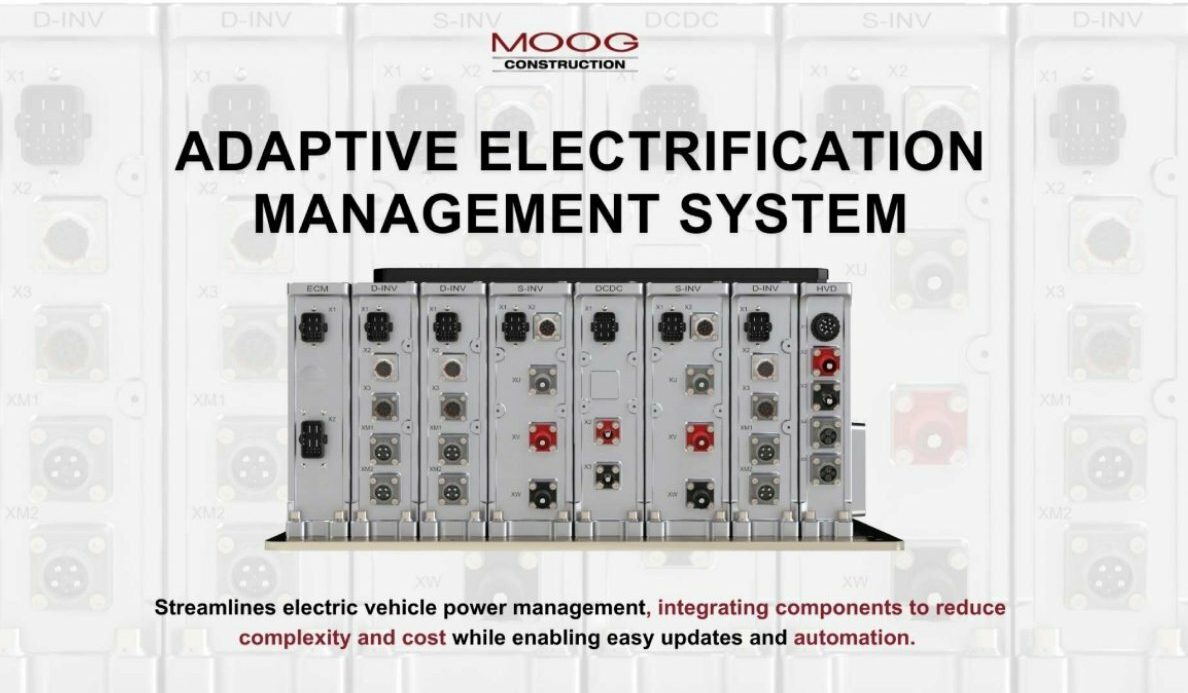
Motion and fluid control system specialist Moog has introduced a groundbreaking electronics system designed to streamline the electrification of construction equipment. The Adaptive Electrification Management System (AEMS) aims to significantly reduce space requirements and manufacturing costs for electric vehicles (EVs) in the heavy-duty sector.
Streamlining Electrification for Construction Machinery
The AEMS is engineered to assist design engineers and product development teams at construction vehicle Original Equipment Manufacturers (OEMs). Its primary goal is to facilitate the efficient and cost-effective electrification, automation, and digitalization of heavy machinery. This integrated approach is crucial for the next generation of construction equipment.

A Compact, Modular Solution
Currently featured in advanced machines like Bobcat’s Rogue X3, the patent-pending AEMS presents itself as a “compact bookshelf.” This modular unit efficiently houses a configurable controller, a DC/DC converter, high-voltage distribution systems, and single- and dual-axis inverters. This design allows OEMs to electrify and automate a wide spectrum of machinery, ranging from compact track loaders weighing six tons to excavators weighing up to 25 tons, using a standardized part number for each module.
Key Benefits for OEMs and End-Users
Dr. Nate Keller, Moog’s Strategic Business Manager, highlighted the system’s advantages. He stated, “AEMS is the most efficient path to achieving electrification, automation and digitalization goals while slashing the cost and boosting the reliability of producing and servicing next-generation vehicles.”
A significant innovation within AEMS is the integration of a high-voltage busbar and a shared coolant manifold. This design dramatically reduces the need for extensive cabling and hoses, cutting them by approximately 30%. This simplification not only makes assembly and maintenance more straightforward but also contributes to overall cost reduction.

Furthermore, the modular nature of AEMS ensures that maintenance teams can quickly replace faulty modules directly on job sites. This rapid on-site repair capability minimizes downtime, a critical factor in the construction industry.
Enhanced Software and Diagnostics
Beyond its hardware integration, AEMS excels in managing multiple EV functions through a streamlined software architecture. The system incorporates built-in diagnostics, enabling consistent and reliable monitoring of key functions such as traction, steering, and lifting across various machine platforms. This comprehensive monitoring capability enhances operational safety and efficiency.
Dr. Keller also shared insights into the system’s rapid deployment capabilities. “We recently developed a machine for an OEM with AEMS, completing all system programming in under 15 minutes,” he noted. “AEMS reduces testing and configuration time by up to eight hours and supports over-the-air software updates post-production to add new features seamlessly.”
The ability for over-the-air (OTA) software updates is a significant advantage, allowing manufacturers to introduce new functionalities and improvements to vehicles even after they have been delivered to customers. This ensures that construction equipment remains up-to-date with the latest technological advancements, enhancing its long-term value and performance.
Impact on the Electric Off-Highway Vehicle Market
Moog’s AEMS represents a significant step forward in the electrification of the off-highway vehicle sector. By addressing key challenges related to space, cost, complexity, and serviceability, the system empowers manufacturers to accelerate their transition to electric powertrains. This innovation is expected to drive wider adoption of electric construction equipment, contributing to reduced emissions and improved operational efficiency in the industry.
The focus on standardization through modular components also offers OEMs greater flexibility and scalability in their product development. This allows them to leverage a common electronic architecture across different machine models, reducing development cycles and R&D investment.
The integration of advanced software management and diagnostics further enhances the overall value proposition of AEMS. It enables predictive maintenance, optimizes performance, and ensures a higher level of reliability for these demanding industrial applications.