
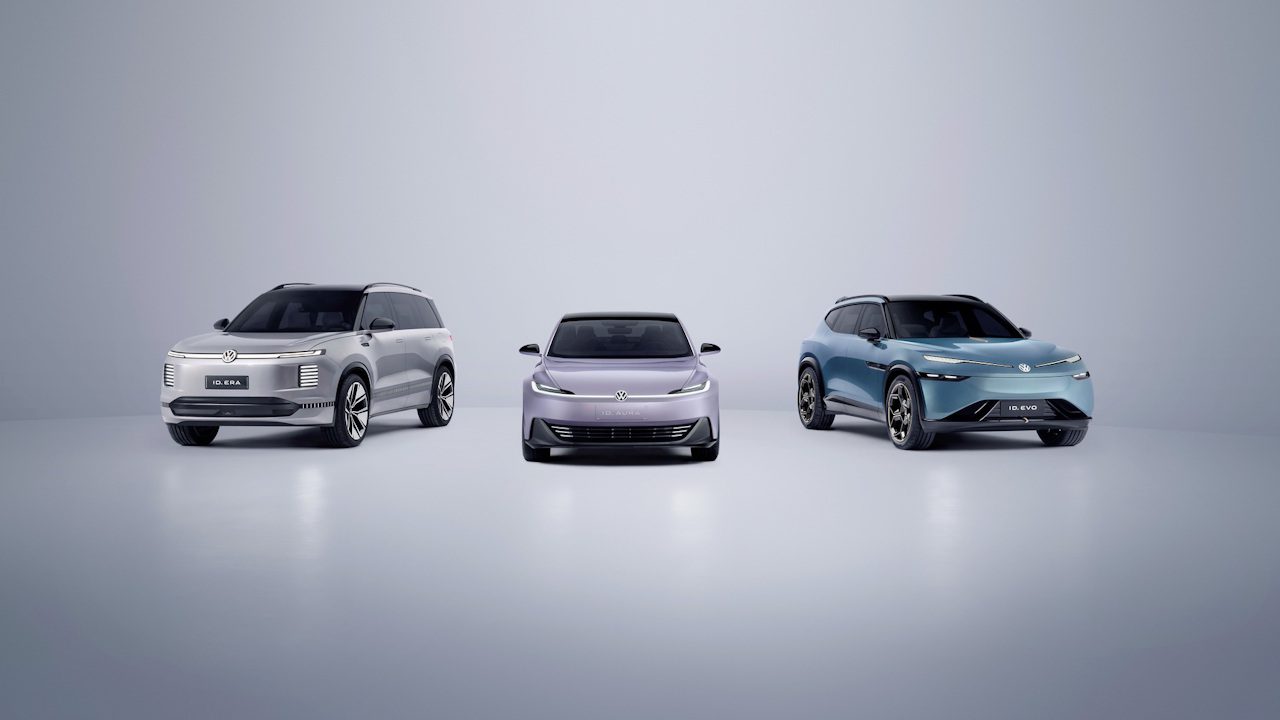
German automotive giant Volkswagen Group has reported missing its 2025 European Union (EU) fleet CO2 emissions compliance targets. Despite a substantial increase in electric vehicle sales, the company’s average emissions for its passenger fleet landed just above the mandated threshold. However, Volkswagen will not face immediate penalties due to the EU’s flexible compliance framework.
Improved Financial Performance Amidst Challenges
Volkswagen Group, which oversees a diverse portfolio of brands including Audi, Bentley, Porsche, and Škoda, released its Annual Report & Full Year Results for 2025 this week. The report indicates a strengthening financial performance, mirroring the previous year’s results, even as the company navigated increasing global economic pressures, such as U.S. tariffs.
These challenging market conditions impacted Volkswagen’s sales revenue and vehicle deliveries. Nonetheless, the group achieved a significant milestone, with the number of battery electric vehicles (BEVs) delivered in 2025 surging by 32 percent, bringing the total close to one million units.
CO2 Emissions Data Reveals Target Shortfall
According to Volkswagen’s detailed 673-page annual report, the group’s passenger fleet CO2 emissions data for the 27 EU member states, plus Norway and Iceland (EU27+2), was revealed. The data, calculated based on statutory requirements, shows that Volkswagen’s passenger fleet emitted an average of 100 grams of CO2 per kilometre (g CO2/km).
This figure of 100g CO2/km means Volkswagen narrowly missed the revised 2025 targets set by the European Commission. The EU’s executive body had mandated a 15 percent reduction in CO2 emissions compared to 2021 levels. For Volkswagen’s new passenger car fleet, this translated to a specific target of 95g CO2/km. The reported average of 100g CO2/km also fell short of the industry-average weight-based fleet target, which stood at 93.6g CO2/km.
Progress Made, But Not Enough for 2025 Mandate
The 2025 emissions figure represents a notable improvement from previous years. In 2024, the fleet average was 118g CO2/km, and for the three years preceding that, it remained at 119g CO2/km. Despite this considerable decrease, the group’s 2025 performance was still not sufficient to meet the legally stipulated targets.
EU’s Flexible Compliance Mechanism Offers Respite
While falling short of the 2025 goal, Volkswagen Group is not subject to immediate penalties. This is largely due to the European Commission’s established three-year compensation mechanism, which provides car manufacturers with a degree of flexibility. This system allows companies to underperform in a given year, provided they compensate for the shortfall in subsequent years.
In its Annual Report, Volkswagen stated its objective: “The Volkswagen Group’s goal is to achieve the CO2 fleet limits in EU27+2 in each year over the three-year period from 2025 to 2027 primarily through its own efforts.” However, the company also cautioned that “the persistently challenging and volatile market environment, particularly in the field of e-mobility, [means] achieving the targets remains a major challenge.”
Accelerated EV Push and Future Strategy
Industry analysts, such as Matthias Schmidt of Schmidt Automotive Research, suggest that Volkswagen is banking on an intensified push for electric vehicles in 2026. This strategy is expected to drive a further reduction in overall CO2 fleet emissions.
The anticipated improvement is linked to the upcoming rollout of the ‘Electric Urban Car Family’ from Volkswagen’s core brands. These new models are slated to feature lithium iron phosphate (LFP) batteries. The adoption of LFP technology is strategic, aiming to lower production costs, enhance profit margins on BEVs, and reduce the financial provisions the company sets aside to meet its emissions targets.
The group’s commitment to electrification and emissions reduction remains a central pillar of its long-term strategy, even as it navigates the complexities of regulatory compliance and market dynamics in the rapidly evolving automotive landscape.