
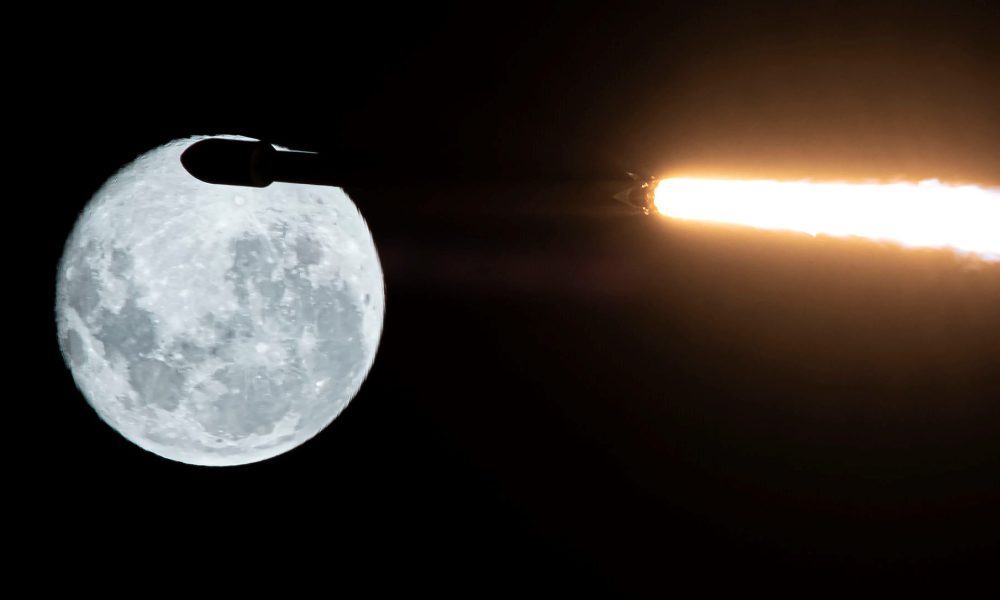
For the first time in over half a century, American astronauts are poised to journey towards the Moon, marking a monumental step in humanity’s renewed quest for lunar exploration. NASA’s Artemis II mission is slated for launch as early as this week from Kennedy Space Center in Florida, carrying a four-member crew on a rigorous 10-day expedition that will circumnavigate the Moon before returning to Earth.
While this particular mission will not involve a lunar landing, it signifies the first crewed flight to travel beyond low Earth orbit since the Apollo 17 mission in December 1972. This pioneering voyage is crucial, as it lays the foundational groundwork for a series of ambitious lunar endeavors that will eventually include the high-stakes SpaceX Moon mission.

Artemis II: A Crucial Test for Human Deep Space Travel
The Artemis II mission represents a pivotal moment in NASA’s long-term strategy to establish a sustainable human presence on the Moon and eventually, Mars. The crewed flight will thoroughly test the agency’s Space Launch System (SLS) rocket, the most powerful rocket ever built, and the Orion spacecraft, specifically designed for deep space exploration.
During its 10-day duration, the Orion spacecraft will perform a precise trajectory around the Moon, utilizing lunar gravity to slingshot back towards Earth for a targeted splashdown in the Pacific Ocean around April 10. This complex maneuver is designed to validate all systems with human occupants, building upon the success of the uncrewed Artemis I mission in 2022 that proved the hardware’s capabilities.
According to NASA’s official countdown blog, preparations for the historic launch are proceeding smoothly, with an encouraging 80 percent chance of favorable weather conditions reported. The crew expressed their readiness and excitement ahead of the journey, with Commander Wiseman reportedly telling reporters upon his arrival at Kennedy Space Center, “Hey, let’s go to the moon!”

The success of Artemis II is paramount. It will provide invaluable data on spacecraft performance, crew health, and operational procedures in a deep space environment, ensuring the safety and reliability of subsequent missions that aim for lunar landings and sustained orbital presence.
SpaceX’s Pivotal Role: The Lunar Lander Contract
While Artemis II focuses on proving human endurance and spacecraft capabilities, the subsequent phases of the Artemis program hinge significantly on a critical component: the lunar lander. This is where Elon Musk’s SpaceX enters the narrative with a transformative role that will define future lunar landings.
In 2021, NASA awarded SpaceX a substantial $2.89 billion contract to develop the Starship Human Landing System (HLS). This specialized version of SpaceX’s Starship vehicle is engineered to transport astronauts from lunar orbit directly to the surface of the Moon, making it an indispensable part of NASA’s ambitious plans for the first crewed lunar landing since Apollo.
Initially, the Starship HLS was envisioned to facilitate the first human return to the lunar surface under the Artemis III mission. However, the intricate development timeline for Starship and its associated technologies necessitated a significant re-evaluation and restructuring of the entire Artemis mission sequence.
Navigating Technical Hurdles: Orbital Refueling Challenges
The pathway for the Starship Human Landing System to deliver astronauts to the Moon’s surface is fraught with unprecedented technical challenges, the most formidable of which is orbital refueling. This complex procedure, essential for the Starship HLS, demands a scale of in-orbit propellant transfer that no rocket has yet demonstrated.
The Starship HLS requires an estimated ten tanker launches to load sufficient propellant into an orbital depot in low Earth orbit before it can accumulate the necessary fuel reserves to embark on its journey to the lunar surface. SpaceX intends to execute this intricate refueling process using its advanced V3 Starship.
Until this orbital refueling demonstration successfully takes place and proves viable, the operational readiness of the Starship Moon lander remains a significant question mark. The successful mastery of this capability is not merely a technical milestone but a fundamental prerequisite for the ambitious deep space missions planned by both NASA and SpaceX.
Artemis Mission Sequence Restructured Amidst Delays
The complexities surrounding Starship’s development and the inherent challenges of orbital refueling have led NASA to strategically revise the Artemis mission timelines. In February 2026, NASA Administrator Jared Isaacman confirmed the updated schedule, outlining a phased approach to lunar landings.
Under the revised plan, Artemis III, now projected for mid-2027, will pivot to conducting lunar lander tests exclusively in low Earth orbit, rather than attempting a direct lunar landing. The monumental task of returning humans to the Moon’s surface has been subsequently pushed to Artemis IV, which is currently targeted for 2028.
This restructuring underscores NASA’s cautious yet determined approach, prioritizing safety and validation of critical systems before attempting the ultimate goal of a human lunar landing. The extended timeline allows both NASA and its commercial partners, particularly SpaceX, additional time to refine and prove their technologies, ensuring the robustness of every component involved in a future SpaceX Moon mission.
Elon Musk’s Stance and the Race for Lunar Dominance
The revised timelines and the inherent challenges in Starship development have not been without scrutiny. Addressing earlier criticisms regarding SpaceX’s schedule, Elon Musk took to X, asserting his company’s aggressive pace within the space industry. “They won’t. SpaceX is moving like lightning compared to the rest of the space industry,” Musk posted on October 20, 2025.
He further reiterated his unwavering confidence in Starship’s ultimate capabilities, adding, “Moreover, Starship will end up doing the whole Moon mission. Mark my words.” This statement highlights SpaceX’s ambition to potentially handle the entire human transport chain to the Moon, from Earth orbit to lunar surface and back.
The competitive landscape in lunar exploration is also intensifying. In October 2025, then-NASA chief Sean Duffy reopened the contract competition for the Human Landing System. This decision was explicitly made in light of Starship’s delays and the agency’s urgent need for speed, especially considering China’s publicly declared goal of landing its own astronauts on the Moon by 2030.
The involvement of other commercial entities, such as Blue Origin with its own competing lunar lander designs, further underscores the dynamic and competitive environment. This global interest amplifies the stakes for every mission, including the ambitious SpaceX Moon mission, pushing innovation and accelerating development.
The Genesis of Artemis: A Renewed National Priority
The Artemis program itself traces its origins to the first Trump administration’s 2017 Space Policy Directive 1, which unequivocally directed NASA to return humans to the Moon. This directive re-energized lunar ambitions, which had largely been dormant for decades following the Apollo era.
Throughout the 2020s, the Artemis program gained significant momentum, albeit with substantial investments and prolonged development periods for key components like the Orion spacecraft and the Space Launch System. These governmental undertakings, characterized by their scale and complexity, laid the groundwork for a new era of space exploration.
The strategic inclusion of SpaceX in 2021 as the chosen lander contractor marked a pivotal shift, integrating the burgeoning commercial space sector into what had historically been an exclusively government-led endeavor. This partnership model is designed to leverage private sector innovation and efficiency, accelerating progress and potentially reducing overall costs for future missions like the SpaceX Moon mission.
Looking Ahead: The Future of Lunar Exploration and Beyond
As the countdown for Artemis II commences, its significance extends far beyond a single crewed flight. Getting four humans safely to the Moon’s vicinity and back to Earth is a critical proof of concept, demonstrating the fundamental capabilities required for all subsequent deep space missions.
The Artemis program, with its multifaceted approach and reliance on both governmental expertise and commercial innovation, aims for a sustainable presence on the Moon. This lunar outpost will not only facilitate groundbreaking scientific research but also serve as a crucial proving ground for the technologies and human endurance necessary for eventual journeys to Mars.
Regardless of whether SpaceX’s Starship ultimately carries astronauts to the lunar surface solo or shares that vital role with a competing lander from Blue Origin, this week’s Artemis II launch remains an indispensable initial stride. It is the necessary first step in humanity’s ambitious return to the Moon, paving the way for a future where lunar exploration is routine and the **SpaceX Moon mission** plays a central role in realizing these interplanetary aspirations.