
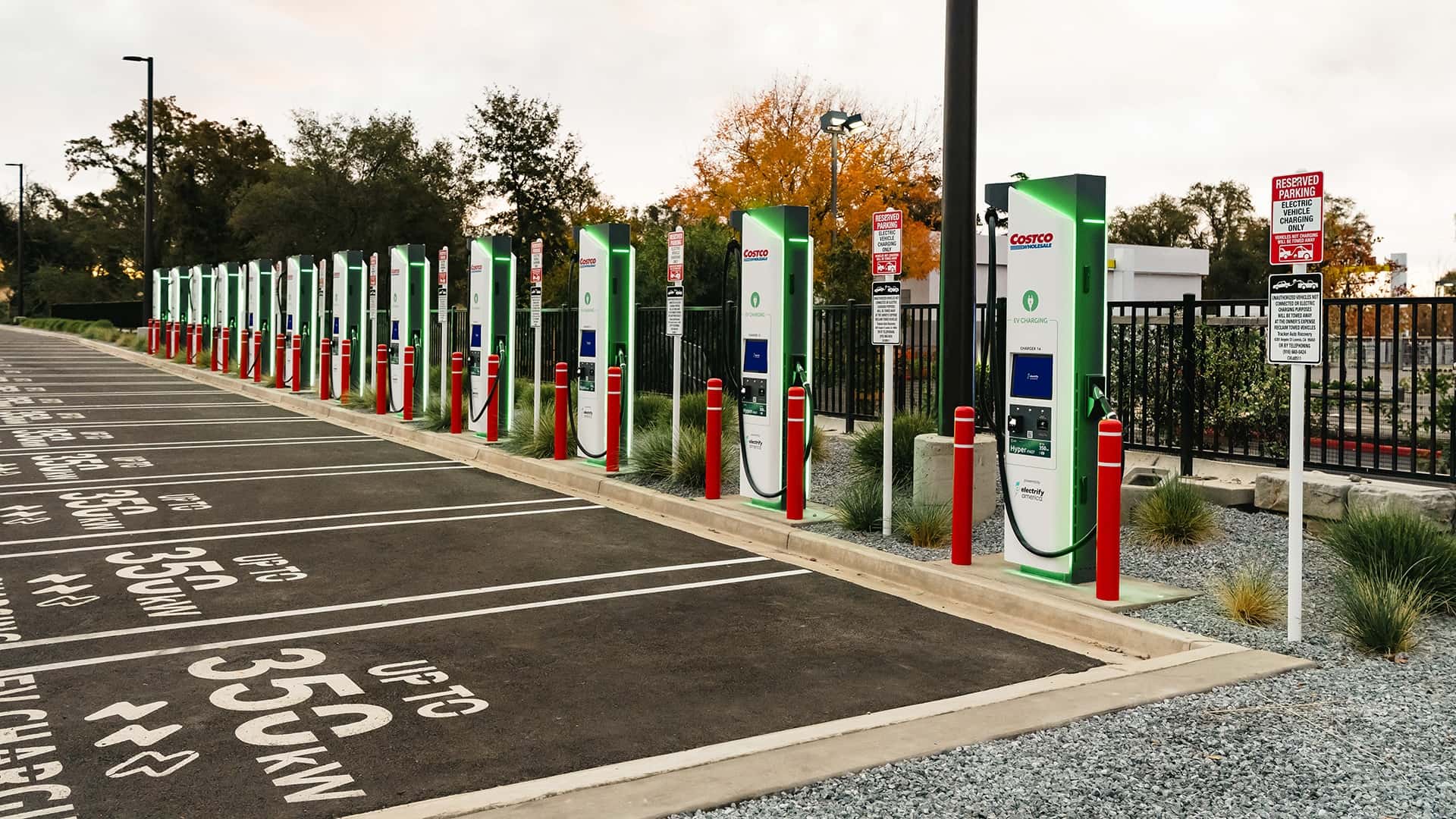
Key Takeaways
- A new white paper from Kempower challenges the industry’s focus on ultra-fast charging.
- The study, based on North American data, suggests that electric vehicle charging networks achieve higher utilisation and revenue by installing more charging points, even if they offer lower individual power output.
- An ideal power output of approximately 100 kW per connector maximises utilisation, as most EVs do not sustain advertised peak charging rates.
- Stations with eight plugs demonstrate a utilisation rate three times higher than smaller, high-powered stations, leading to a quicker return on investment for operators.
- The distributed power and dynamic power management model, championed by Kempower and Tesla, offers flexibility and scalability, aligning with this ‘more plugs, less power’ strategy.
The global push towards electric vehicles (EVs) has spotlighted the critical importance of robust charging infrastructure. For years, the narrative has often centred on the race for faster charging speeds, with headlines celebrating ‘megawatt charging’ and ‘sub-10-minute top-ups’ that promise hundreds of miles of range. However, a recent analysis suggests this pursuit of peak power may be overshadowing a more fundamental truth about the financial viability and operational efficiency of EV charging networks.
A white paper published by Kempower, a Finnish firm specialising in EV charging hardware and management software, presents a compelling counter-argument. The findings, based on extensive North American charging data from their ChargEye analytics platform, indicate that the mere presence of ultra-fast EV chargers does not guarantee their commercial success or widespread utility. Instead, the study posits that profitability for charging operators hinges on a different metric: the sheer number of available plugs.

Rethinking Charging Infrastructure: Quantity Over Raw Power
For electric vehicle charging companies, the primary objective extends beyond technical prowess to sustainable business models. The Kempower paper argues that for charging networks to maintain profitability and ensure long-term viability, they should strategically prioritise an increased number of charging points at their stations, even if these individual stalls offer less peak power compared to their higher-rated counterparts.
This insight directly challenges the industry’s often-singular focus on installing chargers with maximum kilowatt (kW) ratings. The paper unequivocally states, “Installed power barely moves the needle.” Instead, it highlights a strong correlation between the number of plugs at a site and its overall utilisation rate, suggesting that “Charging site utilization climbs steadily as sites add charging points.”
The Direct Link Between Plugs, Utilisation, and Revenue
The data compiled by Kempower underscores a significant trend: more plugs translate directly into higher utilisation rates. This, in turn, leads to increased revenue generation and a faster return on investment (ROI) for the charging infrastructure operators. For instance, the company’s analysis reveals that a charging station equipped with eight plugs can deliver a utilisation rate three times higher than a smaller station that might boast higher-powered but fewer stalls.

Visual representations within the white paper further illustrate this disparity. The utilisation rate for 100-kilowatt stations was observed to be around 3%, modestly increasing to just over 5% for 400-kW stations. In stark contrast, scaling from a two-plug station to an eight-plug station dramatically boosts the utilisation rate from approximately 2% to nearly 10%. This eight-plug configuration also proves more efficient in energy delivery, dispensing an average of 128,342 kilowatt-hours (kWh) compared to the 61,453 kWh from four-plug sites.
Understanding Optimal Power Output and Charging Behaviour
A critical revelation from the Kempower study concerns the ideal power output for maximising a charging station’s utilisation rate when all connectors are actively in use. The paper suggests an optimal output of roughly 100 kW per connector. This recommendation stems from the practical observation that most electric vehicles rarely leverage their advertised peak charging power for the entirety of a session.
Even if an EV manufacturer touts a peak charging rate of 300 kW, a typical 10% to 80% charging session often averages an input closer to 100 kW to 150 kW. This means that highly expensive, ultra-fast charging hardware might frequently operate below its maximum capacity, making the investment less efficient if not paired with sufficient plug availability.
The Strategic Advantage of Distributed Power Systems
Kempower’s findings resonate deeply with its core business model, which revolves around building EV charging stations that incorporate distributed power and dynamic power management. This approach mirrors the design philosophy seen in Tesla’s widely acclaimed Supercharger network.
Founded in Finland in 2017, Kempower champions the idea that a distributed power architecture offers considerable advantages. It significantly simplifies the process of scaling a charging station in the future, allowing operators to expand capacity without necessitating substantial additional investment after the initial stalls have been energised. This flexibility provides a crucial hedge against fluctuating demand and evolving EV technology, ensuring that EV charging infrastructure can adapt efficiently.
Implications for the Expanding EV Ecosystem
The shift in focus from raw power to plug availability has profound implications for all stakeholders in the electric vehicle market. For charging network operators, it presents a clearer pathway to profitability and sustained growth. By optimising their investment in charging points, they can achieve higher asset utilisation, which is paramount in a capital-intensive industry like EV charging.
For electric vehicle drivers, this strategy promises a more reliable and less congested charging experience. An abundance of plugs, even if individually slightly less powerful, means shorter wait times and increased confidence in finding an available charging spot. This directly addresses one of the primary concerns for potential EV owners: range anxiety and charging availability. Ultimately, by fostering a financially robust and user-friendly EV charging infrastructure, the industry can accelerate the widespread adoption of electric vehicles, contributing to a more sustainable transportation future.
FAQ Section
What is the main finding of Kempower’s white paper on EV charging?
The white paper suggests that for EV charging networks to be profitable, operators should prioritise installing more charging plugs at stations rather than solely focusing on ultra-high-powered chargers. More plugs lead to significantly higher utilisation rates and, consequently, greater revenue and a faster return on investment.
Why do more charging plugs lead to higher utilisation rates?
More plugs increase the availability of charging spots, reducing wait times and allowing more electric vehicle drivers to charge simultaneously. This improved accessibility makes stations more appealing and ensures that expensive infrastructure is used more frequently, boosting overall utilisation.
What is considered the ideal power output per charging connector for maximised utilisation?
Kempower’s data indicates that an ideal power output of approximately 100 kW per connector maximises utilisation. This is because most EVs rarely sustain their advertised peak charging rates throughout an entire charging session, often averaging between 100 kW and 150 kW for a typical 10-80% charge.
How does distributed power management benefit EV charging stations?
Distributed power and dynamic power management, as championed by Kempower and Tesla, allow for flexible power allocation across multiple charging points. This approach makes it easier to scale charging stations, reduces initial investment, and enhances overall operational efficiency by balancing the load effectively without heavy upfront costs for future expansion.
How does this strategy impact the profitability of charging networks?
By focusing on more plugs and higher utilisation, charging networks can generate substantially more revenue from the same or even lower total installed power capacity. This directly translates to quicker returns on their considerable infrastructure investments and fosters a more sustainable and financially viable business model for EV charging operators.
What are the benefits for electric vehicle drivers from this approach?
For EV drivers, this strategy means a more reliable and convenient charging experience. Increased plug availability reduces the likelihood of encountering fully occupied stations, thereby minimising waiting times and alleviating range anxiety. This practical improvement contributes to greater confidence in the broader electric vehicle ecosystem.