
Key Takeaways
- A recent white paper by Kempower suggests that simply installing ultra-fast EV chargers does not guarantee high utilisation or profitability for network operators.
- Data from Kempower’s ChargEye platform indicates a stronger correlation between the number of charging plugs at a station and its utilisation rate, rather than the total installed power.
- Charging networks may achieve higher revenue and a quicker return on investment by focusing on deploying more charging points, even if individual stalls offer lower power output.
- The ideal power output for maximising charging station utilisation when all connectors are active is estimated to be around 100 kW, aligning with average EV charging behaviour.
- The distributed power approach, as championed by Kempower, offers scalability and flexibility for future expansion without prohibitive initial infrastructure investments.
In the rapidly expanding ecosystem of electric vehicles (EVs), the race to deploy ultra-fast EV charging infrastructure often dominates headlines. However, a new analysis challenges the prevailing notion that higher power output inherently translates to better service and, crucially, greater profitability for charging network operators. A white paper from Kempower, a prominent provider of charging hardware and management software, suggests a paradigm shift: more charging plugs, even with less individual power, could be the key to sustainable growth.
This comprehensive report, drawing on extensive North American charging data from Kempower’s proprietary ChargEye analytics platform, underscores a critical insight for the future of EV charging networks. It argues that the financial viability of these networks hinges less on peak power capabilities and more on the sheer availability of charging points for EV drivers.

Rethinking Charging Network Strategy
The allure of megawatt charging, promising the addition of hundreds of miles of range in under ten minutes, is undeniable for the consumer. Yet, the business logic for charging companies operating these advanced stations demands a closer look at utilisation rates and return on investment. Kempower’s findings indicate that while impressive, high-powered chargers alone do not ensure consistent usage or financial success.
The Finnish company, established in 2017, positions itself as a builder of advanced EV charging solutions. Their white paper contends that operators aiming for long-term sustainability and profitability should prioritise installing a greater number of plugs at their charging sites. This strategy, they assert, proves more effective than focusing solely on increasing the power output of individual stalls when considering the overall health of an EV charging business.
The Power of Plugs: Data-Driven Insights
According to the detailed data extracted from Kempower’s ChargEye platform, a direct and robust correlation exists between the number of charging plugs available at a station and its overall utilisation rate. The report starkly concludes: “Installed power barely moves the needle.” Instead, it highlights that “Charging site utilization climbs steadily as sites add charging points.”

This finding is pivotal for shaping future EV charging infrastructure investments. It suggests that a fundamental re-evaluation of current deployment strategies might be necessary to meet both consumer demand for accessibility and operator requirements for profitability. The emphasis shifts from raw power to pragmatic availability.
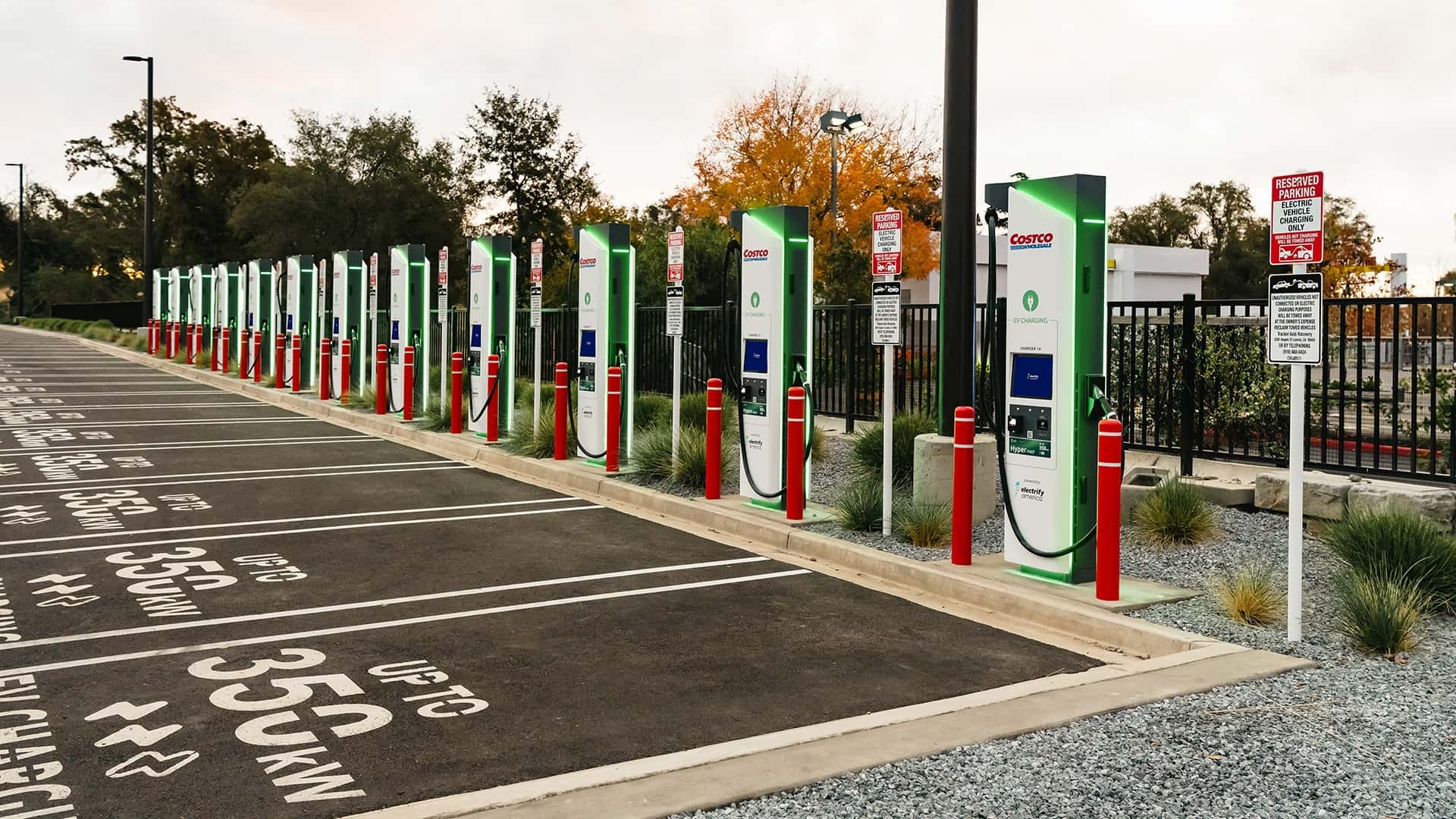
The statistical evidence presented by Kempower is compelling. The analysis reveals that a charging station equipped with eight plugs can achieve a utilisation rate three times higher than a smaller station featuring fewer, albeit higher-powered, stalls. This dramatic difference in usage directly translates to increased revenue streams and an accelerated return on the initial capital investment.
Further supporting this conclusion, one of the white paper’s illustrative graphs demonstrates a marginal increase in utilisation rate—from approximately 3% for 100-kilowatt (kW) stations to just over 5% for 400-kW stations. In stark contrast, scaling from a two-plug station to an eight-plug station propels the utilisation rate from roughly 2% to nearly 10%. This eight-plug configuration also delivers significantly more energy, averaging 128,342 kilowatt-hours (kWh) compared to 61,453 kWh from four-plug sites.
Understanding Optimal Power Output and EV Charging Behaviour
Kempower’s research pinpoints an intriguing aspect of EV charging dynamics: the ideal power output for optimising a station’s utilisation rate when all connectors are in use is approximately 100 kW. This figure is critical because it aligns with real-world EV charging patterns.
Most electric vehicles, regardless of their advertised peak charging rates, rarely sustain these maximum power inputs throughout an entire charging session. For instance, an EV manufacturer might claim a peak charging rate of 300 kW, but a typical 10% to 80% charging session often averages between 100 kW to 150 kW due to battery management systems optimising for battery health and efficiency. Therefore, installing excessively high-powered chargers might lead to underutilised capacity for a significant portion of the charging cycle.
The Advantage of Distributed Power and Scalability
A core tenet of Kempower’s philosophy, and a point of emphasis in their white paper, is the adoption of a distributed power and dynamic power management architecture. This approach, mirroring the successful model employed by Tesla with its Superchargers, offers substantial benefits for EV charging infrastructure development.
Distributed power allows for more flexible and efficient allocation of available energy across multiple charging points. Rather than dedicating a fixed, high power output to each individual stall, the system dynamically distributes power based on the demands of connected vehicles. This ensures that the available grid connection is used optimally, preventing bottlenecks and maximising throughput across the entire station.
Moreover, this architectural choice significantly enhances the scalability of EV charging stations. Operators can initially deploy a foundational setup and then easily expand the number of charging points later without undertaking massive, costly overhauls of the electrical infrastructure. This modularity reduces the initial investment barrier and allows networks to adapt more readily to evolving demand and technology.
Implications for the EV Charging Landscape
The findings from Kempower’s white paper carry significant implications for various stakeholders in the EV ecosystem. For charging network operators, it provides a data-backed roadmap towards more financially robust and user-friendly deployments. Prioritising a higher density of charging points at a moderate power level could lead to higher customer satisfaction, reduced wait times, and ultimately, greater profitability.
For city planners and government bodies investing in public EV charging infrastructure, this research offers valuable guidance on how to allocate resources effectively. Focusing on ‘more plugs’ rather than ‘more power’ could accelerate the expansion of accessible EV charging options, addressing a key concern for potential EV buyers: range anxiety and charging availability.
Ultimately, a shift towards optimising plug density over peak power could foster a more resilient and widely adopted EV charging network. This strategy promises a better experience for EV drivers, ensuring that when they arrive at a station, a functional and available charging point is more likely to await them, thereby contributing to the broader success and growth of electric mobility.
FAQ: EV Charging Network Optimisation
Q: What is the main finding of Kempower’s white paper on EV charging?
A: The white paper asserts that charging network operators can achieve higher utilisation rates and profitability by installing more charging plugs at a station, even if individual stalls offer lower power, rather than focusing solely on ultra-high power chargers.
Q: How does the number of plugs affect utilisation compared to power output?
A: Data from Kempower’s ChargEye platform shows that the utilisation rate of a charging site climbs significantly with an increased number of charging points, while increased installed power has a much less pronounced effect on utilisation.
Q: What is considered the ideal power output for maximum charging station utilisation?
A: Kempower suggests that an average power output of approximately 100 kW per connector is ideal for maximising the utilisation rate of a charging station when all plugs are in use, reflecting typical EV charging profiles.
Q: Why do EVs rarely utilise their advertised peak charging power?
A: Electric vehicles often average 100 kW to 150 kW during a typical 10-80% charging session, even if capable of higher peaks, due to battery management systems optimising for battery health and efficiency, as well as maintaining optimal charging speeds.
Q: What is ‘distributed power’ in EV charging, and what are its benefits?
A: Distributed power involves dynamically allocating available energy across multiple charging points, similar to Tesla’s Superchargers. It makes it easier to scale a charging station later and optimises the use of grid connection, improving efficiency and reducing initial investment.
Q: How can this research impact the future of EV charging infrastructure?
A: This research could lead to a shift in investment strategies, encouraging more accessible and reliable networks by prioritising a higher density of charging points over just higher peak power. This could enhance the overall EV driver experience and accelerate EV adoption.