
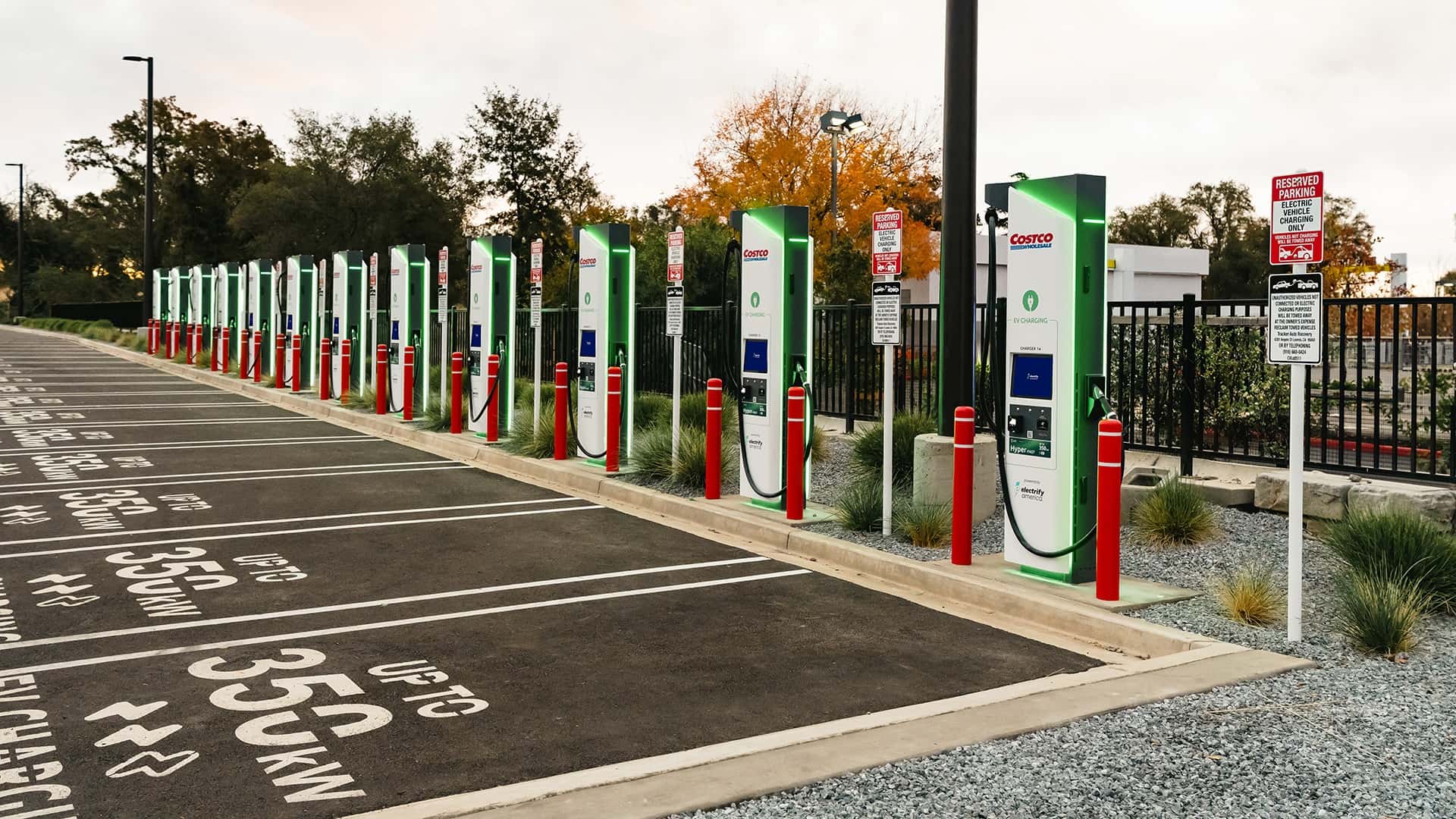
Key Takeaways:
- A new white paper by Kempower challenges the prevailing focus on ultra-high-power EV chargers for network profitability.
- Analysis of North American charging data suggests that increasing the number of charging plugs at a station significantly boosts utilization rates and revenue, more so than merely elevating individual stall power output.
- For EV charging network operators, prioritizing a greater quantity of charging points, even with moderate power, appears to be a more viable strategy for financial sustainability and improved return on investment.
- Most electric vehicles rarely sustain their advertised peak charging rates, making average power delivery around 100-150 kW often sufficient for optimal charging sessions.
The burgeoning electric vehicle (EV) market has driven a race to deploy cutting-edge charging infrastructure, with headlines often dominated by the promise of megawatt charging and sub-10-minute top-ups. However, a recent white paper from Kempower, a prominent Finnish provider of EV charging hardware and management software, introduces a crucial economic perspective: the sustainability of EV charging networks hinges less on raw power and more on practical utilization.

This comprehensive study, drawing on real-world North American charging data from Kempower’s proprietary ChargEye analytics platform, suggests a counterintuitive truth for developers of EV charging solutions. For these networks to thrive and ensure financial viability, the focus should shift towards increasing the sheer number of available charging points rather than solely chasing higher power outputs for individual stalls.
The Shifting Paradigm in EV Charging Infrastructure
The rapid expansion of electric vehicle adoption has necessitated a robust and reliable EV charging infrastructure. Developers and policymakers alike have often emphasized the need for faster charging speeds to alleviate range anxiety and mimic the quick refuelling experience of traditional gasoline vehicles. This emphasis has led to significant investments in ultra-fast DC fast charging technology, promising peak power delivery exceeding 350 kW.
However, the economic realities of operating such high-powered stations are complex. High capital expenditure, the cost of grid connection upgrades, and the actual usage patterns of EV drivers all play critical roles in determining a network’s profitability. The Kempower paper aims to illuminate these underlying dynamics, offering data-driven guidance for a more sustainable EV charging future.

Data-Driven Insights: Quantity Over Peak Power
Kempower’s analysis presents a compelling argument against the singular pursuit of peak power. The study found a strong correlation between the number of plugs available at a charging site and its overall utilization rate. Conversely, the total installed power capacity at a site showed minimal impact on how frequently the stations were used by EV drivers.
“Installed power barely moves the needle,” the company stated in its findings. “Charging site utilization climbs steadily as sites add charging points.” This suggests that the convenience of finding an available charger outweighs the marginal benefit of an extremely high-powered, but potentially occupied, stall for many consumers.
Understanding Utilization Rates and Revenue Generation
The financial health of any EV charging network is intrinsically linked to its utilization rate. Higher utilization directly translates to increased revenue, which in turn accelerates the return on investment (ROI) for operators. Kempower’s data illustrates this clearly: a station equipped with eight charging plugs can achieve a utilization rate three times higher than a smaller station with fewer, albeit higher-powered, stalls.
Further supporting this, the white paper’s graphs demonstrate a modest increase in utilization from approximately 3% for 100-kilowatt stations to just over 5% for 400-kW stations. In stark contrast, scaling from a two-plug station to an eight-plug station dramatically boosts the utilization rate from roughly 2% to nearly 10%. Moreover, sites with eight plugs delivered an average of 128,342 kilowatt-hours (kWh) of energy, more than double the 61,453 kWh delivered by four-plug sites.
These figures underscore that providing more access points reduces waiting times, improves the overall charging experience, and ensures more consistent energy delivery across the network. This comprehensive approach to EV charging infrastructure development is crucial for long-term viability.
The Role of Average Charging Speed
Another critical insight from the Kempower study revolves around the actual power consumption of electric vehicles during a typical charging session. The paper suggests that an ideal power output for maximizing a charging station’s utilization rate, particularly when all connectors are in use, is approximately 100 kW per stall. This recommendation stems from the observation that most EVs rarely maintain their advertised peak charging power throughout an entire session.
Even if an electric vehicle manufacturer advertises a peak charging rate of 300 kW, the real-world average power input during a common 10% to 80% charging session often falls within the range of 100 kW to 150 kW. Factors such as battery temperature, state of charge, and the vehicle’s battery management system dynamically adjust the power intake to optimize battery health and charging efficiency. Therefore, excessively high individual stall power may represent an underutilized asset.
Strategic Implications for EV Charging Networks
For companies investing in and operating EV charging networks, these findings offer vital strategic guidance. Instead of focusing solely on procuring the highest-power chargers, operators might achieve greater profitability and user satisfaction by deploying more moderately powered charging points. This strategy could lead to:
- Improved Customer Experience: Reduced wait times and a higher likelihood of finding an open stall can significantly enhance the EV driver’s satisfaction.
- Optimised Capital Expenditure: Investing in a greater number of slightly lower-powered chargers might be more cost-effective than a few ultra-high-powered units, especially considering grid connection costs.
- Enhanced Revenue Streams: Higher utilization rates directly translate to greater energy sales and, consequently, increased profitability for the network operator.
The goal, ultimately, is to create a reliable and accessible network that serves the broadest possible base of EV drivers effectively. This balanced approach to EV charging infrastructure development considers both technological capabilities and economic realities.
The Advantage of Distributed Power Systems
Kempower’s own business model, which specializes in EV charging stations featuring distributed power and dynamic power management, aligns well with its white paper’s conclusions. This approach mirrors systems like Tesla’s Superchargers, where a central power cabinet dynamically allocates available power across multiple charging stalls based on individual vehicle needs.
The Finnish company, founded in 2017, advocates for this distributed power architecture because it offers greater flexibility and scalability. It makes it easier for operators to expand a charging station’s capacity over time without requiring massive, upfront infrastructure investments after the initial stalls have been energised. This modularity in EV charging design can be a significant advantage in a rapidly evolving market.
Looking Ahead: Building a Sustainable EV Charging Ecosystem
The insights from Kempower’s white paper highlight a critical juncture in the evolution of EV charging. While technological advancements in ultra-fast charging are impressive, the long-term success of the electric vehicle transition depends on economically sustainable and user-friendly charging networks.
By shifting focus from maximum power to optimal plug density and smart power management, network operators can build more robust, profitable, and accessible EV charging infrastructure. This balanced strategy not only benefits the operators’ bottom line but also contributes significantly to fostering greater confidence among potential EV buyers, thereby accelerating the broader adoption of electric mobility.
The future of EV charging likely involves a diversified approach, with some ultra-high-power hubs for specific needs, but a broader foundation of well-utilized, multi-plug stations forming the backbone of accessible and reliable energy delivery for electric vehicles.
FAQ Section
What is the main finding of Kempower’s white paper on EV charging?
The white paper concludes that for EV charging networks, increasing the number of available charging plugs at a station leads to significantly higher utilization and revenue, more so than simply increasing the peak power output of individual stalls.
Why do more plugs lead to higher utilization than higher power?
More plugs reduce wait times and increase the likelihood of an EV driver finding an available charging point. This improved accessibility and convenience directly translate to higher overall station usage, regardless of how fast each individual charger is.
What is considered an ideal power output for maximizing utilization?
Kempower’s data suggests that an average power output of approximately 100 kW per stall is often ideal for maximizing utilization, as most electric vehicles rarely sustain their maximum advertised charging rates throughout an entire charging session.
How does ‘distributed power’ benefit EV charging stations?
Distributed power systems, like those offered by Kempower, allow a central power unit to dynamically allocate power across multiple charging stalls. This approach enhances flexibility, makes it easier to scale stations, and optimises energy delivery based on real-time vehicle demand.
What are the strategic implications for EV charging network operators?
Operators should consider prioritizing the deployment of more charging points, even if they offer moderate power, over fewer ultra-high-powered units. This strategy can lead to better customer satisfaction, more efficient capital expenditure, and ultimately, higher profitability and ROI.
Does this mean ultra-fast chargers are not important?
While ultra-fast chargers have their place for specific needs, the paper suggests they may not be the primary driver of network profitability and broad utilization. A balanced approach, combining some high-power options with a larger number of well-distributed, moderately-powered plugs, is likely most effective.
What data was used for Kempower’s analysis?
The white paper is based on extensive North American charging data extracted from Kempower’s own ChargEye analytics platform, providing real-world insights into EV charging patterns and network performance.