
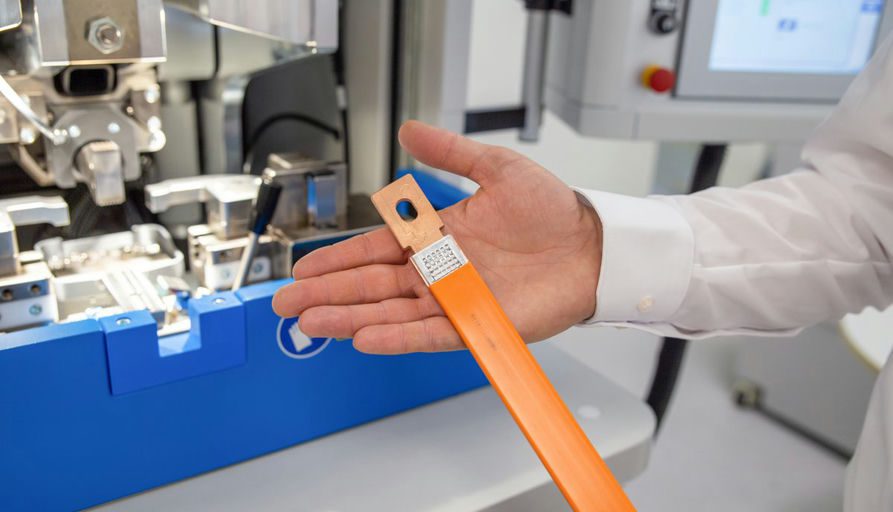
Key Takeaways: As electric vehicle production accelerates globally, the performance and reliability of electrical connections have become paramount for the automotive industry. Traditional methods often introduce inefficiencies and risks. This article explores how advanced ultrasonic metal welding provides critical ultrasonic solutions for critical connections in EV manufacturing, significantly boosting performance, energy efficiency, and overall reliability. It highlights how this innovative technology minimizes contact resistance, enhances EV range, reduces production cycle times and scrap rates, and ensures durable joints capable of withstanding severe thermal and mechanical stresses, even across dissimilar materials like copper and aluminum.
The Imperative of Robust Electrical Connections in Electric Vehicles
The rapid acceleration of electric vehicle (EV) production marks a significant shift in the automotive landscape. With this surge in manufacturing comes a heightened focus on every component’s integrity, particularly the intricate network of electrical connections. In an EV, these connections are not merely functional; they are mission-critical, directly influencing performance, safety, and longevity.

Traditional joining methods, such such as crimping or bolting, commonly employed in conventional automotive manufacturing, often present inherent limitations when applied to the demanding specifications of electric vehicles. Over time, these conventional techniques can lead to increased electrical resistance, reduced overall system reliability, and higher scrap rates during the production process.
These issues translate directly into compromised energy efficiency, potentially diminishing an EV’s range and operational performance. As the industry pushes for greater electrification and higher power densities, the need for superior, future-proof connection technologies becomes undeniably urgent.
Ultrasonic Welding: A Paradigm Shift for EV Manufacturing Efficiency
In response to the escalating demands of EV production, ultrasonic metal welding emerges as a transformative technology, offering robust ultrasonic solutions for critical connections. This advanced method provides a compelling alternative to traditional joining processes, specifically for vital wire-to-terminal and busbar applications within electric vehicles.

Unlike conventional techniques that rely on mechanical deformation or heat, ultrasonic welding utilizes high-frequency vibrations to create a metallurgical bond between materials. This process results in stronger joints, superior electrical conductivity, and faster, more consistent production cycles, directly addressing many of the challenges posed by the rapid expansion of EV manufacturing.
Boosting Performance and Extending EV Range
One of the most significant advantages of deploying ultrasonic solutions for critical connections lies in their capacity to elevate an EV’s operational performance. The technology is engineered to achieve lower contact resistance in electrical pathways, which is fundamental to energy efficiency.
By minimizing energy loss at each connection point, ultrasonic welding directly contributes to improved energy efficiency throughout the vehicle’s electrical system. This enhanced efficiency translates into a tangible benefit for consumers: a longer effective EV range, making electric vehicles more practical and appealing for a wider audience.
Enhancing Productivity and Manufacturing Scalability
Beyond performance, the adoption of ultrasonic metal welding significantly impacts manufacturing productivity. The process is inherently faster and more consistent than many traditional joining methods, leading to a substantial reduction in cycle times.
Furthermore, the superior quality and repeatability of ultrasonic welds contribute to significantly lower scrap rates during production. These combined efficiencies are crucial for scaling EV manufacturing operations, allowing carmakers to meet increasing market demand with more efficient and cost-effective production lines.
Ensuring Durability and Reliability Under Extreme Stress
The operational environment of an electric vehicle subjects its components to considerable stress. Electrical connections must withstand various forces, including significant thermal fluctuations and mechanical vibrations. Ultrasonic solutions for critical connections are renowned for creating strong, highly durable joints designed to endure such demanding conditions.
This reliability extends even to complex scenarios involving mixed material connections, such as copper-aluminum (Cu-Al) interfaces. The ability of ultrasonic welding to forge robust bonds between dissimilar metals without introducing intermetallic brittleness is a critical advantage, ensuring the long-term integrity and safety of EV electrical systems.
The Broader Context: Advancements in EV Engineering
The exploration of advanced joining techniques like ultrasonic welding is part of a larger, ongoing effort within the electric vehicle engineering ecosystem to continuously innovate and refine every aspect of EV design and production. Industry experts and engineers regularly convene to discuss such groundbreaking developments.
For instance, a dedicated session titled “Driving efficiency in EV manufacturing: ultrasonic solutions for critical connections” is scheduled for September 15, 2026, at 11:45 am EDT. This presentation aims to provide deeper insights into how manufacturers can optimize their EV connections and gain a competitive edge through the strategic implementation of ultrasonic welding technology.
This session is a key highlight of the Virtual Conference on EV Engineering, which will broadcast live from September 14 to 17, 2026. The conference’s comprehensive content spans the entire EV engineering supply chain and ecosystem, covering critical areas such as motor and power electronics design and manufacturing, advanced cell development, sophisticated battery systems, rigorous testing protocols, innovative powertrains, efficient thermal management solutions, robust circuit protection, specialized wire and cable technologies, and essential EMI/EMC considerations. Such platforms underscore the industry’s collaborative drive towards next-generation EV solutions.
Interested parties can Register now—it’s free! for the specific session on ultrasonic solutions or See the complete session list for the Virtual Conference on EV Engineering here. to explore other crucial topics. Additional sessions include discussions on Advancing Battery Safety Through Early Thermal Runaway Detection With Infineon Sensors, Scalable And Cost-Efficient Testing Of State-of-the-Art Battery Management Systems, CoolGaN™ Automotive Bidirectional Switch: Shaping Single-Stage On-Board Chargers, Microseconds Matter: High-Fidelity FPGA Motor Models For Real-Time HIL Validation, Simplifying Commercial EV Power Distribution With Integrated Off-the-Shelf Solutions, From Lab To Vehicle: Driving Reliable Insulation Systems For E-mobility Innovation, How To Test For Anti-Islanding In EV Chargers, OBCs, And V2G Systems, Multiphysics Modeling Of Transport Phenomena In Cells With Gas Diffusion Electrodes, Optimizing HV/LV Power Conversion For Next-Generation xEV Architectures, and Beyond Sealing: Extrusion And Co-Extrusion For Thermal, Electrical, And Sensing Applications, all offering valuable insights into the future of EV technology.
Securing a Competitive Edge in a Dynamic Market
As the global automotive industry continues its pivot towards electrification, manufacturers capable of deploying superior, efficient, and reliable production methods will undoubtedly gain a significant competitive advantage. The integration of advanced ultrasonic solutions for critical connections represents more than just a technological upgrade; it is a strategic imperative for companies aiming to lead in the rapidly evolving EV market.
By optimizing EV connections through ultrasonic welding, companies can not only meet but exceed the stringent performance and reliability expectations of modern electric vehicles. This commitment to engineering excellence directly translates into higher quality products, enhanced brand reputation, and sustained growth in a fiercely competitive sector.
FAQ Section
What makes electrical connections so critical in electric vehicles?
In electric vehicles, every electrical connection is paramount for overall performance, safety, and energy efficiency. Poor connections can lead to increased resistance, reduced range, and reliability issues, directly impacting the vehicle’s operational capabilities and the consumer’s experience.
Why are traditional joining methods often insufficient for EV manufacturing?
Traditional methods like crimping or bolting can introduce several drawbacks in EV applications, including higher contact resistance, which wastes energy, and diminished long-term reliability. They may also contribute to increased scrap rates and slower production cycles, hindering efficient scaling of manufacturing.
How does ultrasonic metal welding improve EV performance and range?
Ultrasonic metal welding significantly lowers contact resistance in electrical joints, leading to improved energy efficiency throughout the EV’s power train. This reduction in energy loss translates directly into a longer driving range, enhancing the vehicle’s practicality and appeal for users.
Can ultrasonic welding handle different material combinations in EVs?
Yes, a key benefit of ultrasonic solutions for critical connections is their ability to create strong, durable bonds even with challenging mixed material connections, such as copper (Cu) and aluminum (Al). This capability is vital for modern EV designs that often integrate various metals for optimized performance and weight.
What productivity benefits does ultrasonic welding offer EV manufacturers?
Ultrasonic welding enhances manufacturing productivity by reducing cycle times and minimizing scrap rates. Its consistent and fast bonding process allows for more efficient, scalable production lines, enabling manufacturers to meet the growing demand for electric vehicles more effectively.
How does ultrasonic welding contribute to the reliability of EV connections?
The technology creates strong, metallurgical bonds that are highly resistant to thermal and mechanical stresses, common in vehicle operations. This ensures enhanced durability and reliability of connections over the vehicle’s lifespan, preventing failures and maintaining consistent performance under demanding conditions.
Where can one learn more about advanced ultrasonic solutions for critical connections?
Experts frequently discuss these advanced technologies at industry events. For example, a dedicated webinar on “Driving efficiency in EV manufacturing: ultrasonic solutions for critical connections” is part of the Virtual Conference on EV Engineering, offering in-depth insights into the application and benefits of this technology.
What other topics are covered at the Virtual Conference on EV Engineering?
The Virtual Conference on EV Engineering covers a broad spectrum of critical areas, including motor and power electronics design, battery systems, thermal management, circuit protection, wire and cable, and EMI/EMC. It offers a comprehensive overview of the entire EV engineering supply chain and ecosystem.