
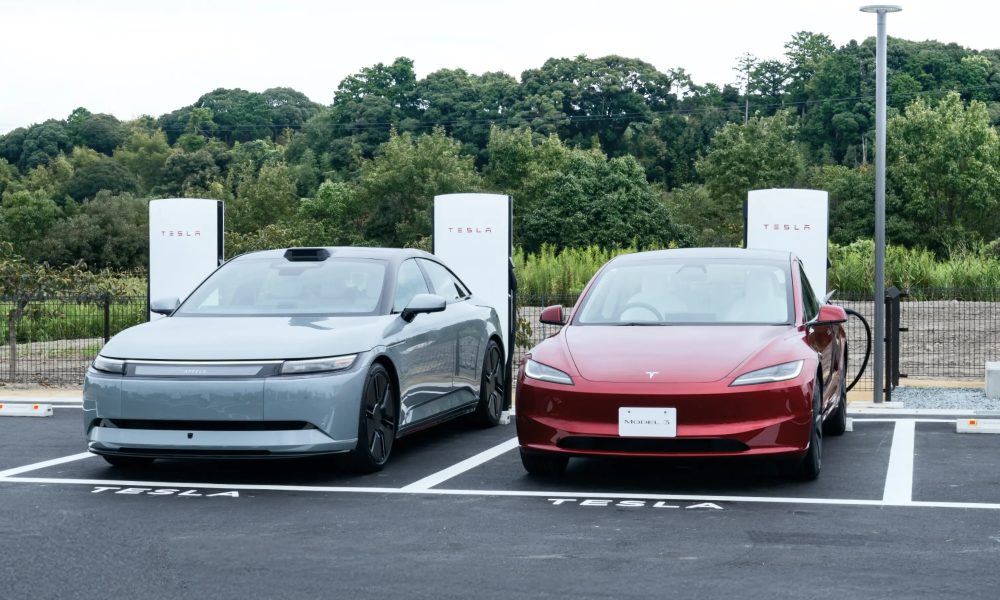
In a significant development for the automotive industry, Sony Honda Mobility (SHM) has officially ceased the development of its highly anticipated AFEELA electric vehicles. The joint venture, formed between technology giant Sony and automotive powerhouse Honda, announced its decision on March 25, confirming the halt of both the AFEELA 1 luxury sedan and a previously planned SUV model.
This move marks the end of an ambitious project that garnered considerable media attention, with many industry observers initially labeling it a potential ‘Tesla Killer.’ The discontinuation underscores the increasingly fierce competition and complex economic landscape defining the global electric vehicle market, challenging even well-resourced new entrants.
A Pioneering Vision Ends
The AFEELA project was introduced with much fanfare in 2022, presenting a vision for a premium, tech-forward electric vehicle. Its core promise was to seamlessly blend Honda’s renowned engineering reliability with Sony’s deep expertise in entertainment systems and artificial intelligence. This collaboration aimed to carve out a distinct niche in the burgeoning EV sector.
Prototypes of the AFEELA electric vehicles showcased a range of cutting-edge features. These included advanced autonomous driving systems, sophisticated immersive in-cabin displays designed to enhance the passenger experience, and even integrated PlayStation functionality. Such innovations positioned the AFEELA not merely as a mode of transport but as a comprehensive digital ecosystem on wheels.
The luxury sedan was slated for a premium price point, estimated around $90,000, targeting the high-end segment of the electric vehicle market. Limited production was planned at Honda’s manufacturing facility in Ohio, with initial deliveries anticipated for late 2026. Experts within the industry viewed the AFEELA as a credible contender, capable of challenging Tesla’s established dominance in areas like software integration, connectivity, and overall premium appeal.
Unpacking Honda’s Strategic Reassessment
The decision to discontinue the AFEELA electric vehicles follows a critical reassessment of Honda’s broader electrification strategy, announced on March 12. This strategic shift saw the Japanese automaker scrap several other upcoming electric vehicle programs, reflecting a cautious adjustment to prevailing market conditions.
Among the key factors influencing this revised strategy were a noticeable slowing of consumer demand for electric vehicles, persistent high manufacturing costs associated with EV production, and a rapidly evolving competitive landscape. These elements collectively presented significant headwinds for new, high-investment projects like the AFEELA.
SHM articulated that, in light of these changes, it could no longer reliably depend on essential Honda technologies and manufacturing assets. This fundamental shift in support and resource allocation ultimately left the joint venture with “no viable path forward” for the AFEELA project. The future of the entire Sony Honda Mobility venture is now reportedly under review, signaling a period of strategic introspection.
For those early buyers in California who had placed reservations for the AFEELA electric vehicles, SHM has confirmed that all reservation fees are being fully refunded. This measure aims to mitigate the impact on prospective customers affected by the unexpected discontinuation.
Navigating the Turbulent Electric Vehicle Market
The AFEELA’s demise, while specific to SHM’s circumstances, mirrors broader challenges faced across the global electric vehicle market. Despite initial hype and significant investment, numerous ambitious EV projects have struggled to achieve sustained success, often falling victim to similar industry headwinds.
Softening consumer demand has become a palpable reality for many automakers. Factors such as economic uncertainty, alongside the inherent higher purchase price of many electric vehicles, continue to weigh on consumer decisions. This has led to a more discerning buyer base than initially projected, particularly in segments like luxury EVs.
Furthermore, persistent high interest rates globally have made financing new vehicle purchases more expensive for consumers. For manufacturers, these rates also impact the cost of capital, making large-scale investments in new EV platforms and production facilities more challenging to justify and fund.
Intense competition from both established legacy automakers and a wave of new entrants further complicates the landscape. The electric vehicle market is no longer a nascent sector dominated by a few players; it is a mature and crowded arena where differentiation, cost-efficiency, and rapid scalability are paramount.
The ‘Tesla Killer’ Narrative: A Challenging Legacy
The narrative of the ‘Tesla Killer’ has permeated the electric vehicle market for over a decade. It refers to a series of vehicles, often conceptualized by ambitious startups or established players, aiming to dethrone Tesla from its pioneering leadership position in the EV space. However, very few, if any, have managed to live up to this formidable moniker.
The AFEELA electric vehicles were among the latest to inherit this label, lauded for their advanced technology and premium aspirations. Yet, like many before them, the project’s journey has now culminated in its discontinuation, adding another entry to what has been colloquially termed the ‘Tesla Killers Graveyard.’ An observation on social media by TESLARATI noted this trend, summarizing the AFEELA as “The sleek, AI-packed luxury sedan with PlayStation integration. Officially cancelled in March 2026 after Honda scaled back its EV plans.” The same post also referenced Fisker Ocean as another example, highlighting its bankruptcy.
Indeed, the list of vehicles once hyped as formidable ‘Tesla Killers’ that ultimately failed to deliver on their promise is extensive. Each case offers insights into the immense complexities of breaking into and sustaining a presence in the competitive EV market.
Lessons from a Competitive Landscape
Among the prominent examples is Fisker’s second attempt at an EV, the Ocean SUV. Launched in the late 2010s, it promised stylish design and advanced solid-state battery technology. However, the company eventually filed for bankruptcy in 2024, plagued by production delays, quality issues, and significant financial shortfalls.
Faraday Future also garnered substantial attention with its FF 91 luxury sedan. Billions were poured into developing a vehicle touted as a hyper-tech rival with unmatched performance and features. Despite the immense investment and bold claims, the company delivered fewer than 100 vehicles before largely fading from public prominence.
Lordstown Motors’ Endurance electric pickup truck generated massive pre-order buzz and excitement on Wall Street. Yet, its journey was fraught with challenges, including exaggerated range claims, the eventual sale of its factory, and a subsequent implosion into bankruptcy.
Even more established names have faced an uphill battle. Lucid Motors’ Air sedan, frequently praised as a ‘Tesla Killer’ for its superior range and luxury attributes, has struggled with sluggish sales and missed growth targets, despite receiving strong critical reviews. Similarly, Rivian’s R1T and R1S trucks enjoyed early acclaim and a blockbuster initial public offering (IPO), but production ramp-up challenges and persistent profitability woes have prevented the company from significantly challenging Tesla’s market position.
The Broader Implications for EV Innovation
The quiet demise of the AFEELA electric vehicles serves as a stark reminder of the harsh realities within the electric vehicle sector. While Tesla continues to leverage its formidable first-mover advantage, encompassing superior software, an extensive charging infrastructure, and powerful brand loyalty, both legacy automakers and tech newcomers appear to consistently underestimate the intricate challenges of scaling affordable and desirable electric vehicles.
Innovation, while crucial, rarely suffices on its own to unseat an established market leader. The ability to consistently deliver on production targets, manage supply chains effectively, maintain stringent quality control, and build a robust service network are all equally vital for long-term success in the EV industry.
As market realities continue to compel difficult strategic decisions, the ‘graveyard of Tesla Killers’ grows longer. Each discontinuation underscores that while the promise of electric mobility is immense, the path to market dominance is paved with significant financial, technological, and operational hurdles that demand more than just ambition and advanced concepts. It requires a holistic and sustainable business model capable of weathering the dynamic forces of the global electric vehicle market.