
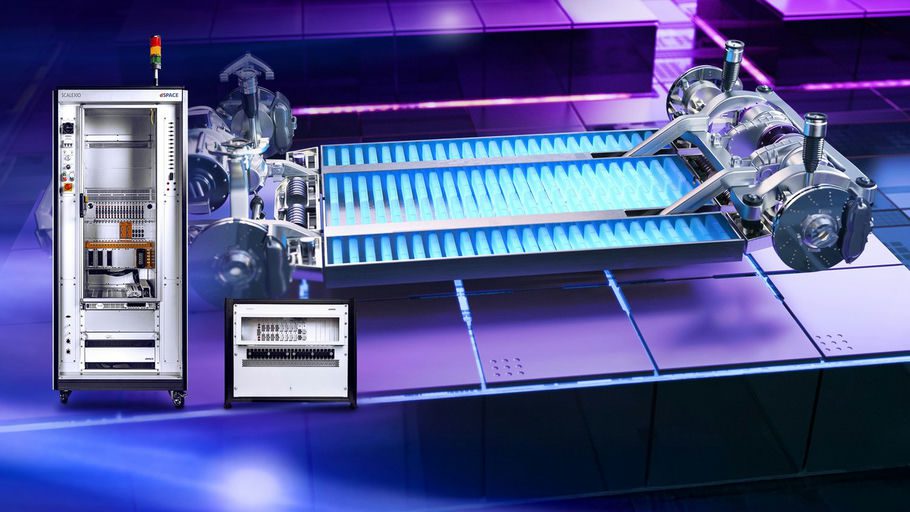
Key Takeaways:
- Battery Management Systems (BMS) are critical for the safety, performance, and longevity of modern rechargeable batteries in electric vehicles.
- The increasing complexity of BMS functionality and software necessitates advanced, model-based testing methods throughout the development cycle.
- Industry pressures demand a reduction in testing effort, shorter validation cycles, and lower overall costs.
- dSPACE is presenting a webinar on September 15, 2026, at 10:15 am EDT, focusing on how a standardized approach to Hardware-in-the-Loop (HIL) testing can significantly improve efficiency in validating next-generation BMS.
- This webinar is part of a larger Virtual Conference on EV Engineering, running from September 14 to 17, 2026, covering the entire EV engineering supply chain.
The Pivotal Role of Battery Management Systems in EVs
Battery management systems (BMS) stand as the central nervous system for modern rechargeable batteries, particularly within the rapidly evolving electric vehicle (EV) sector. These sophisticated units are indispensable for guaranteeing the safety, optimizing performance, and maximizing the operational lifetime of advanced battery packs.

To achieve peak battery longevity and operational integrity, individual cells within a pack must be meticulously monitored and controlled. This process occurs within a precisely defined, narrow operating window, demanding exceptional precision from the BMS.
Key functionalities include the highly accurate measurement of critical parameters such as cell voltages and temperatures. Furthermore, advanced balancing strategies are continuously employed to maintain a uniform state of charge across the entire battery pack, preventing premature degradation and ensuring stable power delivery.
Navigating the Growing Complexity of BMS Development
The landscape of BMS technology is continually evolving, characterized by increasing functionality and intricate software algorithms. This relentless growth in complexity profoundly impacts the entire development process, necessitating more robust and sophisticated validation techniques.

Consequently, model-based testing methods are becoming increasingly prevalent and essential throughout various stages of BMS development. These methods allow engineers to simulate real-world conditions in a controlled, virtual environment, accelerating design and iteration cycles.
For validating advanced BMS algorithms effectively under realistic operating conditions, accurate cell voltage emulation and high-fidelity battery simulation models are not just beneficial; they are absolutely essential. These simulation environments serve as the backbone for thorough system verification.
Defining the Demands of Next-Generation BMS Testing
The specialized test environments required for modern BMS must integrate several critical attributes. They need to combine precision to capture minute electrical and thermal variations, flexibility to adapt to diverse battery chemistries and configurations, and scalability to accommodate a wide array of battery architectures, from small packs to large-scale systems.
These stringent technical demands are compounded by significant business pressures facing development teams. There is an ongoing imperative to simultaneously reduce overall testing effort, shorten crucial validation cycles, and lower the associated development and operational costs.
dSPACE Webinar Addresses Scalable and Cost-Efficient Testing Solutions
In response to these pervasive industry challenges, dSPACE, a prominent developer of simulation and validation solutions, is poised to present a focused webinar. This session aims to shed light on how a more standardized approach to BMS hardware-in-the-loop (HIL) testing can fundamentally enhance efficiency.
The webinar will delve into practical strategies for achieving scalable and cost-efficient testing of state-of-the-art battery management systems. It promises to demonstrate how such an approach can uphold the necessary accuracy, performance, and flexibility that are critical for validating the next generation of battery management systems.
This initiative directly addresses the dual mandate of accelerating development while maintaining rigorous quality standards. Participants will gain insights into leveraging standardized HIL setups to streamline their testing processes without compromising on precision or adaptability.
Registration Details for the Upcoming Session
Professionals and stakeholders interested in these advancements are invited to join the webinar, which is scheduled for September 15, 2026, at 10:15 am EDT. Registration for this insightful session is free of charge and highly recommended for those involved in EV battery development and testing.
The Broader Context: Virtual Conference on EV Engineering
The dSPACE webinar is an integral component of the comprehensive Virtual Conference on EV Engineering, a significant industry event broadcast live from September 14 to 17, 2026. This extensive conference serves as a pivotal forum for exploring innovations and challenges across the entire EV engineering supply chain and ecosystem.
The conference agenda is meticulously designed to cover a vast spectrum of critical topics essential for the advancement of electric mobility. These include, but are not limited to, motor and power electronics design and manufacturing, cutting-edge cell development, advanced battery systems, and rigorous testing methodologies.
Further discussions will encompass various powertrain architectures, sophisticated thermal management solutions, crucial circuit protection mechanisms, and the evolving standards for wire, cable, and EMI/EMC compatibility. The event also addresses EV charging standards, EVSE design, and manufacturing processes, providing a holistic view of the industry.
Highlighting Diverse Sessions at the Virtual Conference
Beyond the critical focus on scalable and cost-efficient testing of state-of-the-art battery management systems, the Virtual Conference on EV Engineering offers a rich tapestry of sessions. These cover a broad range of pertinent subjects, designed to inform and engage attendees across various specializations within the EV ecosystem.
Other key presentations include discussions on advancing battery safety through early thermal runaway detection with Infineon sensors. There will also be insights into CoolGaN™ Automotive Bidirectional Switch technology and its role in shaping single-stage on-board chargers.
Further sessions will explore the precision of microseconds in high-fidelity FPGA motor models for real-time HIL validation, and strategies for simplifying commercial EV power distribution with integrated off-the-shelf solutions. Attendees can also learn about driving reliable insulation systems for e-mobility innovation from lab to vehicle.
The conference will also address topics such as driving efficiency in EV manufacturing through ultrasonic solutions for critical connections, and crucial testing methodologies for anti-islanding in EV chargers, OBCs, and V2G systems. Complex multiphysics modeling of transport phenomena in cells with gas diffusion electrodes will be presented.
Finally, optimizing HV/LV power conversion for next-generation xEV architectures and the applications of extrusion and co-extrusion for thermal, electrical, and sensing applications beyond sealing will round out the diverse program, underscoring the comprehensive nature of the conference.
FAQ
What is the primary function of a Battery Management System (BMS)?
A BMS is essential for monitoring and controlling modern rechargeable batteries, particularly in EVs. Its primary functions include ensuring battery safety by preventing overcharge/discharge, optimizing performance for power delivery, and extending the battery’s operational lifetime through precise cell voltage and temperature management, alongside charge balancing.
Why is advanced testing crucial for state-of-the-art BMS?
As BMS functionality and software complexity rapidly increase, advanced testing becomes critical for validation. It ensures that sophisticated algorithms perform reliably under diverse real-world operating conditions, preventing safety hazards, optimizing energy efficiency, and meeting stringent performance and longevity requirements for next-generation EV batteries.
What are the main challenges in BMS testing today?
Key challenges include accurately emulating cell voltages and simulating high-fidelity battery models, ensuring precision across a large number of cells, and achieving flexibility for various battery architectures. Furthermore, development teams face pressure to reduce testing efforts, shorten validation cycles, and lower overall costs without compromising quality or safety.
How does Hardware-in-the-Loop (HIL) testing benefit BMS development?
HIL testing integrates actual BMS hardware with simulated battery and vehicle environments. This allows for rigorous, real-time validation of BMS algorithms under realistic yet controlled conditions, significantly accelerating development cycles, identifying issues early, and reducing the need for extensive, costly physical prototypes and field testing.
What will the dSPACE webinar focus on?
The dSPACE webinar will highlight how a standardized approach to BMS HIL testing can drastically improve efficiency. It aims to demonstrate methods for achieving scalable and cost-efficient testing of state-of-the-art battery management systems, while maintaining the high accuracy, robust performance, and necessary flexibility for future EV battery technologies.
When and where is the Virtual Conference on EV Engineering taking place?
The Virtual Conference on EV Engineering is a live-broadcast online event scheduled from September 14 to 17, 2026. The specific dSPACE webinar on BMS testing will be held on September 15, 2026, at 10:15 am EDT. It is accessible online, and registration for the sessions is free.