
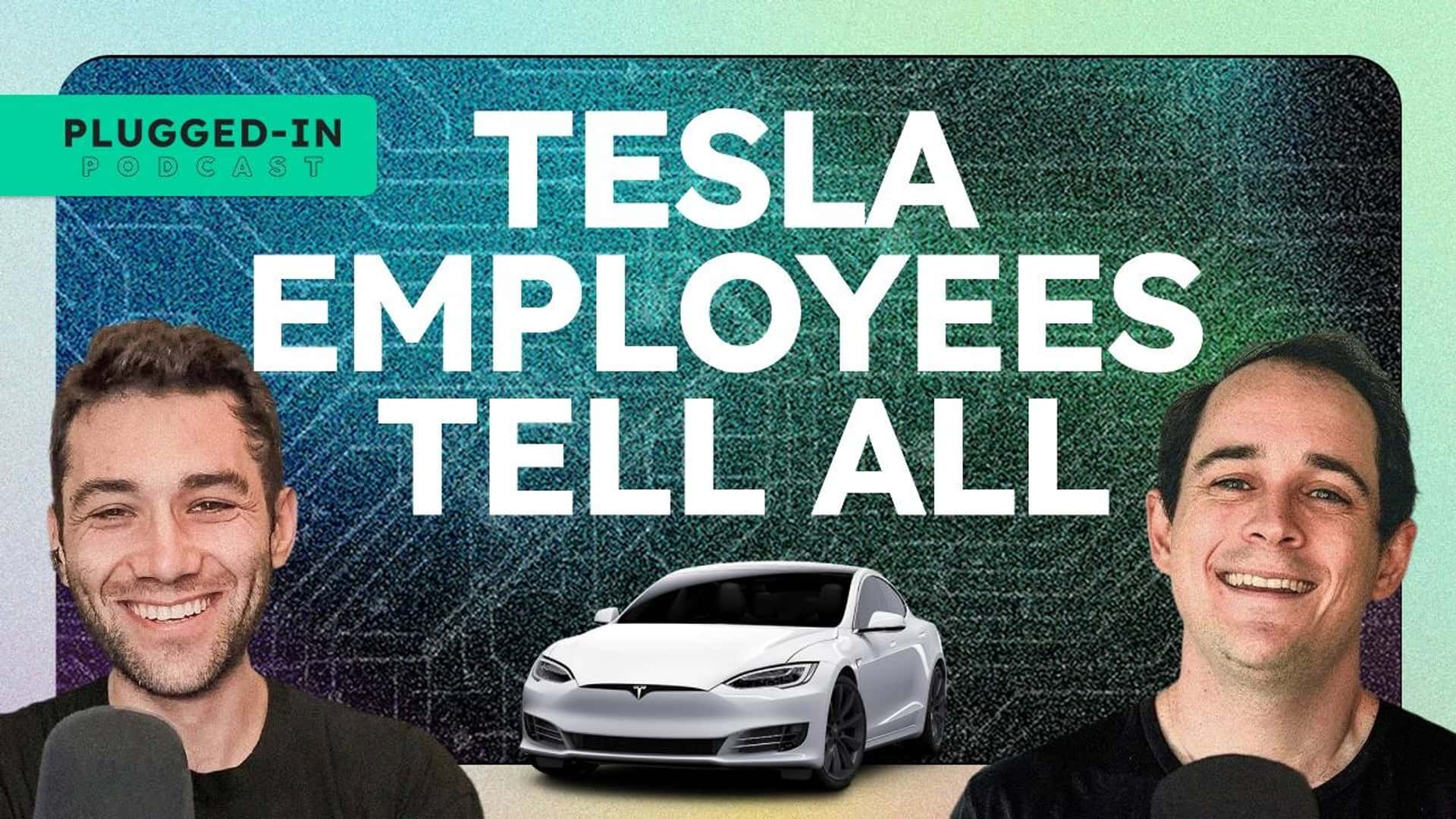
The ambitious promise of fully autonomous vehicles has long been a cornerstone of Tesla’s vision, driven largely by CEO Elon Musk’s declarations that its ‘Full Self-Driving’ (FSD) software would soon achieve complete autonomy. This expectation has lingered for nearly a decade, yet the reality remains elusive, marked by significant challenges.
Over the years, the development of Tesla Full Self-Driving has been accompanied by serious incidents, including fatal crashes, millions of dollars in lawsuit judgments, and numerous vehicle leases expiring without the touted self-driving capabilities being realized. A recent report by *Reuters* has now offered an in-depth look into the internal sentiments surrounding this advanced driver-assistance system, revealing a landscape far removed from its futuristic aspirations.
Key Takeaways:
- A *Reuters* investigation revealed that former Tesla employees involved in labeling FSD training data expressed significant distrust in the software’s ability to drive autonomously.
- Critics allege that Tesla has consistently ‘massaged’ the narrative around FSD’s safety by using incomplete or incomparable data.
- Despite its sophistication, the current FSD (Supervised) system is explicitly described as ‘far from a fully autonomous system.’
- Concurrently, significant strides are being made in America’s EV fast-charging network, with companies like Rivian, Electrify America, and Walmart expanding infrastructure.
- Personal experiences suggest a notable improvement in charging reliability, often contradicting prevailing public skepticism about EV charging infrastructure.
Internal Skepticism Plagues Tesla’s Full Self-Driving Development
The *Reuters* report brought to light candid perspectives from former Tesla employees who were integral to the company’s autonomous driving efforts. These individuals, primarily involved in labeling training data for the FSD system, expressed profound misgivings about its capabilities.
Seven former employees specifically stated they would not trust the software to pilot a vehicle. One former employee conveyed a particularly stark sentiment, asserting he ‘wouldn’t get in a car piloted by FSD “if you fucking paid me.” This level of internal skepticism from those directly involved in the system’s development underscores the formidable challenges Tesla faces in achieving true autonomy.
The investigative report further detailed allegations that Tesla has, at times, manipulated the public perception of FSD’s safety. The former employees suggested that the company has presented data in ways that cast the system in a favorable light, potentially using incomplete or incomparable statistics, even when more transparent, albeit less flattering, data was available internally.
These revelations contrast sharply with the public image of Tesla’s cutting-edge technology. While the current FSD (Supervised) system demonstrates impressive functionalities, it is unequivocally acknowledged as ‘very impressive, but far from a fully autonomous system.’ This distinction is crucial, as ‘Full Self-Driving’ remains a Level 2 driver-assistance system requiring constant human supervision, contrary to the implications of its name.
The long-standing gap between promises and delivered capabilities regarding Tesla Full Self-Driving has led to heightened scrutiny from regulators and the public alike. The continuous evolution of the software, alongside recurrent safety concerns and legal entanglements, highlights the complex road ahead for achieving genuinely autonomous vehicles.
Reflections on EV Design: The Ferrari Luce in Focus
Beyond the complexities of autonomous driving, the broader electric vehicle landscape continues to evolve, encompassing design innovations and infrastructure improvements. Recently, attention has been drawn to vehicles like the Ferrari Luce, which has sparked considerable debate and discussion within the automotive community.
The discourse surrounding the Ferrari Luce, often characterized by ‘dunking and discourse,’ highlights the varied reactions to avant-garde EV designs. However, direct experience with such vehicles often provides a more nuanced understanding. Insights from those who have physically interacted with the car, such as sitting in it, can offer invaluable perspectives.
A notable observation from such in-person encounters suggests that comparisons drawing parallels between the Ferrari Luce and a ‘simulacra of a Nissan Leaf’ may prove surprising to those who view it firsthand. This illustrates how public perception, often shaped by images and initial reactions, can diverge significantly from the tangible experience of a new vehicle’s design and presence.
Advancements in America’s Fast-Charging Network
Amidst ongoing debates about autonomous driving and new EV designs, a more consistently positive narrative is emerging from the improvements in America’s fast-charging network. Significant progress is being made across the nation to enhance the accessibility and reliability of electric vehicle charging solutions.
Key players in the industry are actively expanding and upgrading infrastructure. Companies such as Rivian, Electrify America, and Walmart are demonstrating a concerted effort to make EV charging more convenient and efficient for all users. These initiatives represent a crucial step towards fostering broader EV adoption and alleviating range anxiety among potential buyers.
Rivian, for instance, recently announced a significant milestone: its Adventure Network now boasts ‘over 1,000 DC fast chargers spread over 148 Rivian Adventure Network charging stations.’ This expansion provides a robust charging backbone for Rivian owners and contributes to the overall growth of the public charging ecosystem.
Personal experiences from seasoned EV owners further corroborate this positive trend. While public sentiment often lags, with occasional EV reviewers or those less familiar with the market expressing concerns about network unreliability, the reality on the ground appears to be improving substantially. Many long-term EV drivers report fewer issues than commonly perceived.
One such owner, who primarily relies on Level 1 home charging via an ‘inconsistent street parking spot,’ frequently uses fast chargers and notes a considerable shift. In the ‘past two years,’ this individual ‘can’t remember ever going to a charger with more than one broken stall.’ This observation challenges the widespread notion of unreliable charging infrastructure and suggests a quiet but consistent progress.
Even beyond typical ‘California bubble’ experiences, travel across regions like the Midwest has demonstrated similar reliability, with ‘plenty of stations with no real headaches.’ For critical charging needs where reliability is paramount, Tesla Superchargers, which now ‘accept most EVs,’ serve as a highly dependable alternative, further expanding options for drivers.
Isolated incidents, such as ‘a 24-hour period where the nationwide CrowdStrike outage made it impossible to charge my Ioniq 5 XRT tester at a Supercharger,’ are rare anomalies rather than systemic issues. These occasional disruptions are comparable to minor inconveniences one might encounter at traditional gas stations, such as a single dispenser being out of order or a payment system glitch.
With continued refinement of payment systems and strategic build-out of charging points, the reliability of EV charging stations is rapidly approaching that of conventional fuel stations. Moreover, a key differentiator for electric vehicles is that ‘86% of all charging happens at home,’ significantly reducing the reliance on public infrastructure compared to the ‘roughly 0% of all gasoline fill-ups’ at home.
The Road Ahead for Electric Mobility
The electric vehicle industry presents a complex picture of innovation and ongoing challenges. While the journey towards fully autonomous driving, exemplified by Tesla Full Self-Driving, continues to navigate significant hurdles and internal skepticism, other aspects of EV adoption are seeing steady and substantial progress.
Improvements in the fast-charging network, driven by concerted efforts from various manufacturers and charging providers, are quietly transforming the daily experience of EV owners. This often-underreported progress highlights a dynamic industry where public perception sometimes trails behind the actual advancements being made on the ground, pointing to a future where electric mobility becomes increasingly practical and reliable.
FAQ
What are the primary concerns raised by former Tesla employees about FSD?
Former employees involved in training data labeling for Tesla Full Self-Driving expressed deep distrust in the software’s ability, with some stating they would not use it to drive. They also reported concerns about how Tesla presented FSD safety data, suggesting it was often incomplete or incomparable.
How does the current FSD (Supervised) system compare to full autonomy?
While the FSD (Supervised) system is technologically advanced and impressive in its current form, it is explicitly stated to be far from a fully autonomous system. It still requires active human supervision and is categorized as a Level 2 driver-assistance technology.
What improvements are noted in America’s EV fast-charging network?
Significant improvements include the expansion of charging stations by companies like Rivian, Electrify America, and Walmart. Rivian’s network alone has over 1,000 DC fast chargers across 148 stations, leading to enhanced reliability and accessibility for EV owners nationwide.
Is public perception of EV charging reliability accurate?
According to reports from experienced EV owners, public perception often lags behind the reality. Many regular users report a noticeable increase in reliability, with fewer instances of non-functional charging stalls over the past two years, even when traveling across different regions.
What role do Tesla Superchargers play in the broader EV charging ecosystem?
Tesla Superchargers are increasingly becoming a reliable option for a wider range of electric vehicles, as most now accept non-Tesla EVs. This expansion helps alleviate range anxiety and provides a dependable alternative, especially when other charging networks might be busy or unavailable.
How does home charging affect the need for public charging infrastructure?
A substantial majority, 86%, of EV charging occurs at home. This significantly reduces the daily reliance on public fast-charging networks compared to gasoline vehicles, which rely almost entirely on external fuel stations. This factor influences the overall demand for public chargers.
What is the overall sentiment regarding the EV industry’s progress?
Despite some highly publicized challenges and setbacks, particularly concerning autonomous driving, the broader EV industry is experiencing steady, often quiet, progress. Improvements in charging infrastructure and increased vehicle options indicate a positive trajectory for electric mobility.