
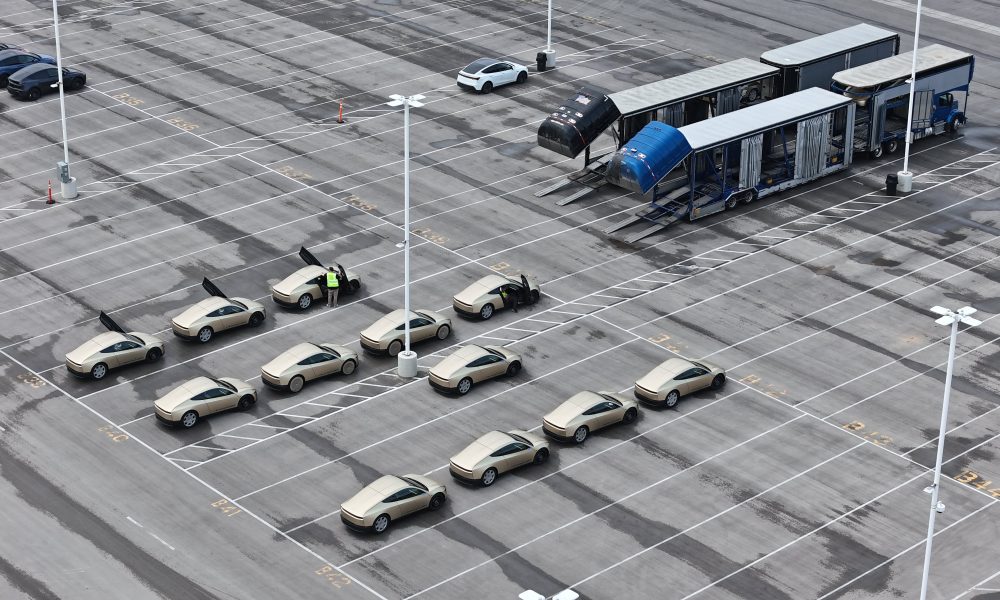
Tesla is consolidating a significant number of its upcoming Cybercab vehicles at Gigafactory Texas, signaling preparations for large-scale production of its autonomous taxi service. Recent visual evidence captured at the facility shows more than 30 Cybercabs either being transported or positioned near testing areas, suggesting a concerted effort to advance the Robotaxi program.
Visual Evidence Emerges from Gigafactory Texas
The compelling imagery and video footage were disseminated by Joe Tegtmeyer, a consistent observer of Gigafactory Texas operations and a drone operator, via posts on the social media platform X. These visuals offer a rare glimpse into the nascent stages of Cybercab deployment.

Notably, Tegtmeyer observed that many of the Cybercabs being loaded onto transport trucks were still equipped with steering wheels. This detail is significant, implying that these vehicles are likely pre-production or testing units rather than the fully driverless configurations intended for Tesla’s eventual Robotaxi service. The presence of steering wheels suggests ongoing validation and refinement processes before the vehicles are deployed in their autonomous operational state.
The Cybercabs might be en route to various testing sites across the United States. This movement is a critical step as Tesla aims to broaden the operational scope and refine the capabilities of its autonomous ride-hailing fleet. Such extensive testing is crucial for validating safety and reliability under diverse real-world conditions.
Cybercab Features and Production Milestones
Further footage captured at Gigafactory Texas provided a closer look at the Cybercab’s operational features. Specifically, the video demonstrated the functionality of the vehicle’s side and rear camera washer system. This system is essential for maintaining clear visibility for the autonomous driving sensors, particularly in adverse weather conditions.

The increasing concentration of Cybercabs at the Texas facility coincides with a significant announcement from Tesla: the production of the first-ever production Cybercab at the plant. This milestone marks a critical step toward realizing the company’s ambitious autonomous mobility goals.
Full-scale production of the Cybercab is anticipated to commence in April. This accelerated timeline reflects Tesla’s commitment to bringing its Robotaxi vision to fruition. The vehicle is positioned to be a cornerstone of Tesla’s future mobility services, aiming to complement and eventually expand beyond the existing Robotaxi operations that currently utilize Model Y vehicles in early deployment phases.
Tesla has also integrated the Cybercab’s production strategy with its innovative ‘Unboxed’ manufacturing process. This method involves assembling large vehicle modules independently before their final integration. The objective is to streamline production, reduce manufacturing costs, and significantly increase output efficiency. This approach represents a departure from traditional automotive assembly lines, prioritizing modularity and speed.
Production Outlook and Challenges
Elon Musk, Tesla’s CEO, has acknowledged that the ramp-up of Cybercab production might start at a measured pace. This is attributed to the complexity introduced by numerous new components and manufacturing techniques involved in the Cybercab’s design. The company is navigating a learning curve associated with these novel elements.
However, Musk expressed confidence in the long-term scalability of Cybercab production. Once the manufacturing processes mature and are optimized, he anticipates that production volumes could increase rapidly. This phased approach allows Tesla to manage complexities while building towards mass production capabilities.
The development and deployment of the Cybercab are central to Tesla’s overarching strategy in the autonomous vehicle and ride-hailing sectors. The company continues to invest heavily in research, development, and manufacturing infrastructure to support its ambitious goals in transforming personal transportation and urban mobility.