
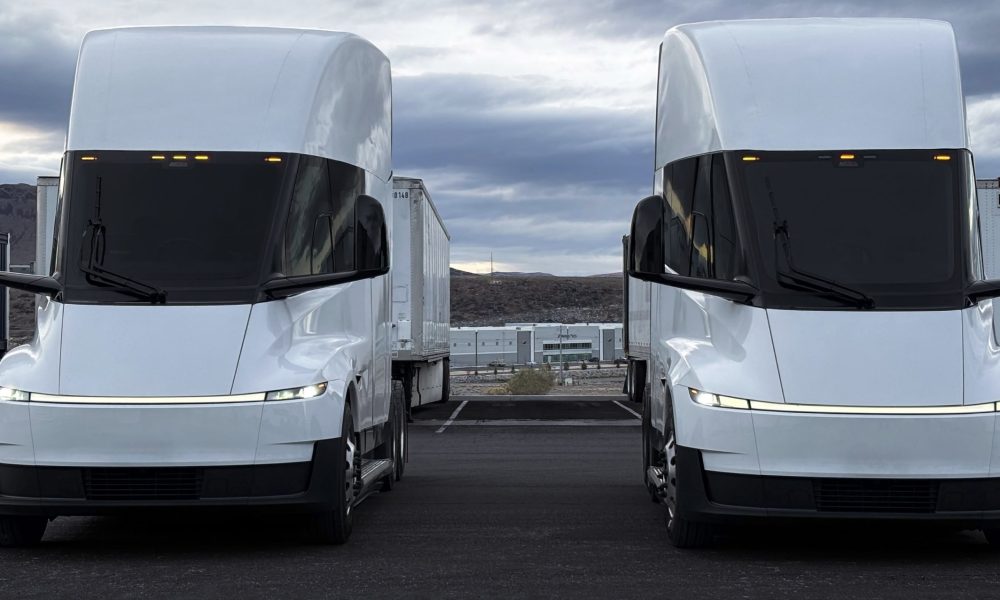
In a significant transformation within the heavy-duty transportation sector, the Tesla Semi, the all-electric Class 8 truck, is rapidly garnering widespread approval from the very professionals who operate these powerful machines daily: truck drivers. Far from being merely a futuristic concept, Tesla’s innovative electric truck is consistently impressing operators across North America through ongoing pilot programs, demonstrating its capability to redefine the long-haul experience.
The consensus among drivers actively participating in these programs is remarkably clear: the Tesla Semi offers a driving experience that is notably quieter, considerably quicker, and significantly less physically demanding than traditional diesel-powered counterparts. This advanced electric vehicle is not only lauded for its enhanced comfort but also for delivering triple the power output while simultaneously promising dramatically lower operating costs, positioning it as a formidable contender in the evolving electric trucking industry.

Tesla Semi Redefines Long-Haul Driving for Professionals
Early adopters and experienced drivers are consistently highlighting a suite of unique features integrated into the Tesla Semi that fundamentally transform their daily shifts. These include a meticulously designed centered driver’s seat, providing unparalleled visibility, alongside an intuitive, massive touchscreen interface that streamlines information and controls.
The immediate, powerful torque characteristic of electric powertrains, coupled with the complete absence of manual gear-shifting, eliminates a significant source of physical fatigue common in diesel rigs. These innovations are collectively making demanding long days behind the wheel noticeably easier and considerably less stressful for operators.
Ergonomics and Ease: A New Standard in Trucking
Drivers transitioning from conventional trucks often express surprise at the ease of operation the Tesla Semi offers. The centralized seating position, a departure from traditional cabin layouts, significantly improves peripheral vision and reduces blind spots, contributing to a safer and more confident driving experience.

The elimination of a clutch pedal and manual stick shift means less repetitive strain on the driver’s body. This ergonomic advantage is particularly valuable for long-haul routes, where physical discomfort can accumulate over many hours on the road, directly impacting driver well-being and concentration.
Real-World Maneuverability and Stress Reduction
Professional testimonials underscore the practical benefits of the Tesla Semi’s design and advanced technology. Dakota Shearer of IMC Logistics recounted a challenging maneuver, stating: “I backed right out of there, no problem. It’s like I’d never done it in the first place. That right there showed me that the technology the Tesla has makes a big difference.” This highlights the precision and control offered by the electric powertrain.
Similarly, Angel Rodriguez of Hight Logistics, a veteran who transitioned from a 13-speed diesel truck, affirmed the physical relief: “It’s just easier on your body. It’s less stressful because you’re not really having to engage the clutch and the stick shift.” Such feedback from experienced professionals provides robust validation for the electric trucking solution.
The enthusiasm extends across other pilot programs. Tom Sterba, a Senior Driver at Saia, spent several days testing the Tesla Semi and expressed deep admiration for its technological integration. “The navigation systems in these trucks are just unbelievable. That’s what I love about it,” Sterba remarked, emphasizing the advanced capabilities within the cabin.
His profound satisfaction with the experience was encapsulated in a statement that has resonated widely within the trucking community: “I hope I retire in this truck.” This sentiment speaks volumes about the significant appeal and potential for driver retention offered by the Tesla Semi in the competitive heavy-duty transport sector.
Unmatched Performance and Efficiency in Electric Trucking
Beyond driver comfort, the Tesla Semi is demonstrating compelling performance metrics and operational efficiencies that are critical for fleet operators. The shift from fossil fuels to electricity promises not only environmental benefits but also substantial economic advantages in the long run, positioning the Tesla Semi as a forward-thinking investment in the electric trucking industry.
Pilot programs involving major logistics and supply chain companies like ArcBest, thyssenkrupp Supply Chain Services, and Mone Transport have consistently yielded positive results. Drivers from these fleets echoed similar praise for the intuitive center-seat layout, the remarkably smooth and instant acceleration, and the overall impression of enhanced comfort and safety.
Power Output and Operational Cost Savings
A key differentiator for the Tesla Semi is its power delivery. It provides three times the power of typical diesel rigs, translating into superior acceleration and uphill climbing capabilities without the usual strain. This robust performance is achieved while significantly reducing energy consumption compared to traditional fuel-based vehicles.
The long-term operational costs are projected to be dramatically lower. Electric vehicles generally incur reduced fuel expenses due to the lower cost of electricity per mile compared to diesel, alongside decreased maintenance requirements stemming from fewer moving parts and simpler powertrains.
Pilot Programs Validate Real-World Efficiency
The real-world data collected from these extensive pilot programs has substantiated the initial hype surrounding the Tesla Semi. ArcBest, for instance, logged thousands of miles, showcasing impressive efficiency rates even when tackling challenging routes such as the demanding Donner Pass.
Moreover, some participating fleets reported beating even Tesla’s own stringent efficiency targets, underscoring the formidable capabilities of the heavy-duty electric truck under diverse operational conditions. This data provides concrete evidence of the Tesla Semi’s viability and strong competitive edge.
Next-Generation Engineering: Advancements in the Production Tesla Semi
The latest insights into the Tesla Semi’s evolution were recently shared on *Jay Leno’s Garage*, featuring renowned host Jay Leno as the first outsider to experience the updated long-range production model. He was joined by key figures from Tesla: Chief Designer Franz von Holzhausen and Semi Program Director Dan Priestley, who unveiled significant upgrades.
This exclusive segment offered a detailed look at the enhancements slated for volume production of the Tesla Semi this year. These improvements address various aspects of the truck, from its structural integrity and power systems to its battery technology and aerodynamic profile, reinforcing its position as a leading heavy-duty electric truck.
Key Technical Upgrades for Volume Production
Among the most notable advancements, the production-ready Tesla Semi has undergone a significant weight reduction, shedding approximately 1,000 pounds. This lighter chassis contributes to increased payload capacity and improved overall efficiency. Internally, the truck now features a robust 48-volt architecture, a standard increasingly adopted in advanced automotive systems for greater power delivery efficiency.
The steering system has been upgraded to fully electric steering, incorporating actuators derived from the innovative Cybertruck, promising enhanced responsiveness and control. Crucially, the Tesla Semi will utilize advanced 4680 battery cells, meticulously engineered for an exceptional lifespan exceeding one million miles, ensuring long-term reliability and performance.
Charging Infrastructure and Extended Range Capabilities
Aerodynamic improvements have played a pivotal role in extending the range of the Tesla Semi. The long-haul version is now capable of achieving an impressive 500 miles on a single charge, while the shorter-wheelbase standard-range model offers approximately 325 miles, catering to various operational needs within the electric trucking industry.
To support these extensive ranges, the Megacharger network has seen significant enhancements, capable of delivering up to 1.2 megawatts of power. This translates into rapid charging times, allowing the Tesla Semi to regain roughly 300 miles of range in approximately just 30 minutes, minimizing downtime and maximizing productivity.
During his drive, Jay Leno, while hauling substantial loads, expressed his astonishment at the Tesla Semi’s agility and seemingly boundless power. “I don’t feel like I’m pulling anything,” he remarked, highlighting the seamless and effortless performance of the heavy-duty electric truck even under demanding conditions.
The Future of Heavy-Duty Transport: Electric and Driver-Approved
With hundreds of Tesla Semis already on the roads, accumulating over 13.5 million fleet miles and demonstrating high uptime, the future of heavy-duty transportation appears decisively electric. The overwhelming positive feedback from drivers underscores a pivotal shift in industry perception, moving beyond skepticism towards enthusiastic adoption.
The unanimous consensus from participants across various pilot programs is unequivocal: the Tesla Semi is not merely a replacement for diesel trucks but a superior alternative. Its quiet operation, rapid acceleration, and significantly reduced physical demands offer a stark contrast to traditional rigs, all while delivering three times the power and substantially lower operating costs.
This confluence of advanced engineering, validated real-world performance, and enthusiastic driver endorsement strongly indicates that the electric trucking industry is poised for rapid expansion. The Tesla Semi is leading this charge, securing its position as a transformative force and demonstrating that professionals are ready to embrace an electric future for good.