
Key Takeaways (TL;DR)
- Tesla announced plans for an innovative Tesla robotaxi service, envisioning a hybrid model that combines company-operated autonomous vehicles with owner-contributed cars.
- CEO Elon Musk described the future mobility solution as a fusion, akin to a “combination of Airbnb and Uber,” offering owners unprecedented flexibility to integrate their personal vehicles into the self-driving fleet.
- The foundational technology underpinning this ambitious project will leverage Tesla’s proprietary “vision-only architecture” and advanced “end-to-end neural networks,” meticulously trained on billions of miles of real-world driving data.
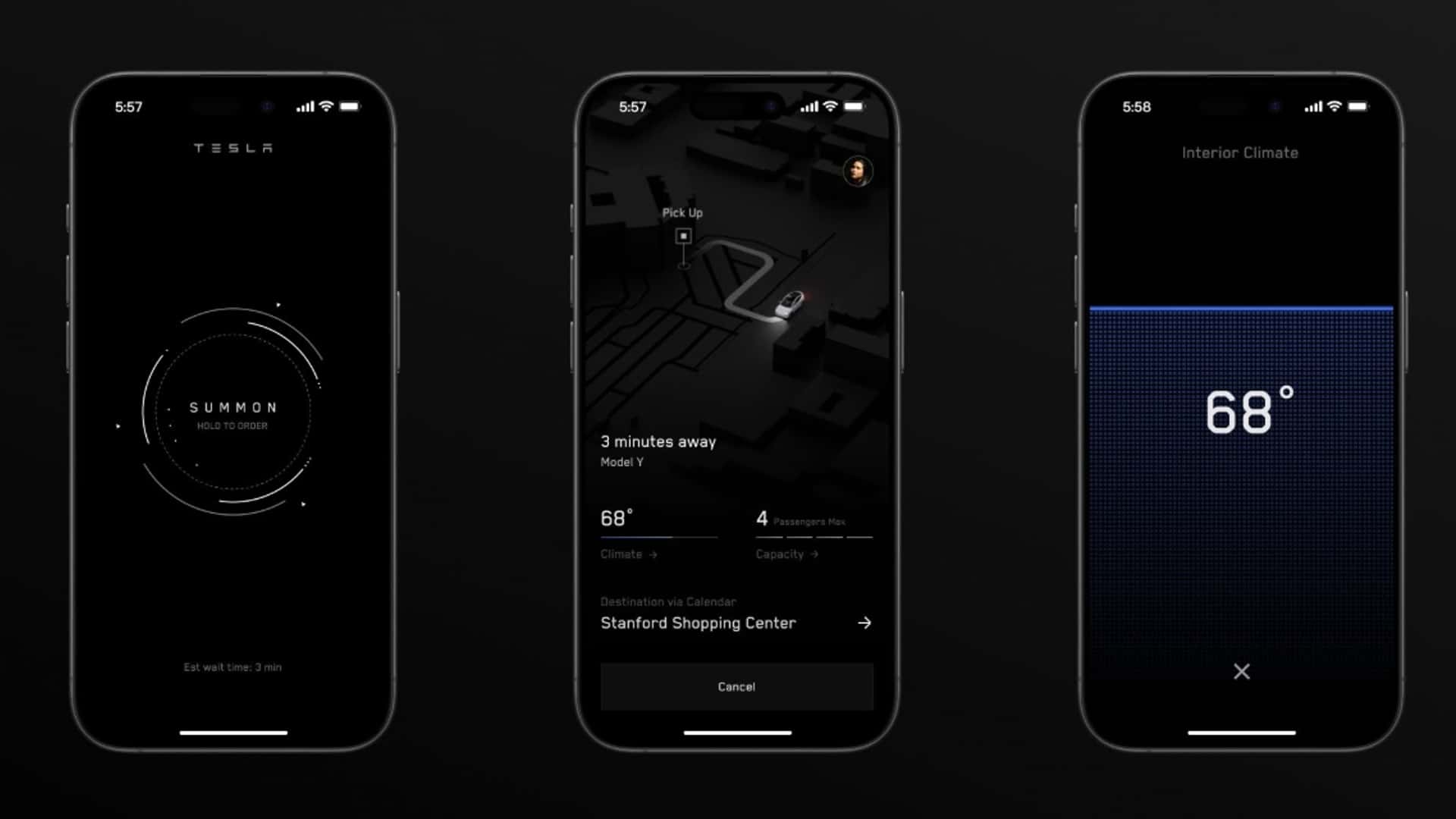
- While initial glimpses of the ride-hailing functionality within the Tesla app, featuring a “Summon” button and climate control options, have been shared, the full-scale deployment remains a long-term aspiration.
- This strategic announcement, made during a pivotal first-quarter earnings call on April 23, 2024, aims to bolster investor confidence amid recent market fluctuations and reports suggesting a reprioritization from a more affordable consumer electric vehicle.
- The ultimate success of the Tesla robotaxi service is intricately linked to the company’s ability to achieve robust and reliable Full Self-Driving (FSD) capability, a long-standing objective that has faced considerable developmental challenges and unfulfilled past timelines.
Tesla has formally revealed its comprehensive strategy for entering the ride-hailing market, detailing plans for a sophisticated autonomous Tesla robotaxi service. This initiative, articulated during the company’s recent first-quarter earnings call, outlines a dual operational model where Tesla will deploy and manage a significant portion of its own self-driving fleet while simultaneously allowing private owners to contribute their vehicles.
The vision presented by CEO Elon Musk suggests a groundbreaking shift in personal mobility, merging the convenience of ride-sharing with the potential for passive income generation for Tesla vehicle owners. This approach seeks to redefine vehicle utility, moving beyond traditional ownership models.
Tesla’s Vision for a Hybrid Autonomous Mobility Network
During the first-quarter earnings call, Tesla CEO Elon Musk unveiled more clarity on the automaker’s long-anticipated foray into the autonomous ride-hailing sector. He articulated a future where Tesla would not only operate its own expansive fleet of self-driving taxis but would also integrate a network of owner-operated vehicles.
Musk characterized this innovative model as a “combination of Airbnb and Uber,” highlighting its unique blend of centralized fleet management and decentralized individual participation. This hybrid structure aims to capitalize on both the scalability of a large, dedicated fleet and the expansive availability provided by a network of private car owners.
A New Paradigm for Vehicle Ownership and Utilization
A cornerstone of the proposed Tesla robotaxi service is the unprecedented flexibility offered to Tesla owners. According to Musk, owners would possess the autonomy to “add or subtract their cars from the fleet whenever they want,” granting them full control over their vehicle’s availability within the network.
Furthermore, owners will be empowered to set specific parameters for who can utilize their vehicle. They “can decide if they want to only let the car be used by friends and family, or only by five-star users or by anyone.” This tiered access system allows for a personalized level of trust and security, appealing to a broad spectrum of potential participants.
This innovative concept promises to transform electric vehicles into lucrative assets, potentially generating income for owners during periods of non-use. The ability to customize usage and availability marks a significant departure from conventional ride-sharing platforms, offering a new dimension of control and financial opportunity.
The Technological Core: Vision-Only Autonomy for the Tesla Robotaxi Service
Tesla’s commitment to a specific technological pathway for achieving full autonomy was reiterated in its first-quarter earnings report. The document underscored that the company has been “investing in the hardware and software ecosystems necessary to achieve vehicle autonomy and a ride-hailing service.”
Central to this strategy is a robust belief in a “vision-only architecture with end-to-end neural networks, trained on billions of miles of real-world data.” This approach relies exclusively on cameras and advanced artificial intelligence to perceive and navigate the environment, eschewing alternative sensor technologies such as LiDAR.
The emphasis on an extensive dataset, comprising billions of miles of real-world driving scenarios, is crucial for training these neural networks. This vast reservoir of data allows the AI to learn and adapt to diverse driving conditions, road layouts, and unexpected events, continually improving the system’s ability to make safe and precise decisions without human intervention.
Integrating Robotaxi Functionality into the Tesla Ecosystem
The earnings report also provided a glimpse into the anticipated user experience for the future Tesla robotaxi service. Renderings showcased how ride-hailing functionality would be seamlessly integrated into the existing Tesla mobile application.
One notable feature highlighted was a prominent “Summon” button, presumably designed for users to easily request an autonomous taxi. Another intriguing detail was a screen displaying a temperature setting of 68 degrees, suggesting that future customers might have the capability to pre-adjust climate control settings within their robotaxi before it even arrives.
While these details remain somewhat scant, they offer a tantalizing preview of the convenience and personalization Tesla aims to deliver. The integration into the familiar Tesla app ecosystem is intended to provide a cohesive and intuitive user experience for both vehicle owners and riders.
Strategic Rationale Amidst Shifting Priorities
The timing of Tesla’s detailed robotaxi announcement is particularly significant, coming after a period of considerable market speculation and investor uncertainty. Reports from Reuters, indicating that Tesla had potentially abandoned plans for a more affordable consumer vehicle in favor of prioritizing robotaxis, had created significant ripples across the automotive industry and financial markets.
Musk’s latest disclosures, therefore, served as a crucial communication to “assuage investors” and clarify the company’s future strategic direction. By firmly outlining the ride-hailing business, Tesla aimed to demonstrate a clear and profitable long-term vision, addressing concerns about its product pipeline and growth trajectory.
Crucially, during the same earnings call, Tesla also took steps to reassure stakeholders regarding its commitment to broader market segments. The company stated its intention to accelerate the launch timing of “new vehicles, including more affordable models,” indicating that the pursuit of the Tesla robotaxi service does not preclude the development of more accessible electric vehicles, with the robotaxi itself expected to arrive later.
The Path to True Self-Driving: Promises and Persistent Challenges
The successful realization of a fully operational Tesla robotaxi service hinges entirely on the company’s ability to achieve robust, reliable self-driving capabilities. This goal, however, has been a long-standing and often challenging endeavor for the automaker.
Tesla’s Full Self-Driving (FSD) feature, despite its name and significant cost, currently “requires total driver supervision and regularly makes mistakes.” This reality underscores the substantial gap between present advanced driver-assistance systems and truly autonomous operation without human intervention.
Historically, Elon Musk has been known for making ambitious projections regarding autonomous driving timelines. Famously, he proclaimed that Tesla would have “1 million robotaxis on the road by 2020.” This prediction, which did not materialize, serves as a poignant reminder of the formidable engineering and regulatory hurdles inherent in deploying a fully autonomous fleet at scale. The company’s current statements about the robotaxi service being “far down the line” reflect a potentially more grounded outlook on development. Overcoming these technical and operational complexities is paramount for the credibility and ultimate success of the robotaxi venture.
Regulatory Landscape and Safety Considerations for Autonomous Vehicles
Beyond the technical development, the deployment of any autonomous vehicle fleet, including Tesla’s, navigates a complex and evolving regulatory landscape. Governments worldwide are working to establish frameworks for testing, licensing, and operating self-driving cars, with a strong emphasis on public safety and liability.
Rigorous safety validation and extensive testing are non-negotiable prerequisites before widespread commercial rollout of the Tesla robotaxi service. Public trust, which is fundamental for adoption, will be built upon a demonstrated track record of safe and reliable operation under various real-world conditions. These regulatory and safety challenges add layers of complexity to the already demanding technological development process.
Economic Implications and Future Market Potential
Should the Tesla robotaxi service come to fruition as envisioned, its economic implications for the company and the broader mobility sector could be profound. For Tesla, this service represents a significant new revenue stream, moving beyond mere vehicle sales into recurring service income.
The dual model, allowing both company-owned and owner-operated vehicles, offers diverse avenues for profitability. Tesla could generate revenue from operating its own fleet directly, while also taking a commission from the rides facilitated by private owners’ vehicles. This model could unlock substantial value from its installed base of electric vehicles, enhancing overall financial performance and market valuation.
Furthermore, a successful entry into the autonomous ride-hailing market could position Tesla as a dominant player in the future of urban mobility, potentially disrupting traditional taxi and ride-sharing services and expanding its influence beyond manufacturing into the service economy.
Looking Ahead: The Evolving Timeline for Tesla Robotaxis
While the recent earnings call provided a clearer conceptual framework for the Tesla robotaxi service, the precise timeline for its full-scale commercial launch remains undefined. Tesla has consistently indicated that the full deployment of a robotaxi fleet is still “far down the line,” underscoring the significant developmental milestones that must still be achieved.
The journey from conceptualization to widespread commercial operation involves not only perfecting the autonomous driving technology but also navigating complex regulatory approvals, building out a robust operational infrastructure, and ensuring public acceptance. As such, investors and consumers are advised to approach these ambitious plans with a balanced perspective, acknowledging both the transformative potential and the inherent challenges in bringing such a complex service to market.
FAQ Section
What is Tesla’s robotaxi service concept?
Tesla’s robotaxi service envisions a hybrid ride-hailing network combining company-operated autonomous vehicles with privately owned Teslas. CEO Elon Musk described it as a blend of “Airbnb and Uber,” where owners can rent out their self-driving cars to others, generating income while Tesla manages a core fleet.
How will Tesla owners participate in the robotaxi fleet?
Tesla owners will have the flexibility to add or remove their vehicles from the robotaxi fleet as they choose. They can also set specific user access parameters, deciding whether their car can be used by friends and family, highly-rated users, or any customer on the network.
What technology will power the Tesla robotaxi service?
The service will be powered by Tesla’s “vision-only architecture,” utilizing cameras and advanced “end-to-end neural networks.” These systems are extensively trained on billions of miles of real-world driving data, aiming to enable full autonomy without relying on other sensors like LiDAR.
When is the Tesla robotaxi service expected to launch?
While Tesla has confirmed development, the full launch of the robotaxi service is still considered “far down the line.” The company is accelerating the release of new, more affordable vehicle models first, with the robotaxi deployment slated for a later, unspecified date.
Why is Tesla prioritizing robotaxis?
The strategic focus on robotaxis aims to unlock new revenue streams for Tesla beyond vehicle sales, capitalizing on recurring service income. The announcement also served to reassure investors about Tesla’s long-term growth strategy, particularly after reports suggesting a shift in priorities from a cheaper consumer EV.
What are the main challenges for Tesla’s robotaxi plans?
Key challenges include achieving true, reliable Full Self-Driving (FSD) capability, which currently requires human supervision. Additionally, navigating complex and evolving regulatory frameworks for autonomous vehicles, ensuring public safety, and building widespread consumer trust will be critical hurdles for successful deployment.