
Key Takeaways (TL;DR):
- Tesla plans to launch a Tesla robotaxi service combining company-owned autonomous vehicles with a unique program allowing private Tesla owners to add their cars to the fleet.
- CEO Elon Musk described the future service as a “combination of Airbnb and Uber,” offering flexibility for owners to set usage parameters.
- The automaker is investing heavily in “vision-only architecture with end-to-end neural networks” for full vehicle autonomy.
- This strategic pivot was highlighted during the Q1 earnings call, addressing investor concerns following reports of shifting priorities from a cheaper consumer vehicle to robotaxis.
- Despite past ambitious timelines for self-driving technology, Tesla maintains its commitment to a future scalable and profitable autonomous ride-hailing business.
Tesla Details Vision for Autonomous Ride-Hailing
In a significant disclosure during its first-quarter earnings call, electric vehicle giant Tesla outlined its long-anticipated plans for a Tesla robotaxi service. The company’s vision sketches a future where autonomous vehicles, both company-operated and owner-contributed, will form a revolutionary ride-hailing network. This strategic direction aims to address investor questions regarding the automaker’s future trajectory and commitment to innovation.
The announcement provided a clearer picture of how Tesla intends to enter the competitive ride-hailing market, leveraging its advanced self-driving technology. While specific timelines remain fluid, the commitment to developing this service was underscored, offering insights into one of the most ambitious projects in the automotive industry.
A Hybrid Model: Airbnb Meets Uber
Tesla CEO Elon Musk elaborated on the unique operational model for the impending Tesla robotaxi service, likening it to a blend of established sharing economy platforms. “Think of it like a ‘combination of Airbnb and Uber’,” Musk stated, suggesting a flexible ecosystem designed to integrate both corporate-owned fleets and privately-owned vehicles.
Under this proposed system, individual Tesla owners will possess the unprecedented ability to lease their vehicles for autonomous ride-hailing. Musk explained that owners would be able to “add or subtract their cars from the fleet whenever they want.” This flexibility extends to setting specific parameters for vehicle usage.
Owners will reportedly “decide if they want to only let the car be used by friends and family, or only by five-star users or by anyone.” This tiered access control could offer owners significant autonomy over their vehicle’s participation, potentially fostering wider adoption among the existing Tesla customer base.
Technological Backbone for Autonomy
The foundation of this ambitious Tesla robotaxi service lies in the company’s continuous investment in advanced autonomous driving technology. Tesla’s first-quarter earnings report highlighted these ongoing efforts, stating, “We have been investing in the hardware and software ecosystems necessary to achieve vehicle autonomy and a ride-hailing service.”
Central to Tesla’s strategy is its unique approach to vehicle autonomy. The company reiterated its belief that “a scalable and profitable autonomy business can be realized through a vision-only architecture with end-to-end neural networks, trained on billions of miles of real-world data.” This reliance on camera-based systems, eschewing lidar sensors common in other autonomous driving projects, remains a distinctive characteristic of Tesla’s development.
The extensive training data gathered from millions of miles of real-world driving by Tesla vehicles worldwide is deemed crucial for refining these neural networks. This data-centric approach underpins the iterative development of its Full Self-Driving (FSD) software, which is intended to be the core technology powering the robotaxi fleet.
User Experience and App Integration
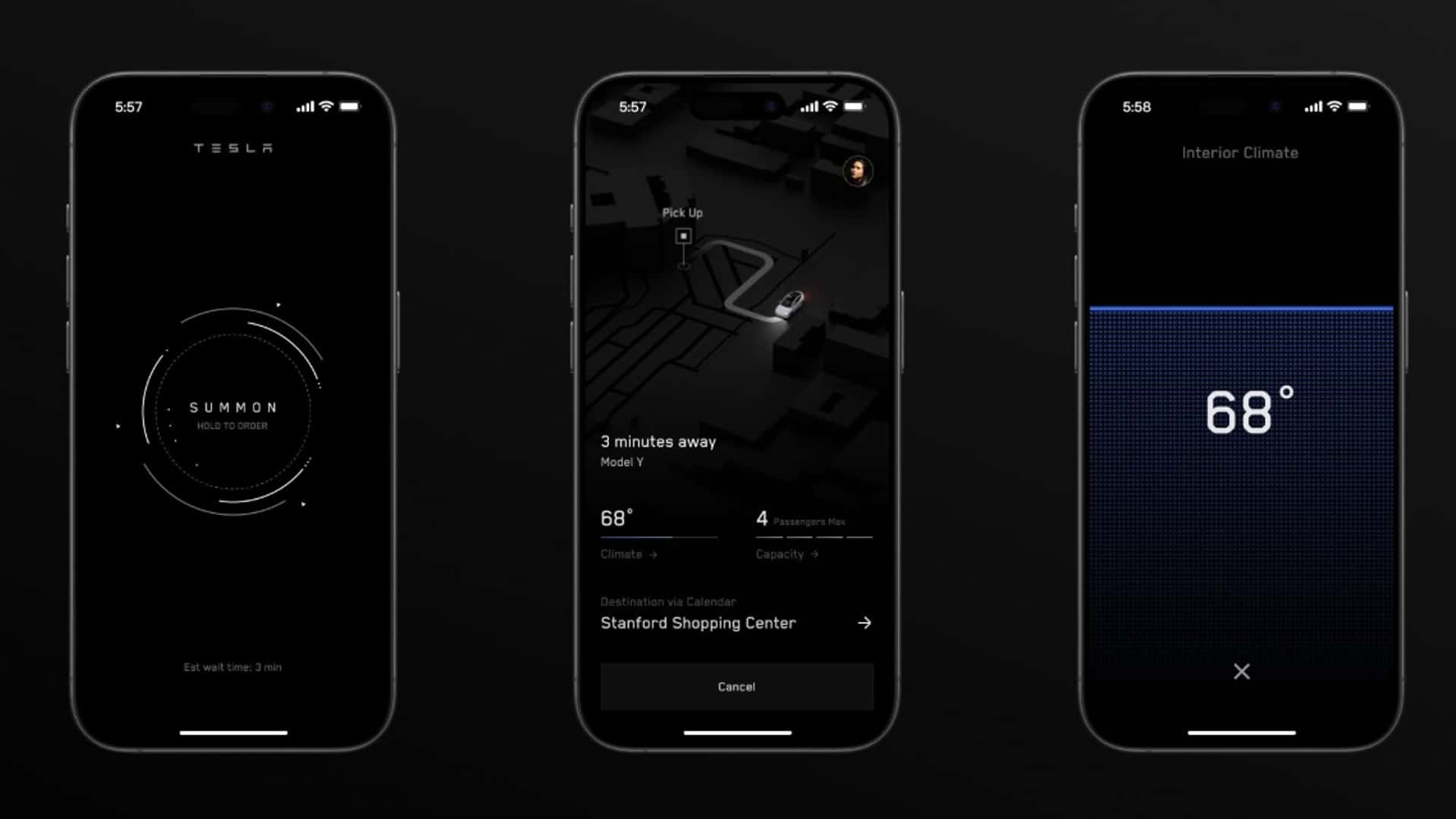
To provide a tangible glimpse into the future Tesla robotaxi service, the company also released preview renderings of what the ride-hailing functionality might look like within the Tesla app. These visuals hint at an intuitive user interface designed for seamless interaction.
One prominent feature depicted is a “Summon” button, presumably allowing users to easily request an autonomous taxi. Another intriguing detail showcased a screen displaying a temperature setting of “68 degrees,” suggesting that customers may have the option to pre-set climate controls in their robotaxi before it arrives, enhancing comfort and personalization.
While these details are currently scant, they illustrate Tesla’s focus on integrating a sophisticated user experience into its broader autonomous mobility ecosystem. Such features would distinguish the service and cater to modern consumer expectations for personalized transportation.
Navigating Investor Scrutiny and Market Shifts
The detailed announcement regarding the Tesla robotaxi service arrived at a critical juncture for the automaker. Significant uncertainty had surrounded Tesla’s strategic direction following reports, notably from Reuters, suggesting a potential shift from developing a more affordable consumer vehicle to prioritizing robotaxi development.
These reports had raised questions among analysts and investors about Tesla’s commitment to its mass-market appeal and future growth vectors. The earnings call provided an opportunity for the company to clarify its stance and reassure stakeholders.
During the call, Tesla confirmed its intention to accelerate the launch timing of “new vehicles, including more affordable models,” effectively indicating that the robotaxi would arrive later. This balanced approach aims to address both the demand for accessible electric vehicles and the long-term vision for autonomous ride-hailing, potentially assuaging investor concerns.
The Road Ahead: Challenges and Promises
Despite the grand vision for a Tesla robotaxi service, the path to widespread autonomous deployment is fraught with significant technological and regulatory hurdles. Tesla’s journey with its Full Self-Driving (FSD) feature exemplifies these challenges, as the system currently requires active driver supervision and has, at times, demonstrated limitations.
Historically, CEO Elon Musk has made ambitious projections regarding Tesla’s autonomous capabilities. A notable instance includes his 2019 proclamation that the company would have 1 million robotaxis operating on the road by 2020. This ambitious timeline, however, was not met, leading to a degree of skepticism among industry observers and the public.
Achieving true Level 5 autonomy, where a vehicle can operate completely without human intervention in all conditions, is a complex engineering feat that no company has yet fully mastered. Regulatory frameworks for widespread autonomous vehicle operation are also still evolving globally, posing additional complexities for deployment.
The successful realization of Tesla’s robotaxi ambitions will therefore depend not only on its continued technological advancements but also on its ability to navigate stringent safety standards, public perception, and a rapidly changing regulatory landscape. The company’s ongoing investment in hardware and software ecosystems, coupled with its vision-only architecture, reflects a deep commitment to overcoming these challenges and realizing a scalable, profitable autonomy business.
Frequently Asked Questions (FAQ)
What is Tesla’s robotaxi service?
Tesla’s robotaxi service is a planned autonomous ride-hailing network. It intends to operate with a combination of Tesla-owned self-driving vehicles and private Tesla cars whose owners opt to add them to the fleet for earning revenue.
How will the Tesla robotaxi service work for owners?
Tesla owners will have the flexibility to add or remove their vehicles from the robotaxi fleet at will. They can also set specific access preferences, choosing whether their car can be used by friends and family, highly-rated users, or any customer on the platform.
What technology will power Tesla’s robotaxis?
The service will be powered by Tesla’s self-driving technology, utilizing a “vision-only architecture with end-to-end neural networks.” These systems are trained on billions of miles of real-world driving data collected from Tesla vehicles globally.
When is the Tesla robotaxi service expected to launch?
While Tesla has not provided a firm launch date, the company’s Q1 earnings report indicated that ride-hailing functionality “will be available in the future” and that the robotaxi would arrive later than new, more affordable vehicle models.
How does this plan address investor concerns?
The announcement clarifies Tesla’s long-term strategy amidst reports of prioritizing robotaxis over cheaper consumer cars. By confirming continued investment in both affordable models and autonomous ride-hailing, Tesla aims to reassure investors about its diversified growth plan.
What challenges does Tesla face in deploying its robotaxi service?
Key challenges include achieving full Level 5 autonomous driving capabilities, which currently require driver supervision for Tesla’s FSD. Additionally, navigating evolving regulatory landscapes and addressing public skepticism regarding autonomous vehicle safety are significant hurdles.