
Key Takeaways:
- Tesla (NASDAQ: TSLA) reported 480,126 vehicle deliveries in Q2 2026, significantly surpassing Wall Street’s consensus of 406,000 units.
- This performance represents an over 18 percent beat on delivery expectations and marks a strong rebound from Q1 figures.
- The Model 3 and Model Y accounted for the vast majority of deliveries, with 467,762 units.
- Energy storage deployments also showed robust growth, reaching 13.5 GWh for the quarter, highlighting diversification beyond core automotive.
- The company’s full-year delivery forecast remains around 1.69 million vehicles, a modest increase from the previous year.
- Future growth is anticipated from the scaling of the Cybercab project and potential new vehicle introductions, such as the Model Y L.
Mumbai, India – Tesla (NASDAQ: TSLA) has delivered a significant boost to its market standing, announcing Q2 2026 vehicle deliveries that decisively outperformed Wall Street’s projections. The electric vehicle (EV) giant reported a robust 480,126 units delivered for the three months ending in June, comfortably exceeding the analyst consensus of 406,000 vehicles.

This impressive quarterly performance not only represents a substantial beat of over 18 percent against industry estimates but also signals a strong resurgence following a slight miss in the first quarter of the year. The figures underscore Tesla’s enduring capacity to navigate a dynamic global automotive market and reinforces investor confidence in its operational efficiency.
Decisive Q2 Deliveries Propel Tesla Forward
Tesla’s second-quarter delivery report paints a picture of accelerated growth, particularly within its high-volume segments. Of the total 480,126 vehicles delivered, the popular Model 3 and Model Y lines constituted the vast majority, with 467,762 units finding new owners. This sustained demand for Tesla’s core sedan and SUV offerings continues to be a cornerstone of the company’s market strategy.
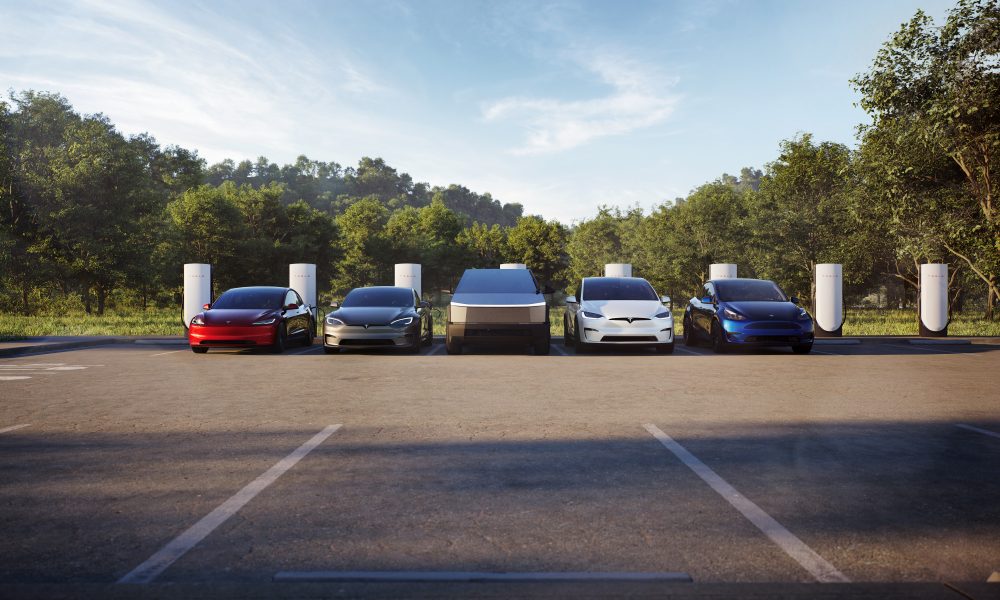
The remaining 12,364 deliveries comprised the Model S, Model X, and the innovative Cybertruck. Notably, this quarter marks a significant shift in Tesla’s vehicle lineup, as the Model S and Model X have officially been sunsetted. These two luxury models will no longer be included in the company’s production and delivery reports moving forward, indicating a strategic streamlining of its older product portfolio.

Production Metrics Support Strong Delivery Figures
Complementing the strong delivery numbers, Tesla reported production of 451,758 vehicles during the second quarter. This includes 442,936 units of the Model 3 and Model Y, alongside 8,822 units across its ‘Other Models’ category, which encompassed the Model S, Model X, and Cybertruck production before the sunsetting of the S and X lines.
The alignment between production and delivery figures highlights Tesla’s robust manufacturing capabilities and efficient supply chain management, ensuring that vehicles produced are rapidly reaching customers. This operational synergy is critical in maintaining market momentum and meeting burgeoning global demand for electric vehicles.
Rebounding from Q1: A Trajectory of Growth
The exceptional Q2 performance serves as a vital rebound for Tesla. In the first quarter of 2026, the company had reported 358,023 deliveries, falling slightly short of Wall Street’s consensus of 365,645 cars. This minor miss had raised some questions among analysts regarding the company’s growth trajectory.
However, the Q2 figures have emphatically answered these concerns, demonstrating Tesla’s ability to quickly recover and exceed expectations. This sequential improvement underscores the inherent resilience and adaptability within its automotive division, reaffirming its leadership position in the fiercely competitive EV market.
Energy Storage: A Powerful Auxiliary Division
Beyond its acclaimed electric vehicles, Tesla’s energy storage division continues to be a formidable and increasingly crucial component of its overall business model. The company reported significant energy storage deployments of 13.5 GWh for the second quarter. This segment has consistently demonstrated robust performance over the past several years, emerging as a strong point for the multifaceted enterprise.
The sustained growth in energy solutions, which includes products like Powerwall and Megapack, highlights Tesla’s commitment to sustainable energy infrastructure. This diversification not only strengthens its revenue streams but also reinforces its overarching mission to accelerate the world’s transition to sustainable energy, attracting a broader base of investors interested in comprehensive climate solutions.
Anticipated Annual Growth and Future Catalysts
Looking ahead, Tesla analysts continue to project full-year deliveries to reach approximately 1.69 million units. This forecast represents a modest increase of 3 to 5 percent from the 1.64 million cars delivered in the previous year. While this might appear conservative to some, it reflects a period of strategic investment and preparation for future growth phases.
Tesla is poised for a return to more substantial sequential and noticeable year-over-year growth, primarily driven by several key initiatives. Among these, the innovative Cybercab project is expected to ramp up considerably in the coming years. This autonomous ride-hailing service is envisioned to revolutionize urban mobility and significantly augment Tesla’s delivery ecosystem.
The Cybercab and New Model Introductions
The Cybercab project represents a bold leap into the future of transportation, with reports indicating that Tesla has already commenced on-road testing of production Cybercabs featuring no steering wheel or pedals. This advanced autonomous technology is a testament to Tesla’s unwavering commitment to artificial intelligence and its ambition to deploy a fully driverless network, which could profoundly impact vehicle delivery numbers in the mid to long term.
Furthermore, Tesla has other potential catalysts on its horizon to spur future vehicle deliveries. One highly speculated release candidate for the U.S. market is the slightly longer Model Y L. This variant has already achieved considerable success in China, where consumers have appreciated its enhanced interior space.
With the discontinuation of the Model X, the demand for a roomier SUV option within Tesla’s lineup has intensified among U.S. buyers. The introduction of the Model Y L could effectively fill this gap, attracting new customers and further solidifying Tesla’s market share in the premium electric SUV segment. This strategic expansion of the electric vehicle lineup is crucial for sustained long-term growth.
Investor Outlook and Market Sentiment
Tesla’s strong Q2 performance underscores a remarkably stable and efficiently managed automotive division. The ability to convincingly beat Wall Street expectations, coupled with robust energy storage deployments, sends a clear positive signal to the market. These figures suggest that Tesla is well-positioned, with no immediate concerns arising from its core operations.
The market’s reaction to such results often translates into heightened investor confidence, reinforcing Tesla’s valuation as a leader in both electric vehicles and sustainable energy solutions. As the company continues to innovate and expand its product offerings, its comprehensive approach to clean energy and advanced technology remains a compelling narrative for global investors.
The positive quarterly results also reflect positively on Tesla’s efforts in advanced manufacturing and global supply chain optimization. Amidst fluctuating economic conditions, consistently delivering above expectations demonstrates strong operational discipline and strategic foresight. This performance further cements Tesla’s reputation as a key player in the ongoing global transition to sustainable transportation and energy systems.
FAQ Section
Q1: What were Tesla’s total vehicle deliveries for Q2 2026?
Tesla reported total vehicle deliveries of 480,126 units for the second quarter of 2026. This figure significantly surpassed Wall Street’s consensus estimate of 406,000 units, marking a strong operational performance and exceeding expectations by over 18 percent.
Q2: How did Tesla’s Q2 deliveries compare to Wall Street expectations?
Tesla’s Q2 2026 deliveries of 480,126 vehicles substantially crushed Wall Street’s expectations of 406,000. This represented an impressive beat of over 18 percent, demonstrating stronger-than-anticipated demand and efficient fulfillment from the electric vehicle manufacturer.
Q3: Which Tesla models contributed most to the Q2 deliveries?
The Model 3 and Model Y vehicles were the primary drivers of Tesla’s Q2 2026 deliveries, accounting for 467,762 units. The remaining 12,364 deliveries were composed of the Model S, Model X, and Cybertruck, before the Model S and X lines were sunsetted this quarter.
Q4: What was the performance of Tesla’s energy storage division in Q2 2026?
Tesla’s energy storage deployments showed robust performance in Q2 2026, reaching 13.5 GWh. This division has been consistently strong over the past few years, highlighting its increasing importance as a key component of Tesla’s broader business model and revenue streams.
Q5: What are Tesla’s projected annual deliveries for 2026?
Analysts currently predict Tesla’s full-year deliveries for 2026 to be in the region of 1.69 million units. This forecast implies a modest increase of 3 to 5 percent compared to the 1.64 million vehicles delivered by the company in the preceding year.
Q6: What future projects are expected to drive Tesla’s growth?
Future growth for Tesla is anticipated to be significantly spurred by the scaling up of the Cybercab project, an autonomous ride-hailing service, which is expected to ramp up considerably in the next few years. Additionally, potential new vehicle introductions like the Model Y L could further boost deliveries.
Q7: Why is the Model Y L important for the U.S. market?
The Model Y L, a slightly longer variant, has performed exceptionally well in China and is highly desired by U.S. buyers for its increased interior space. With the Model X officially discontinued, the Model Y L is seen as a crucial addition to meet market demand for larger electric SUVs in the U.S.