
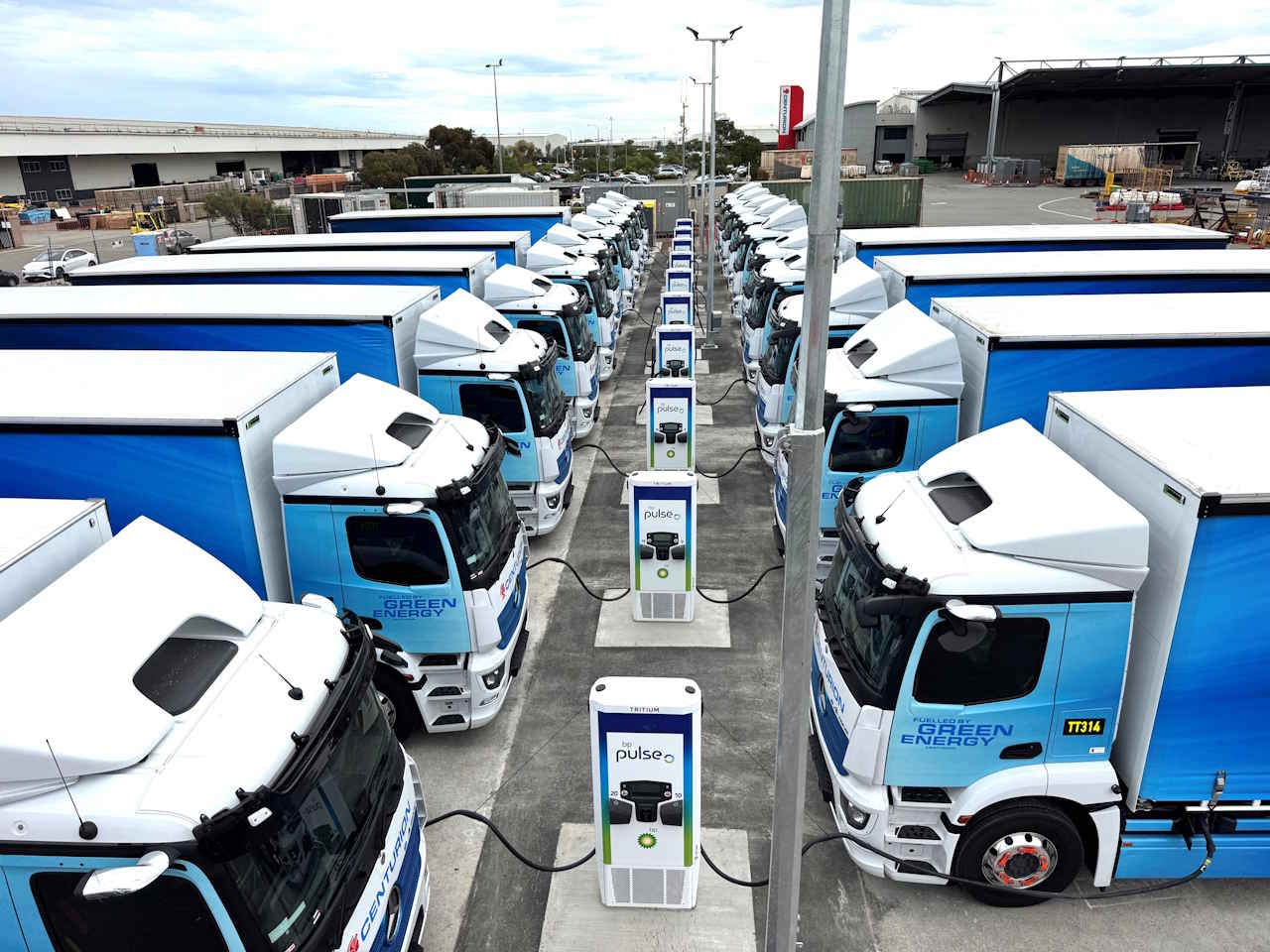
Melbourne, Victoria – The Victorian Labor government has launched a significant initiative aimed at bolstering the financial resilience and environmental sustainability of the state’s vital freight industry. Unveiled recently, two new programs are set to assist Victoria’s freight businesses in transitioning towards cleaner, more fuel-efficient transport options, directly addressing rising operational costs and future-proofing their fleets.
With applications now open, these targeted schemes invite freight operators to invest in cutting-edge low- and zero-emission vehicles, essential infrastructure, and advanced technologies. The overarching goal is to equip Victoria’s freight businesses with the tools to significantly reduce their reliance on traditional fuels, a particularly pressing concern amidst recent fluctuations in global energy markets.

Strategic Investment for a Sustainable Future
The new Freight Decarbonisation Co-Investment Program and the Victorian Electric Heavy Vehicle Trial represent a concerted effort to support Victoria’s freight businesses. These initiatives are designed to not only mitigate the impact of escalating fuel prices but also enhance overall operational efficiency and embrace more sustainable practices across the sector.
Speaking on the launch, Melissa Horne, State Minister for Ports and Freight, underscored the urgency and strategic importance of the programs. She acknowledged the financial pressures facing the industry and articulated the government’s proactive stance.
“We know the cost of fuel is hurting our freight operators which is why rolling out these programs will help freight businesses cut costs, boost efficiency and modernise their fleets for the future,” Minister Horne stated. “We’re making it easier for operators to save on running costs while transitioning to cleaner, more reliable technology.”

The Economic Engine of Victoria’s Freight Businesses
Victoria’s freight businesses are a cornerstone of the state’s economy, playing a critical role in connecting communities and driving commerce. The sector currently provides employment for approximately 240,000 individuals, underscoring its significant social and economic contribution.
Annually, this robust industry is responsible for moving an estimated 440 million tonnes of freight. This monumental task is expected to grow substantially in the coming decades, highlighting the imperative for a sustainable and efficient transport network to support Victoria’s projected expansion.
The sheer scale of operations by Victoria’s freight businesses necessitates forward-thinking policies that ensure long-term viability and environmental responsibility. These new government programs are designed to provide the necessary support for this crucial transition.
The Freight Decarbonisation Co-Investment Program: Empowering SMEs
Central to the government’s strategy is the $8 million Freight Decarbonisation Co-Investment Program. This initiative is specifically tailored to provide substantial financial assistance to small- and medium-sized freight businesses operating across both road and rail networks.
Eligible businesses can apply for grants of up to $300,000, enabling them to make significant investments in cleaner vehicles, establish critical charging infrastructure, explore low-emissions fuels, and integrate other innovative technologies that reduce their carbon footprint.
A key feature of this program is its co-investment model, designed to foster shared responsibility and ensure commitment from recipients. Successful applicants are required to contribute at a rate of 1:5, meaning for every dollar received in grant funding, the business must co-invest 20 cents in cash.
For instance, a business receiving the maximum grant of $300,000 will be required to provide a co-investment of $60,000 in cash. This structure aims to leverage government funding to catalyse greater private sector investment in sustainable transport solutions for Victoria’s freight businesses.
Expressions of interest for the Freight Decarbonisation Co-Investment Program are currently open and will close promptly at 4:00 PM on Wednesday, April 22, 2026. Further comprehensive information regarding eligibility criteria and application procedures can be accessed by interested parties here.
Pioneering Practical Experience: Victorian Electric Heavy Vehicle Trial
Complementing the co-investment program is the $1.5 million Victorian Electric Heavy Vehicle Trial. This forward-looking initiative is being delivered in close partnership with the Victorian Transport Association (VTA), a key industry body representing Victoria’s freight businesses.
The trial’s primary objective is to furnish businesses with invaluable real-world experience in operating electric heavy vehicles. This practical exposure is crucial for understanding the performance characteristics, charging requirements, and operational nuances of these advanced vehicles in a commercial freight context.
While the government has not yet released specific details regarding the trial’s operational framework or participating businesses, its establishment signifies a clear commitment to gathering actionable insights. These insights will be vital for informing future policy decisions and facilitating the broader adoption of electric technologies within Victoria’s freight businesses.
Updates regarding the trial’s progress and further information are anticipated to be made public as the program develops, ensuring transparency and facilitating informed participation from the industry.
Industry Acclaim for a Forward-Thinking Approach
The introduction of these two programs has been met with considerable enthusiasm from industry leaders. The Victorian Transport Association, a vocal advocate for sustainable transport solutions, offered its strong endorsement of the government’s initiatives.
Peter Anderson, CEO of the Victorian Transport Association, commended the government for its foresight and practical support. He praised the administration for “recognising the scale of the decarbonisation challenge and for supporting freight operators with meaningful, hands‑on programs.”
Anderson reiterated the VTA’s consistent advocacy for a carefully managed and informed transition to cleaner technologies. “The VTA has consistently advocated for a measured, informed transition so that freight companies can adopt cleaner technologies when it makes operational and commercial sense,” he affirmed.
He further elaborated on the long-term vision required for such a fundamental shift in the industry. “While this shift will take years, the most important step is beginning with knowledge, clarity, and a plan.” This sentiment underscores the need for strategic planning and ongoing support to ensure the successful transformation of Victoria’s freight businesses.
Driving Economic Resilience and Environmental Stewardship
These government-led programs represent a dual benefit for Victoria’s freight businesses. Economically, they offer a direct pathway to reducing operational vulnerabilities associated with volatile fuel prices, potentially leading to substantial long-term savings and increased profitability. Enhanced efficiency derived from modernised fleets can further boost competitive advantage.
Environmentally, the investment in low and zero-emission vehicles is a critical step towards achieving Victoria’s broader climate change targets. By reducing greenhouse gas emissions from the transport sector, these initiatives contribute significantly to cleaner air and a healthier environment for all Victorians.
The move also positions Victoria’s freight businesses at the forefront of global sustainability trends, ensuring they remain competitive and compliant with evolving environmental regulations, both domestically and internationally. This proactive stance ensures the sector remains robust and adaptable in a changing global landscape.
The Road Ahead: Challenges and Opportunities
While these programs mark a crucial beginning, the decarbonisation journey for Victoria’s freight businesses is a complex and long-term endeavour. It will require sustained investment, continuous innovation, and strong collaboration between government and industry.
The challenges of integrating new technologies, developing extensive charging networks, and upskilling the workforce are considerable. However, the opportunities for enhanced efficiency, reduced operating costs, and a more environmentally responsible freight sector are equally immense.
The Victorian government’s multi-million dollar commitment signals a clear pathway for Victoria’s freight businesses to navigate this transition successfully, ensuring the industry remains robust, innovative, and sustainable for generations to come.