
Key Takeaways:
- America’s EV fast-charging stations saw a 10% year-over-year decline in new port additions in Q2, totaling 4,382 new ports across 806 stations.
- This slowdown reflects a strategic shift by charging networks towards prioritizing profitability, operational efficiency, and an enhanced customer experience over sheer expansion.
- Tesla Superchargers’ long-standing market share dipped below 50% for the first time, signaling increased competition and diversification in the public fast-charging landscape.
- Despite the slower pace of new station construction, average utilization rates held steady at 15.8%, indicating that new capacity is being effectively absorbed by a growing user base.
- New infrastructure development remains regionally concentrated, with 40% of new ports in Q2 deployed across just five states, exacerbating concerns about charging access in underserved areas.
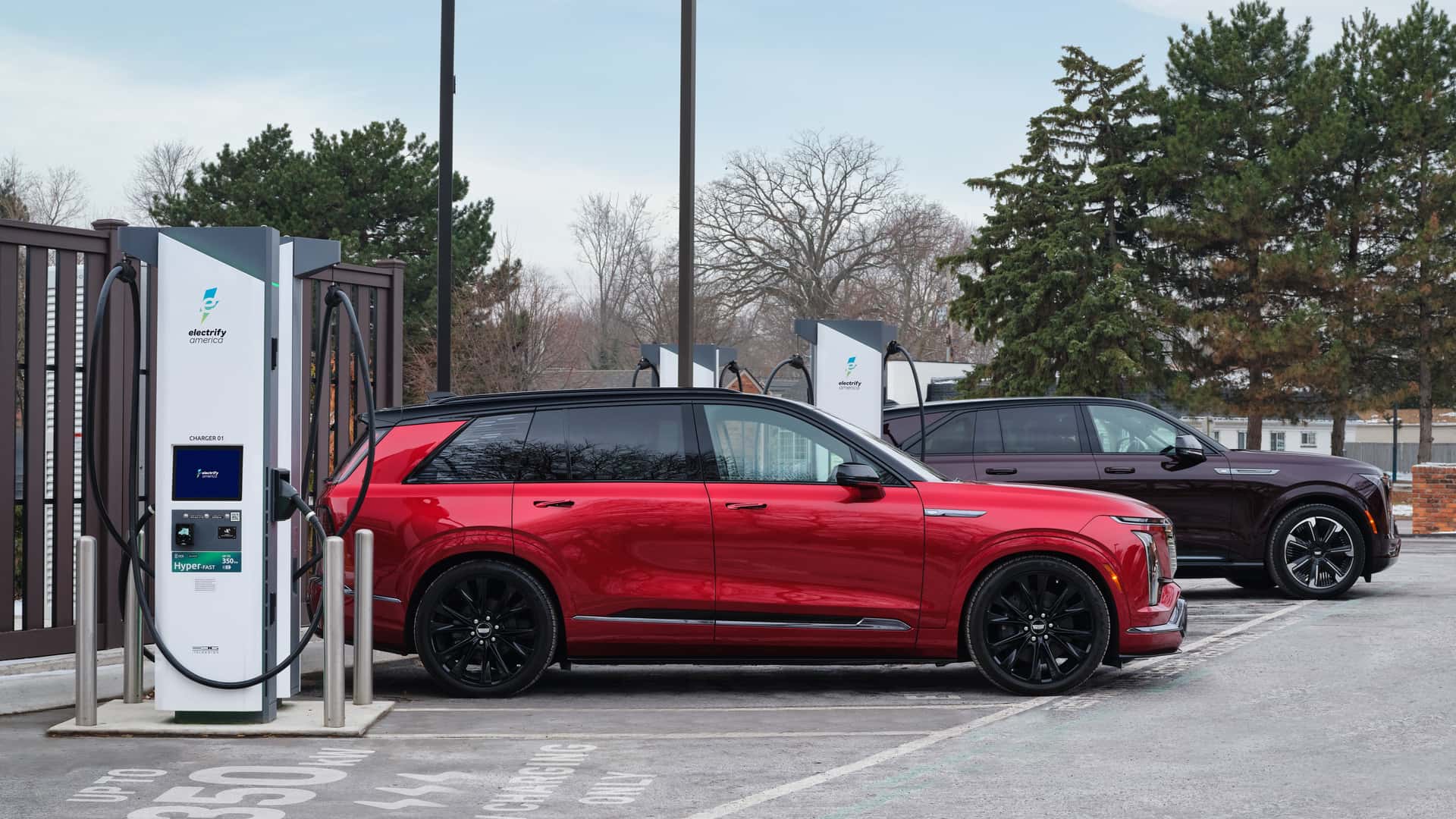
The expansion of America’s public fast-charging stations experienced a notable slowdown in the second quarter of the year. This deceleration comes as electric vehicle (EV) charging networks strategically pivot their focus towards long-term profitability and a significantly improved charging experience for consumers across the nation.

Data released by the charging data platform Paren on Tuesday revealed a dip in new installations. Charging companies collectively added 4,382 new ports across 806 new stations during Q2. This figure represents a 10% year-over-year decline when compared to the 4,865 ports and 891 stations deployed during the same period last year.
A Strategic Slowdown: Prioritizing Quality Over Quantity
While the quarterly numbers fell short of the record-setting fourth quarter of the previous year—which saw 5,966 new ports and 937 new stations—industry analysts suggest this trend is not necessarily a cause for alarm. Instead, it indicates a maturing market and a deliberate shift in operational strategy among charging providers.
Loren McDonald, chief analyst at the respected charging data analytics firm Chargeonomics, provided crucial context to these figures. “A two-quarter year-over-year decline is not definitive proof of a slowdown,” McDonald stated in the Paren report. He further elaborated, “Combined with recent CPO layoffs and pullbacks, it reinforces the industry’s new mantra: operations, customer experience, and profitability.”
This ‘new mantra’ underscores a concerted effort by charging companies to enhance the reliability and overall quality of America’s EV fast-charging stations. The industry is moving beyond simply adding more plugs to ensuring these plugs are consistently operational, user-friendly, and integrated into a more comprehensive service ecosystem.
Enhancing the Electric Vehicle Charging Experience
The qualitative shift in the electric vehicle charging sector is becoming increasingly evident. Operators are now prioritizing the installation of fewer stations, but equipping them with a higher density of powerful ports. This approach aims to reduce waiting times and improve the efficiency of each charging stop for EV drivers.
Beyond raw power, the focus has also expanded to the broader charging environment. Many newly established America’s EV fast-charging stations are now designed with a suite of amenities to enhance driver comfort and convenience. These often include essential facilities like restrooms, alongside value-added services such as cafes and complimentary Wi-Fi access.
Some pioneering networks, such as Ionna, are taking this commitment to customer experience even further, introducing air-conditioned lounges at select locations. These premium facilities allow drivers to relax comfortably or attend to work while their electric vehicles are rapidly recharging, transforming a utilitarian stop into a more pleasant experience.
Quarter-Over-Quarter Growth and Market Dynamics
Despite the year-over-year slowdown, the second quarter demonstrated robust quarter-over-quarter growth. Only 3,521 new ports were installed during the first quarter of the year. This indicates a significant 24% increase in installations from Q1 to Q2, suggesting a steady underlying momentum in the deployment of America’s EV fast-charging stations.
The competitive landscape also saw significant shifts. Tesla, long considered the dominant force in public fast-charging infrastructure, maintained its lead in new deployments but experienced a notable reduction in its overall market share. For the first time, the all-time market share of Tesla Superchargers dropped below 50%.
Tesla accounted for 27% of new deployments in Q2, contributing 1,185 new ports. This indicates that while still a major player, other networks are rapidly expanding and capturing a larger portion of the growing market for America’s EV fast-charging stations. Following Tesla, Walmart emerged as a significant contributor with 368 new ports, underscoring the increasing involvement of retail giants in the charging ecosystem.
ChargePoint added 333 new ports, demonstrating its continued role as a key network provider. Red E and Electrify America rounded out the top five, with 315 and 202 new ports, respectively. This diversification of providers signals a healthier, more competitive market poised to offer a wider range of options for EV owners.
Utilization Rates and Regional Disparities
A critical metric for assessing the health of the charging infrastructure is the utilization rate, which measures how frequently chargers are in use. In the second quarter, average utilization rates for America’s EV fast-charging stations held steady at 15.8%.
This consistent rate is a positive indicator, suggesting that the newly added charging capacity is being absorbed by electric vehicle drivers at a pace roughly equivalent to the rate of station construction. In essence, the supply of charging infrastructure appears to be keeping pace with the evolving demand from the expanding fleet of EVs on American roads.
However, the growth in charging infrastructure deployment was far from uniform across the United States. The second quarter witnessed a heavily regional concentration, with a substantial 40% of all new fast-charging ports being installed in just five states. California led this expansion by a wide margin, adding 120 new stations.
Following California, Texas, Florida, Illinois, and New York demonstrated significant growth in their charging networks. This distribution closely aligns with the uneven pattern of EV adoption across America, which initially skews towards highly populated coastal metropolitan areas, followed by industrial hubs in the Midwest, the Southeast, and the vast market of Texas.
This geographic disparity raises concerns about persistent ‘charging deserts’ in other parts of the country. States like North Dakota, for example, reported zero new public fast-charging ports in Q2. Similarly, Montana, Wyoming, and South Dakota each added only a single new station, highlighting the ongoing challenge of ensuring equitable access to charging infrastructure nationwide.
Long-Term Outlook and Market Resilience
Despite fluctuations in EV sales in the U.S., influenced by shifting federal and state policies, the electric vehicle charging industry has largely maintained its aggressive buildout strategy. Charging providers are making a significant bet on the continued and accelerating demand for electric vehicles in the coming years.
This long-term perspective suggests that the industry views any short-term market cooldowns as temporary blips, confident that the fundamental shift towards sustainable transportation will drive robust growth in EV adoption. The resilience of the charging sector reflects a broader commitment to supporting the transition to electric mobility.
Indications from the second-quarter sales figures suggest that this strategic bet by the charging industry is proving to be a judicious one. Second-quarter EV sales experienced their fastest growth since the expiration of the federal tax credit. This resurgence was notably boosted by rising gasoline prices, which were significantly impacted by geopolitical events, including the war in Iran, making battery-powered models an even more attractive proposition for consumers.
FAQs About America’s EV Fast-Charging Stations
Why did the growth of US EV fast-charging stations slow down in Q2?
The slowdown in Q2 was primarily due to a strategic shift by charging networks. Companies are now prioritizing profitability, operational efficiency, and enhancing the overall customer experience over the rapid, large-scale deployment of new stations, as indicated by charging data platform Paren.
What does it mean that Tesla’s Supercharger market share dropped below 50%?
This signifies a maturing and diversifying market for America’s EV fast-charging stations. While Tesla remains a major player, other networks like Walmart, ChargePoint, Red E, and Electrify America are rapidly expanding their infrastructure, offering more choices and increasing competition in the sector.
How does the industry plan to improve the EV charging experience?
Improvements include building fewer stations but with more high-powered ports, ensuring greater reliability, and incorporating amenities such as restrooms, cafes, and Wi-Fi. Some networks are even adding air-conditioned lounges to provide a more comfortable waiting environment for EV drivers.
Are new EV fast-charging stations being built evenly across the US?
No, the growth is heavily regional. In Q2, 40% of new ports were concentrated in just five states: California, Texas, Florida, Illinois, and New York. This uneven distribution reflects existing patterns of EV adoption and leads to disparities in charging access, with some states seeing minimal or no new installations.
What do steady utilization rates at America’s EV fast-charging stations indicate?
A steady utilization rate of 15.8% suggests that the supply of new charging capacity is being absorbed by electric vehicle drivers at roughly the same rate as stations are being built. This indicates that despite slower new station additions, demand is effectively meeting the available infrastructure.
Is the slowdown in charging infrastructure growth a negative sign for EV adoption?
Industry analysts and operators view this not as a negative, but as a strategic adjustment towards sustainable growth. They are betting on a long-term rebound in EV demand, with Q2 EV sales showing robust growth, suggesting that current strategies are aligning with market realities and future projections.