
Key Takeaways:
- Starting January 2024, the U.S. electric vehicle (EV) tax credit will transform from a year-end refund into an immediate discount at the point of sale.
- This significant change allows buyers to transfer the credit (up to $7,500 for new EVs, $4,000 for used) directly to the dealership, reducing the purchase price upfront.
- The revised system aims to make EVs more accessible by eliminating the need to wait for tax season and ensuring consumers can utilize the full credit amount, regardless of their tax burden.
- Strict eligibility criteria remain, including vehicle manufacturing location, battery component sourcing, MSRP caps, and buyer income limits.
- Dealerships must register with IRS Energy Credits Online to facilitate these immediate discounts.
America’s electric vehicle landscape is on the cusp of a significant transformation, as federal tax credits for clean vehicles are set to become substantially more accessible for consumers starting January 2024. This pivotal shift moves the incentive from a traditional tax refund mechanism to an immediate discount applied directly at the point of sale, potentially revolutionizing how individuals purchase or lease electric and plug-in hybrid vehicles across the nation.

The change, initiated by the Inflation Reduction Act of 2022, was designed to modernize and streamline the process of acquiring federal incentives for sustainable transportation. Previously, buyers would claim these credits on their annual tax returns, often waiting months to see the financial benefit. The upcoming alteration means consumers can effectively drive off the lot with a new or used EV at a significantly reduced price, marking a substantial boost for affordability and adoption.
U.S. Treasury officials have elaborated on these updated rules, confirming that the Internal Revenue Service (IRS) will now repay dealerships the credit amount within 72 hours of a completed eligible transaction. This mechanism addresses previous criticisms regarding the timing and accessibility of the incentives, ensuring that the financial benefit is realized immediately by the buyer.
The Evolution of Federal EV Incentives
Federal tax credits for clean vehicles are not a new phenomenon for U.S. consumers, having been available for new plug-in hybrids, fuel cell electric vehicles (FCEVs), and battery electric vehicles (BEVs) since the late 2000s. These initial credits offered up to $7,500 and remained largely consistent for over a decade, playing a crucial role in encouraging early EV adoption.

However, the landscape dramatically shifted on January 1, 2023, with the implementation of new provisions under the Inflation Reduction Act (IRA). This landmark legislation introduced a revised framework for the electric car tax credit, primarily aimed at bolstering domestic manufacturing and supply chains within North America.
The IRA’s provisions significantly narrowed the eligibility criteria, leading to a number of previously qualified electrified vehicles losing their tax credit status. For instance, models such as the Chinese-made Polestar 2, the British-built Mini Cooper SE, and the German-built BMW i4 were among those that no longer qualified, solely due to their final assembly location outside North America.
Stricter Caps and Income Thresholds
Beyond manufacturing requirements, the IRA also introduced specific Manufacturer’s Suggested Retail Price (MSRP) caps. For sedans, the limit was set at $55,000, while trucks and SUVs faced an $80,000 ceiling. Used clean vehicles, for their part, were subject to a more stringent $25,000 price cap. These additions meant that some premium or higher-priced EV options, like those from Lucid, became ineligible for the federal incentive.
Furthermore, the IRA incorporated income limitations for buyers, ensuring that the electric car tax credit primarily benefited a defined demographic. New EV buyers were subject to income limits of $300,000 for joint filers, $225,000 for heads of household, and $150,000 for single filers. For used EV purchases, these limits were even stricter: $150,000 for joint, $112,500 for head-of-household, and $75,000 for single filers.
Despite these critical additions and restrictions, the fundamental nature of the tax credit remained unchanged throughout 2023. It continued to operate as a non-refundable credit, meaning that the incentive could only reduce a buyer’s tax liability to zero; it could not result in a refund beyond that. For example, a purchaser of a qualifying Tesla Model Y in 2023 could claim the $7,500 credit in the subsequent tax season. If their tax burden was only $5,000, they could only utilize $5,000 of the credit, forfeiting the remaining $2,500. This limitation was a point of contention for many critics, as it prevented individuals with lower tax burdens or those with numerous other write-offs from fully realizing the benefit of the incentive. The upcoming changes for 2024 are specifically designed to address this long-standing issue and make electric vehicles more financially accessible upfront.
Transformative Changes for 2024: The Point-of-Sale Revolution
The most impactful change, effective January 1, 2024, is the ability for consumers to transfer the EV tax credits directly to the dealership at the point of sale. This means the credit amount is applied as an immediate reduction in the vehicle’s purchase price, rather than being claimed on a subsequent tax return.
For a vehicle purchase to qualify for this immediate discount, dealerships must first register with a new online platform, IRS Energy Credits Online. Once registered and verified, the dealership is authorized to facilitate the transfer of the credit, effectively acting as an intermediary between the buyer and the IRS.
Consider the hypothetical taxpayer mentioned earlier, who previously faced a $5,000 tax burden and could only apply $5,000 of a $7,500 credit. Under the new point-of-sale system, this individual can now receive the full $7,500 reduction in the purchase price of their new EV. Crucially, even if the individual’s tax liability for the year is less than the credit amount, they will still benefit from the full reduction and will not owe the IRS any amount come tax season. This effectively transforms the non-refundable credit into a refundable-like benefit at the time of purchase, significantly enhancing its utility for a broader range of buyers.
While this change greatly benefits consumers, concerns have been voiced within the automotive industry. As Motor Trend recently observed, dealerships are grappling with questions about the speed and reliability of reimbursement from the federal government, a process not historically known for its swiftness. This aspect remains a watch point for the seamless operation of the new system.
Income Thresholds and Potential Repercussions
It is critical for consumers to understand that the income caps established by the IRA remain in effect. If a buyer exceeds the applicable income limit by the end of the year in which they received a point-of-sale credit, they will be required to repay the full incentive amount to the IRS. For instance, a single filer who makes $150,001 in a given year, after receiving a $7,500 credit at the time of purchase, would have to return the entire $7,500 during tax season.
Buyers who anticipate potentially exceeding these income thresholds retain the option to claim the credit normally on their tax return, rather than opting for the immediate point-of-sale discount. This flexibility allows individuals on the cusp of the income caps to assess their financial situation more accurately before committing to the incentive.
Vehicle Eligibility: New Requirements Reinforced
The core eligibility requirements for new electrified vehicles remain stringent. To qualify for the federal EV tax credit, a vehicle must, at a minimum, feature a battery capacity of at least 7-kilowatt hours and undergo final assembly in North America. Additionally, it must meet specific critical mineral and battery component sourcing requirements, a provision largely intended to reduce reliance on non-allied nations for key materials.
Below is a list of qualifying vehicles, along with their applicable credit values, categorized by their MSRP caps:
Vehicles With $55,000 Cap:
- Chevrolet Bolt EV: $7,500 credit
- Chevrolet Bolt EUV: $7,500 credit
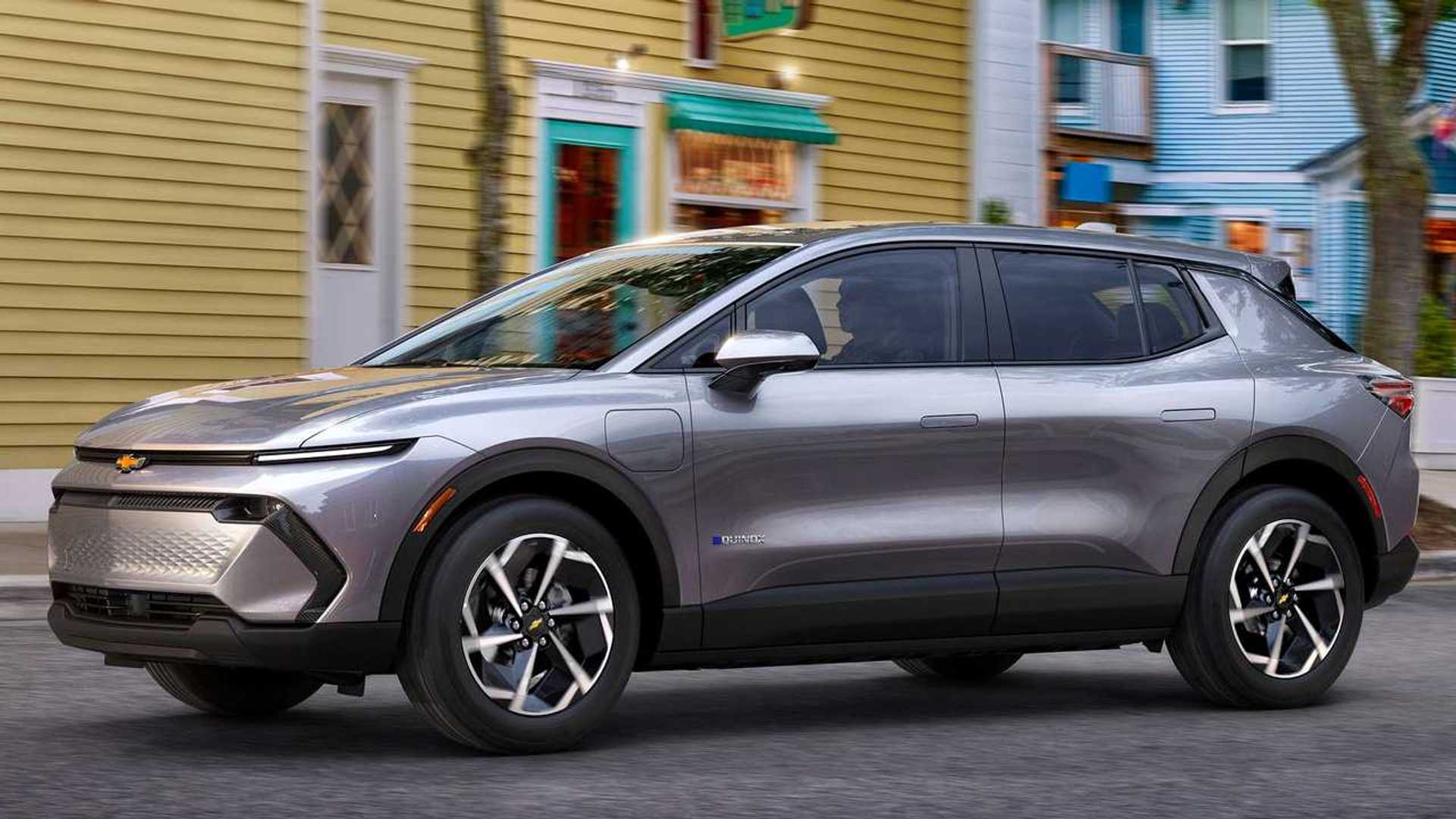
- Chevrolet Equinox EV: $7,500 credit
- Tesla Model 3: $7,500 credit
Vehicles With $80,000 Cap:
- Cadillac Lyriq: $7,500 credit
- Chevrolet Blazer EV: $7,500 credit
- Chevrolet Silverado EV: $7,500 credit
- Chrysler Pacifica: $7,500 credit
- Corsair Grand Touring: $3,750 credit
- Ford E-Transit: $3,750 credit
- Ford Escape: $3,750 credit
- Ford F-150 Lightning: $7,500 credit
- Ford Mustang Mach-E: $3,750 credit
- Jeep Grand Cherokee 4xe: $3,750 credit
- Lincoln Aviator Grand Touring: $7,500 credit
- Rivian R1S: $3,750 credit
- Rivian R1T: $3,750 credit
- Tesla Model X Long Range: $7,500 credit
- Tesla Model Y: $7,500 credit
- Volkswagen ID.4: $7,500 credit
- X5 xDrive50e 2024: $3,750 credit
Qualifying for Used Clean Vehicle Credits
The federal incentives also extend to used clean vehicles, which can include fuel cell EVs, plug-in hybrids, or pure EVs. For a used vehicle to qualify for the $4,000 credit, it must meet several conditions: it must have a battery size of at least 7 kilowatt-hours, be at least two model years old, and sell for under $25,000. Additionally, a crucial stipulation is that the vehicle must not have been transferred to a qualified buyer after August 16, 2022. This means a used electric vehicle that has already been purchased second-hand (regardless of its price) after this specific date will not qualify for the $4,000 credit again.
Prospective buyers seeking to determine the eligibility of a used vehicle can utilize various online tools, such as Recurrent’s EV Qualification Tool, which assists owners in understanding if their desired vehicle meets the necessary criteria.
Navigating the Lease-to-Own Loophole
For strategic buyers, a particular avenue exists to potentially maximize the available federal incentives. This involves utilizing a leasing arrangement for an electric vehicle.
When an individual leases an EV, the federal credit can be factored into their lease payments, often resulting in lower monthly costs. This benefit applies to all EVs, irrespective of their manufacturing location, a key distinction from purchase incentives. The crucial step occurs at the end of the lease term: if the individual agrees to buy out the vehicle for under $25,000, they can then claim the $4,000 used EV credit on that purchase. This approach could potentially allow a savvy buyer to accumulate a combined $11,500 in federal incentives for a single vehicle.
This revised electric car tax credit represents the most substantial enhancement for both new and used EV consumers since its inception under the Inflation Reduction Act. With the introduction of the point-of-sale feature, consumers are now positioned to receive unparalleled purchasing stimuli, which could significantly reduce the upfront cost of electric cars. By making clean vehicles more financially accessible, these updated rules are poised to once again reshape the automotive landscape, accelerating the transition towards sustainable mobility.
FAQs
Frequently Asked Questions
No. With the new point-of-sale system, you will receive the full benefit of the credit as an upfront discount, irrespective of your final tax burden. You will not owe the IRS any portion of the incentive.
If your Modified Adjusted Gross Income (MAGI) exceeds the applicable income thresholds for your filing status in the year you claim the point-of-sale credit, you are legally obligated to repay the entire incentive amount to the IRS.
No. For a vehicle to qualify for the tax credit, its final Manufacturer’s Suggested Retail Price (MSRP), including all options and accessories, must remain strictly under the specified cap for its vehicle category.
No. Only dealerships that have successfully registered with the IRS Energy Credits Online portal and are recognized as eligible sellers can facilitate the immediate point-of-sale transfer of the EV tax credit.
Yes, plug-in hybrid electric vehicles (PHEVs) can be eligible for both new and used clean vehicle tax credits, provided they meet all the specific battery capacity, manufacturing, MSRP, and income requirements.
Yes, the strict requirements concerning the sourcing of battery components and critical minerals, primarily aimed at reducing reliance on specific foreign supply chains, remain essential for a new EV to qualify for the full tax credit amount in 2024.