
Key Takeaways
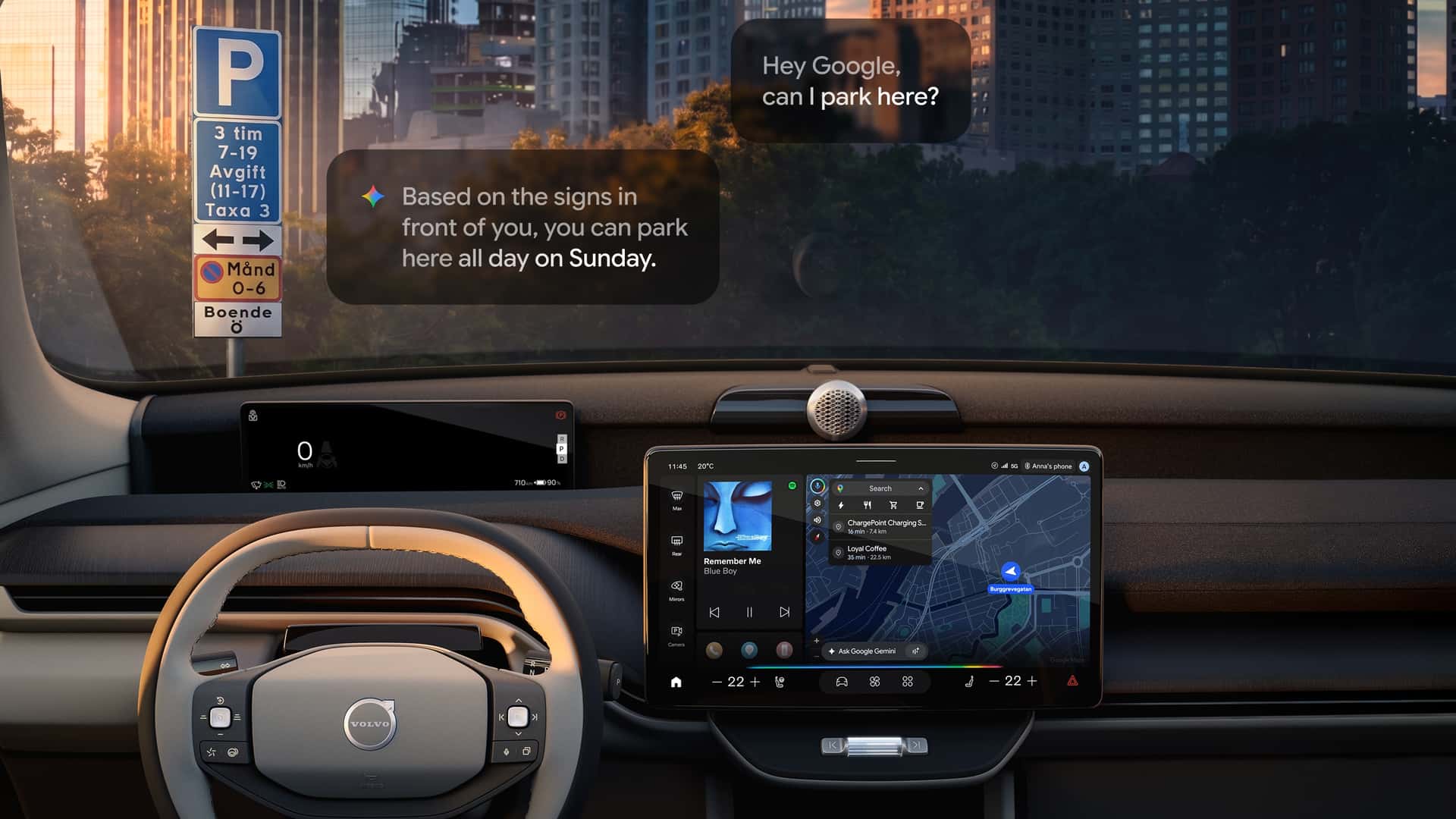
The new Volvo EX60 is set to revolutionise in-car interaction by integrating Google’s Gemini AI assistant directly with its advanced camera systems. This collaboration enables the electric crossover to interpret its surroundings in real time, offering drivers and passengers a truly contextually aware and conversational experience.
Key features include real-time translation of foreign road signs, identification of landmarks with contextual information, and proactive route suggestions. The system, leveraging Gemini’s multi-modal understanding and the Volvo EX60’s advanced computing, prioritises user privacy by requiring explicit consent and blurring sensitive visual data. While still in development, this innovation signals a significant leap in automotive artificial intelligence.

A New Era of In-Car Intelligence
The landscape of modern automotive technology is rapidly evolving, with artificial intelligence (AI) emerging as a cornerstone for future innovations. While many contemporary vehicles feature cameras for enhanced safety and driver assistance, the new generation, powered by sophisticated computing and AI, is pushing these capabilities into unprecedented territories.
At this year’s Google I/O event, a significant collaboration between Volvo and the American tech giant brought to light a groundbreaking development. The demonstration showcased how Google’s Gemini AI assistant, embedded within cars featuring a Google-based infotainment system, can seamlessly tap into the advanced camera feeds of the new Volvo EX60. This integration allows Gemini to interpret visual information in real time and provide intelligent, context-rich responses to occupants.
Real-Time Contextual Awareness
This pioneering project, although still a work in progress, offers a compelling glimpse into the future of automotive interaction. Volvo and Google remain cautious about setting a public release timeline, yet the demonstrated capabilities are remarkably impressive for an unreleased feature. The core functionality revolves around the Volvo EX60’s ability to ‘see’ its environment and engage in a dialogue about it.

Drivers can issue voice commands to inquire about specific details in their surroundings. For instance, if a road sign in a foreign language is encountered, Gemini can automatically scan the sign, translate its text, and articulate its meaning to the driver. This functionality extends beyond mere translation, offering a deeper understanding of the environment.
During the demonstration, the system was tasked with describing a prominent building visible from the street and suggesting activities in its vicinity. Gemini accurately identified the structure as the Transamerica Pyramid in San Francisco. It then provided useful context, noting that it is primarily an office building, hence not a typical tourist attraction, but highlighted the presence of a park at its base. Demonstrating proactive intelligence, the AI voice assistant subsequently asked if it should plot a route to a nearby point of interest.
This advanced interaction mirrors the experience of using Google Lens on a smartphone, but it is dramatically amplified by Gemini’s sophisticated AI and natural voice command interface. Volvo emphasised that this concept represents an early preview of how contextually aware AI experiences will become an integral part of the daily driving experience. The seamless integration of visual data with conversational AI within the Volvo EX60 is a testament to this vision.
The Technology Underpinning Gemini
The remarkable capabilities showcased in the Volvo EX60 are a direct result of several key technological advancements. Central to this innovation is the Gemini model’s multi-modal understanding. This allows the AI to process and synthesize information from various data streams—in this case, visual input from the car’s cameras and auditory input from voice commands—to form a coherent and intelligent response.
Complementing Gemini’s prowess is the Volvo EX60’s robust neural processing engine. This dedicated hardware component is crucial for handling the complex computations required for real-time AI analysis. Furthermore, the vehicle’s software-defined architecture provides the flexibility and power necessary to integrate and run such advanced artificial intelligence systems efficiently, enabling continuous updates and improvements.
Prioritising User Privacy
In an era of increasing digital awareness, privacy remains a paramount concern for users, especially when sophisticated camera systems and AI are involved. Google has explicitly stated that privacy considerations are at the forefront of this feature’s design. The system is engineered to be activated only with the explicit permission of the driver, ensuring user control over data usage.
To further safeguard privacy, any faces detected within the images being analysed are automatically blurred. This commitment to data security and user consent is vital for building trust in advanced in-car AI systems like the one found in the Volvo EX60, reflecting responsible innovation in the automotive sector.
Future Outlook for Google Integration
While the exact release date for these advanced AI features in the new Volvo EX60 remains undisclosed, Google has indicated that several other enhancements are slated for integration into cars equipped with Google built-in infotainment systems. These upcoming improvements are poised to further enrich the in-car digital ecosystem, transforming how occupants interact with their vehicles.
Expanding Google’s In-Car Ecosystem
Among the anticipated updates is a car-optimised version of YouTube Music, designed to provide a tailored audio experience for the automotive environment. Additionally, Google Maps will receive a significant upgrade with the introduction of 3D Immersive Navigation, a feature that promises a more intuitive and visually engaging way to navigate.
A deeper integration for Gemini is also on the horizon, expanding its capabilities beyond environmental analysis. Future iterations will allow Gemini to control various vehicle functions directly through voice commands, moving towards a truly holistic voice assistant experience. This advanced conversational AI integration aims to make everyday driving more convenient and seamless for users of the Volvo EX60 and other compatible models.
The Road Ahead for Volvo
The Immersive Navigation feature in Google Maps, which recently launched on Android smartphones and subsequently rolled out to Android Auto, is now confirmed for vehicles with Google built-in. The first Volvo models slated to receive this cutting-edge navigation experience are the Volvo EX60, EX90, and ES90. This phased rollout underscores Volvo’s commitment to integrating the latest digital innovations into its electric vehicle lineup.
The partnership between Volvo and Google, exemplified by the advanced capabilities of the Volvo EX60, signals a clear direction for the automotive industry. As vehicles become increasingly software-defined and interconnected, the role of artificial intelligence in enhancing safety, convenience, and overall user experience will continue to grow. This collaboration sets a new benchmark for intelligent mobility, promising a future where cars are not just modes of transport but intuitive, conversational companions.
Frequently Asked Questions
What is the primary innovation in the Volvo EX60 mentioned?
The primary innovation in the Volvo EX60 is its integration of Google’s Gemini AI assistant directly with the vehicle’s cameras. This allows the car to “see” and interpret its surroundings in real time, enabling conversational interactions and providing contextually aware information to drivers and passengers.
How does Gemini AI interact with the Volvo EX60’s cameras?
Gemini AI uses the live feed from the Volvo EX60’s built-in cameras to analyse objects like buildings and road signs. This visual data is then processed using Gemini’s multi-modal understanding capabilities and the car’s neural processing engine to provide relevant information through voice commands.
What specific tasks can the Volvo EX60’s AI perform?
The Volvo EX60’s AI can translate road signs written in other languages, identify landmarks such as the Transamerica Pyramid, provide contextual information about locations (e.g., whether a building is a tourist attraction), and suggest navigation routes to nearby points of interest based on observed surroundings.
What technology enables this advanced AI functionality in the Volvo EX60?
This advanced AI functionality in the Volvo EX60 is powered by Google’s Gemini model’s multi-modal understanding, which combines various data inputs. It also relies on the EX60’s dedicated neural processing engine and its flexible software-defined architecture for real-time analysis and seamless integration.
What measures are in place to protect user privacy with this new feature?
Google has stated that user privacy is a priority. The feature is activated only with the driver’s explicit permission. Additionally, faces in any analysed images are automatically blurred, ensuring that sensitive personal data is protected during the AI’s environmental interpretation process.
When will these AI features be available in the Volvo EX60?
While the project is still under development, Volvo and Google have not yet announced a specific public release date for these advanced AI features in the Volvo EX60. However, the demonstration at Google I/O suggests that the technology is progressing towards future implementation.
What other Google integrations are expected for Volvo vehicles?
Upcoming Google integrations for Volvo models with Google built-in infotainment systems include a car-optimised version of YouTube Music, 3D Immersive Navigation in Google Maps, and deeper Gemini integration for controlling various vehicle features via voice commands. The Volvo EX60, EX90, and ES90 will be among the first to receive Immersive Navigation.