
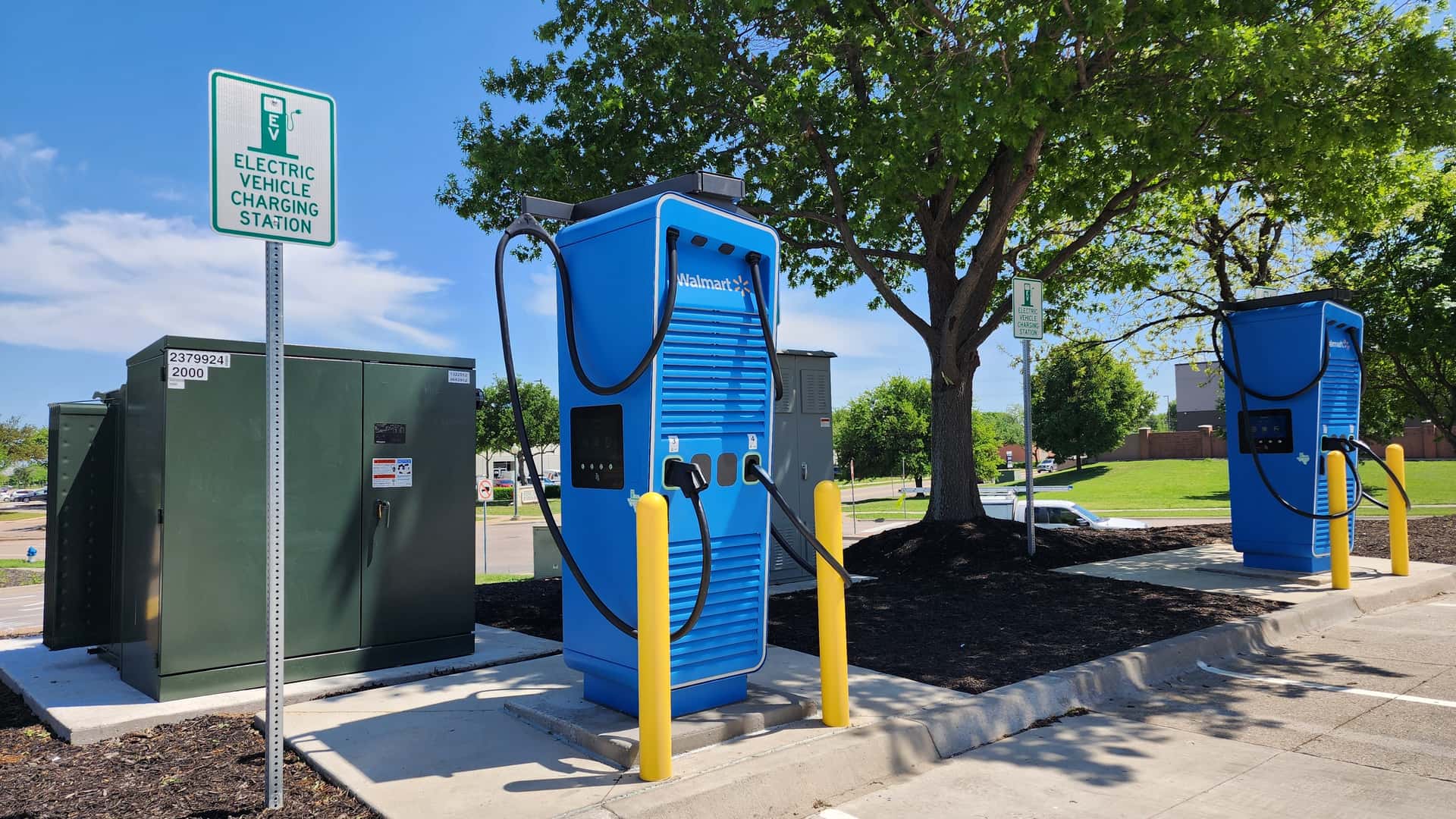
In a significant boost to electric vehicle (EV) infrastructure across the United States, retail giant Walmart is rapidly expanding its high-powered EV charging network, demonstrating a robust commitment to sustainable transportation. The company has not only aggressively increased its footprint but is also introducing user-friendly improvements and cost-saving measures for its members, addressing key pain points for EV owners.
This strategic push is designed to make EV charging more accessible, convenient, and affordable for millions of American consumers. The initiative underscores a growing trend among major retailers to integrate EV charging solutions into their operations, acknowledging the increasing shift towards electric mobility.

Key Takeaways (TL;DR)
- Walmart is significantly expanding its EV fast charging network across the U.S., adding hundreds of new ports.
- The network’s size grew by 50% in a single month and another 50% from February to April.
- New contactless payment options are being piloted and will be integrated into future stations for enhanced convenience.
- Walmart+ members receive a 10% discount on charging sessions when using the dedicated app.
- Stations feature transparent pricing, no idling fees, and 400-kilowatt chargers with both CCS1 and NACS connectors.
- The company plans to deploy thousands more chargers at Walmart and Sam’s Club locations nationwide, signaling a long-term investment.
Rapid Expansion: Walmart’s Ambitious EV Charging Network Growth
Walmart, the world’s largest retailer, has significantly ramped up the deployment of DC fast chargers at its stores across the United States. This aggressive expansion saw the company’s EV charging network grow by approximately 50% in just one month, following an equally substantial 50% increase between February and April.

Currently, Walmart boasts over 300 individual ports capable of delivering an impressive 400 kilowatts of power. These facilities are now active at 50 Walmart stores throughout the U.S., a considerable jump from the 31 stations and 224 high-powered connectors reported just a month prior. This accelerated deployment highlights Walmart’s strategic focus on establishing a widespread and reliable EV charging infrastructure.
The company’s approach to increasing its EV charging capacity at such a rapid pace indicates a clear recognition of the surging demand for convenient and accessible charging solutions as EV adoption continues to climb nationwide. By leveraging its vast network of retail locations, Walmart aims to become a crucial player in supporting the electric vehicle transition.
Enhancing User Experience: New Payment Solutions and Member Benefits
Beyond mere expansion, Walmart is actively implementing improvements designed to enhance the overall user experience at its charging stations. A significant upcoming change addresses customer feedback regarding payment flexibility.
Seamless Transactions: Contactless Payments on the Horizon
Adam Happel, Walmart’s General Manager for Retail EV charging, confirmed during an interview with InsideEVs contributor and charging expert Tom Moulougney that the retailer plans to integrate contactless payment terminals into its DC fast chargers. This move comes in response to customer feedback, which highlighted the desire for more diverse payment options.
Currently, the operational stations exclusively require users to manage and pay for charging sessions through Walmart’s proprietary app. The introduction of contactless payment solutions will offer a convenient alternative for drivers who prefer not to download yet another smartphone application for charging their vehicles. A single station is presently trialing this new payment method, with plans to incorporate the functionality into all future installations.
This shift towards broader payment acceptance is expected to significantly improve accessibility and reduce friction for a wider range of EV drivers, making the charging process more straightforward and less time-consuming. It reflects a growing industry standard for user-friendly charging infrastructure.
Cost-Effective Charging: Discounts for Walmart+ Members
In a move designed to add value for its loyal customers, Walmart is offering a compelling incentive for its Walmart+ members. These members can enjoy a 10% discount on their charging sessions, provided they initiate and pay for the service using the Walmart app. This exclusive benefit underscores the company’s strategy to integrate its retail loyalty program with its emerging EV charging services, fostering greater customer engagement.
This discount not only makes EV ownership more economical for Walmart+ subscribers but also encourages the adoption of the Walmart charging app, streamlining the customer journey and offering personalized benefits. Such initiatives are vital in attracting and retaining EV drivers seeking cost-effective solutions.
Transparent Pricing and Time-of-Use Rates
Regarding pricing transparency, Happel assured that Walmart maintains a clear and straightforward approach. The company does not impose idling fees, a common charge at many fast-charging stations designed to prevent vehicles from occupying ports unnecessarily after completing a charge. This policy aims to alleviate a frequent concern among EV drivers.
Furthermore, customers will consistently have a clear view of their charging costs, eliminating any unexpected charges. While there is no dynamic pricing based on station congestion, some locations implement Time of Use (TOU) rates. This means the price of charging may vary depending on the time of day, aligning with local electricity grid demands and potentially offering cheaper rates during off-peak hours for informed consumers.
Technological Specifications and Future-Proofing
Walmart’s commitment to a high-quality EV charging network is evident in its choice of hardware and its forward-thinking approach to connector standards.
High-Power Charging: 400 kW Stations
The retailer is exclusively installing 400 kW DC fast chargers, sourced from reputable manufacturers such as ABB or Alpitronic. These high-power chargers are critical for enabling rapid energy replenishment, significantly reducing charging times and making long-distance travel more feasible for EV owners. Such high-capacity chargers are at the forefront of modern EV infrastructure, capable of delivering substantial range in short charging windows.
Connector Standardisation: Addressing NACS Placement
Each charging unit is equipped with both CCS1 and NACS (North American Charging Standard) connectors, ensuring compatibility with a wide array of electric vehicles currently on the market and those planned for future release. An initial design oversight related to NACS cable placement, where the cable was fitted to the right, has been identified and corrected.
This placement proved less convenient for Tesla EVs, which typically have their NACS port located on the left rear of the vehicle. To optimize the user experience for Tesla owners and other vehicles with similar port configurations, future Walmart EV chargers will feature the NACS cable on the left side, reflecting an adaptable and customer-centric approach to infrastructure design.
Considering Plug & Charge for Future Convenience
While Plug & Charge functionality, which allows EV drivers to simply plug in and begin charging without needing an app or credit card, is not currently supported, Walmart is actively considering its implementation. The main hurdle for adopting Plug & Charge revolves around how discounts, particularly for Walmart+ members, are applied. The current app-based system allows for automatic discount application as the owner is logged into their account, whereas Plug & Charge involves direct communication between the car and the charger, potentially bypassing these loyalty benefits.
Nevertheless, the consideration of Plug & Charge underscores Walmart’s ongoing evaluation of emerging technologies to further streamline the charging process and cater to evolving customer preferences.
Long-Term Vision: Thousands More EV Charging Ports Planned
Walmart’s head of retail EV charging, Adam Happel, emphasized the company’s long-term commitment to this initiative. While an exact figure for future installations was not disclosed, Happel stated that “Walmart is not in this game for the short term” and indicated that “we should see thousands of chargers pop up at as many Walmart and Sam’s Club locations in the U.S. as possible.”
Given that Walmart operates over 5,200 stores across the United States, the potential for expansion is immense. This ambitious vision positions Walmart as a crucial player in building out a comprehensive national EV charging network, significantly contributing to the widespread adoption of electric vehicles by providing convenient and reliable charging options where people already shop.
Frequently Asked Questions (FAQ)
How many EV charging ports does Walmart currently have?
Walmart has rapidly expanded its EV charging network to over 300 individual DC fast charging ports located at 50 Walmart stores across the United States, with plans for thousands more.
What improvements is Walmart making to its EV charging stations?
Walmart is introducing contactless payment terminals, offering a 10% discount for Walmart+ members via its app, ensuring transparent pricing, and optimizing NACS cable placement for better user convenience.
Are there any discounts for using Walmart’s EV chargers?
Yes, Walmart+ members who initiate and pay for their charging sessions through the Walmart app receive a 10% discount on the charging fees, making it a more economical option.
Does Walmart charge idling fees at its EV charging stations?
No, Walmart explicitly states that it does not implement idling fees at its EV charging stations, ensuring drivers are only charged for the energy consumed without additional penalties for longer stays.
What type of chargers is Walmart installing?
Walmart is installing high-powered 400-kilowatt DC fast chargers from manufacturers like ABB or Alpitronic, equipped with both CCS1 and NACS connectors for broad compatibility with various EV models.
Is Plug & Charge supported at Walmart’s stations?
Currently, Plug & Charge functionality is not supported. However, Walmart is actively considering its implementation, though factors like integrated discount application for members need to be addressed.
What is Walmart’s long-term goal for its EV charging network?
Walmart’s long-term goal is to install thousands of EV chargers at as many of its Walmart and Sam’s Club locations as possible across the U.S., signaling a significant and sustained investment in EV infrastructure.