
Key Takeaways
Walmart is significantly expanding its electric vehicle charging infrastructure across the United States, targeting thousands of 400 kW DC fast chargers by 2030.
The retail giant is deploying advanced ABB E-mobility A400 all-in-one chargers, complementing existing Alpitronic units, offering peak power output and dual CCS and NACS compatibility.

Initial rollout focuses on the Phoenix metropolitan area, with 38 stalls planned across nine locations, marking the first phase of an ambitious national network.
The chargers feature cutting-edge Silicon Carbide (SiC) semiconductors for high efficiency and leverage a seamless, app-based payment system for driver convenience, foregoing traditional card readers.
This aggressive expansion of the Walmart EV charging network aims to alleviate range anxiety and support the accelerating adoption of electric vehicles by providing convenient, high-speed charging options at retail locations.

Walmart Forges Ahead with Ambitious EV Charging Network Expansion
In a significant stride towards bolstering the nation’s electric vehicle (EV) infrastructure, retail behemoth Walmart has initiated the deployment of cutting-edge 400-kilowatt (kW) DC fast chargers. This strategic move marks a critical phase in the company’s ambitious plan to establish a comprehensive EV charging network across the United States, providing drivers with high-speed, reliable charging solutions at convenient retail locations.
The rollout commenced in the vibrant Phoenix metropolitan area, where the first installations of ABB E-mobility’s A400 all-in-one DC fast chargers are now underway. This initiative is set to rapidly expand, integrating thousands of these powerful charging units into the Walmart EV charging network by the year 2030, fundamentally reshaping access to EV charging for millions of Americans.
The Scale of Walmart’s Ambition
Walmart’s commitment to the EV revolution is underscored by its exclusive focus on 400 kW chargers, a benchmark for high-speed charging capabilities. This decision reflects an understanding of the evolving needs of EV owners, who increasingly seek faster charging times to minimize downtime and enhance convenience.
The initial phase targets nine locations within the Phoenix metro area, including key sites in Mesa, Tempe, Apache Junction, and Queen Creek. This deployment will see 38 new charging stalls become operational in the coming months, laying the groundwork for a far more expansive national footprint.
The retail giant’s vision extends far beyond these initial installations. The stated goal of installing thousands of 400 kW EV chargers nationwide by 2030 positions the Walmart EV charging network as a pivotal player in the future of electric mobility.
Advanced Charging Technology at Play
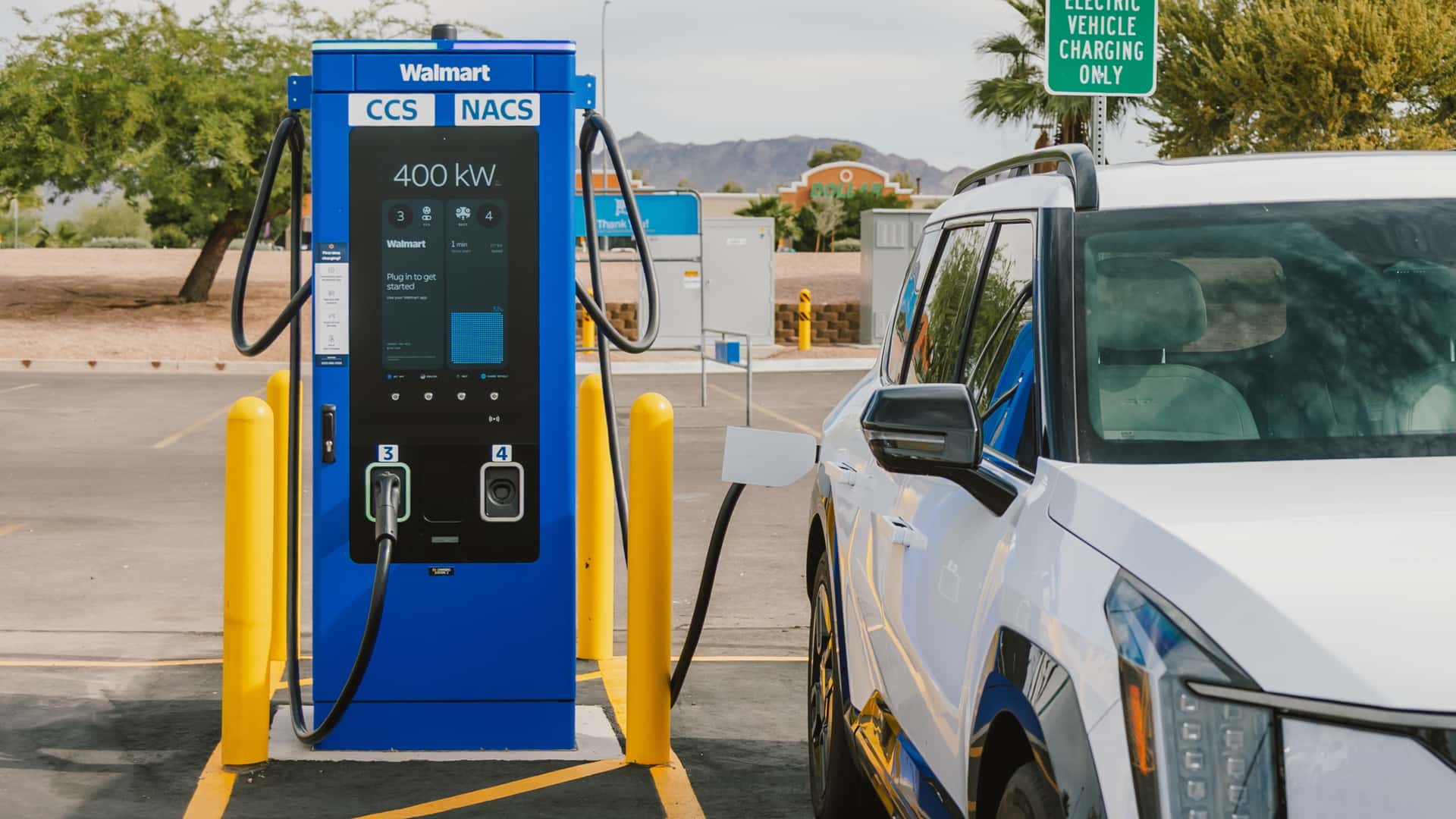
The newly deployed ABB E-mobility A400 chargers represent the pinnacle of current fast-charging technology. Each all-in-one dispenser is engineered to deliver an impressive 400 kW of power to a single connected EV, ensuring exceptionally rapid charging sessions.
For situations where two electric vehicles require charging simultaneously, the units are designed with dynamic power management capabilities. This allows the chargers to intelligently allocate power output to each EV, optimizing charging efficiency and reducing wait times for drivers.
Crucially, these advanced chargers come equipped with dual CCS (Combined Charging System) and NACS (North American Charging Standard) connectors. This universal compatibility ensures that the vast majority of EVs currently on the road in the United States, as well as future models, can utilize the Walmart EV charging network without hassle, a key factor in driving broader EV adoption.
ABB vs. Alpitronic: A Closer Look at Performance
Before the introduction of ABB’s units, Walmart initially deployed 400 kW chargers from Alpitronic. Both manufacturers provide all-in-one solutions featuring two charging cables, a testament to the industry’s shift towards integrated, user-friendly designs.
From a technical standpoint, the two systems share significant similarities that contribute to their high performance. Both the ABB and Alpitronic chargers boast a maximum current output of 600 amps. Furthermore, they integrate cutting-edge Silicon Carbide (SiC) semiconductors, a material known for its superior efficiency in power electronics, resulting in an impressive energy conversion efficiency of approximately 97%.
While their core technical specifications are largely aligned, a notable distinction lies in the user interface. ABB’s new chargers feature a substantial 32-inch LCD display, offering a spacious and potentially more engaging visual experience for drivers. In contrast, Alpitronic’s units employ a 15.6-inch display. Both charger types maintain a practical design with four physical control buttons, ensuring ease of operation.
Strategic Location and Accessibility
The decision to install these high-powered chargers at Walmart and Sam’s Club store parking lots is a strategic one. Retail locations offer inherent advantages, including existing infrastructure, high foot traffic, and the convenience of combining charging with shopping errands. This approach minimizes dedicated trips solely for charging, making EV ownership more integrated into daily life.
The initial focus on the Phoenix metropolitan area is often a common strategy for major infrastructure rollouts. It allows for concentrated deployment, data collection, and refinement of operations before a wider national expansion. As the Walmart EV charging network grows, it is expected to significantly enhance charger availability in suburban and semi-urban areas where retail centers are prevalent.
Enhancing the User Experience: App-Based Payments
In line with modern digital trends, the chargers deployed within the Walmart EV charging network do not feature traditional physical card readers for payments. Instead, the company has opted for an entirely app-based payment system, requiring EV drivers to use Walmart’s dedicated smartphone application to initiate charging sessions and process payments.
This digital-first approach streamlines the payment process, potentially offering a more integrated and personalized user experience through the app. It also allows Walmart to collect valuable data on charging habits and preferences, which can inform future network expansions and service improvements. While convenient for app users, this model might require drivers unfamiliar with the Walmart app to download it before charging.
Industry Impact and Future of the Walmart EV Charging Network
The rapid expansion of the Walmart EV charging network represents a significant development for the broader electric vehicle industry. Brandt Hastings, President North America, ABB E-mobility, highlighted the significance of this collaboration, stating: “Launching in the Phoenix metro area is the first step in what will become the most ambitious retail charging rollout in the United States. Together with Walmart, we are combining trusted retail access with telecom-grade charging reliability, delivering infrastructure that meets the needs of drivers today and scales with demand tomorrow.”
This statement underscores the dual benefit of Walmart’s initiative: leveraging its extensive retail footprint with advanced charging technology. The network has already seen substantial growth, escalating from a limited number of stalls just last year to over 200 operational ports this month. This accelerated growth trajectory positions Walmart as a key player in the development of a robust and accessible EV charging ecosystem across the nation.
Driving EV Adoption Across America
One of the primary barriers to widespread EV adoption has historically been ‘range anxiety’ – the fear of running out of charge before reaching a charging station. By strategically placing thousands of high-speed chargers at its ubiquitous retail locations, Walmart directly addresses this concern, providing accessible and reliable charging options where people already go for daily necessities.
The integration of high-powered 400 kW chargers within the Walmart EV charging network means quicker turnaround times for charging sessions, making EV ownership more practical for long-distance travel and busy daily routines. This convenience, coupled with the sheer scale of the planned rollout, is expected to instill greater confidence in prospective EV buyers and support the ongoing transition to electric mobility in the United States.
Frequently Asked Questions (FAQ)
What kind of EV chargers is Walmart deploying?
Walmart is deploying advanced 400 kW DC fast chargers, primarily from ABB E-mobility (A400 model), alongside existing units from Alpitronic. These all-in-one dispensers offer high-speed charging capabilities for a rapid power-up of electric vehicles.
Where are these new chargers being rolled out first?
The initial rollout of the new ABB E-mobility chargers is concentrated in the Phoenix metropolitan area. Specific cities include Mesa, Tempe, Apache Junction, and Queen Creek, with 38 charging stalls planned across nine locations.
Will these chargers work with all electric vehicles?
Yes, the new ABB E-mobility chargers are equipped with dual CCS (Combined Charging System) and NACS (North American Charging Standard) connectors. This ensures compatibility with the vast majority of electric vehicles currently available in the United States.
How do EV drivers pay for charging at Walmart locations?
Walmart’s EV charging network utilizes an app-based payment system. Drivers will need to use the official Walmart smartphone application to initiate charging sessions and process payments, as the chargers do not feature physical card readers.
What is the long-term goal for Walmart’s EV charging network?
Walmart has an ambitious plan to install thousands of 400 kW DC fast chargers at its stores across the country by 2030. This expansion aims to significantly enhance EV charging accessibility and support the widespread adoption of electric vehicles.
What makes these 400 kW chargers advanced?
These chargers are considered advanced due to their high power output of 400 kW, dynamic power management for dual charging, universal connector compatibility (CCS and NACS), and the use of Silicon Carbide (SiC) semiconductors, which ensure high energy efficiency (around 97%).
How many charging ports does Walmart currently have?
The Walmart EV charging network has rapidly expanded from a few stalls last year to over 200 operational charging ports as of this month. This number is set to grow substantially as the nationwide deployment continues.