
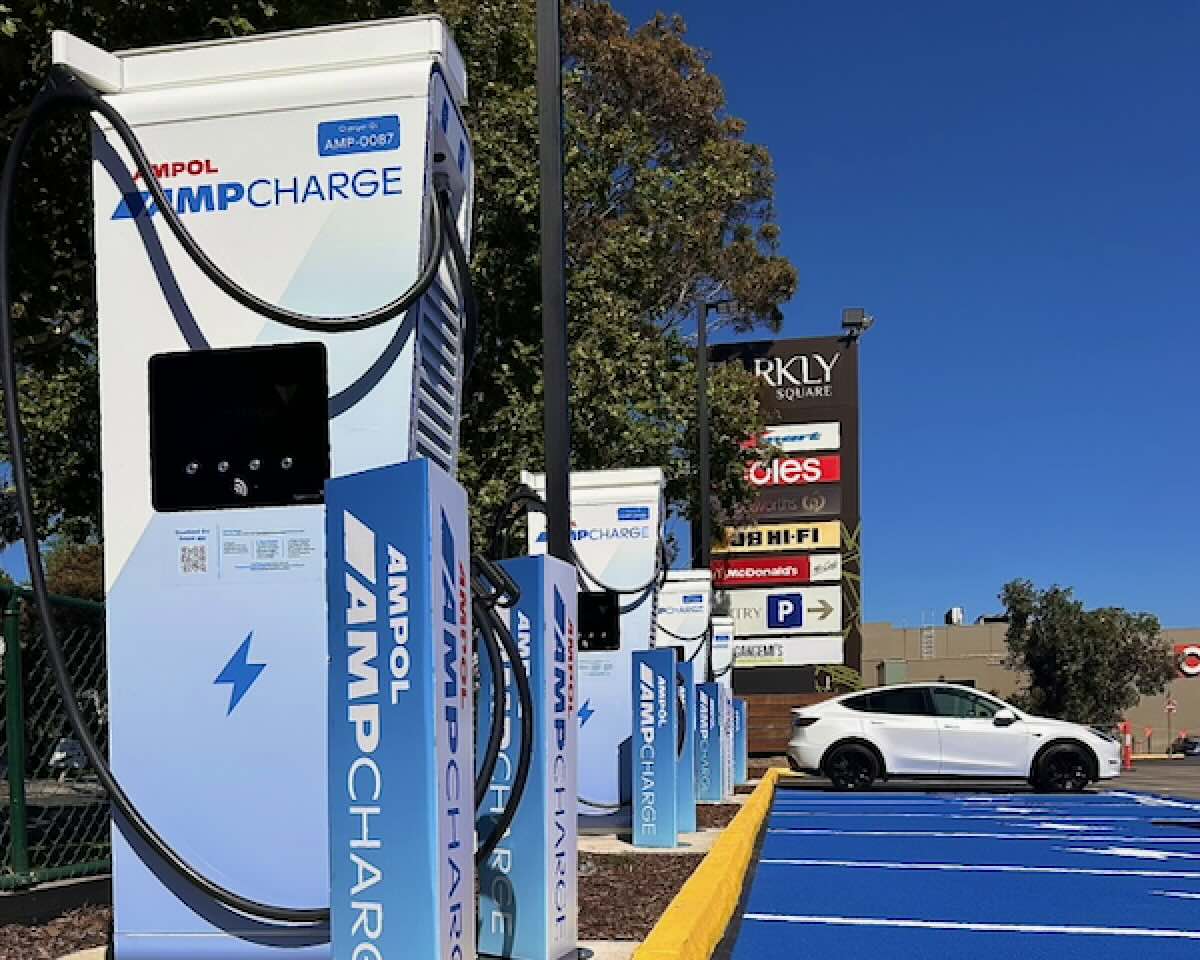
Recent performance rankings from Monta, a prominent Charge Point Management Software provider, have highlighted the strength of Australia’s electric vehicle (EV) DC fast charging network. The data, gathered from Monta’s platform connecting 260,000 chargers primarily across Europe, reveals that a significant majority of the top-performing DC fast charger models are actively in use within Australia.
Top Performers Dominated by European Brands
Monta’s 2025 Charger Performance Ranking, which assesses chargers based on uptime and charging success rate, places nine out of the top ten DC fast charger models as being available and operational in Australia. This indicates a high standard of charging hardware being deployed locally.

The rankings showcase Alpitronic, an Italian manufacturer, securing the top four positions. Their HYC 400 model achieved the highest overall score of 96.54, with a charging success rate of 95.42% and an impressive uptime of 97.65%. Following closely are Alpitronic’s HYC 200, HYC 300, and HYC 150 models, all demonstrating robust performance metrics.
Alpitronic chargers are gaining traction in Australia through partnerships with major energy providers such as Ampol AmpCharge and BP Pulse, underscoring the growing confidence in their technology.
European Leaders in Australian Charging Networks
Finnish company Kempower also features prominently, with its C-Series and S-Series units securing the fifth and eighth spots respectively. These chargers are utilized by Australian networks including Evie Networks, Exploren, and RAA, further contributing to the high-performing ecosystem.
Autel, a brand from China, secured the sixth position with its MaxiCharger DC Fast model. This charger has been widely deployed at numerous Woolworths locations across Australia, integrated into the Chargefox network. While the Autel MaxiCharger boasts a high uptime score of 98.17%, ranking second among the top ten, its charging success rate of 87.85% is the lowest within this elite group.
Swiss-based EVTEC AG’s espresso&charge model and French manufacturer EVBox’s Troniq Modular complete the top ten, ranking ninth and tenth respectively. These chargers also contribute to the diverse and competitive landscape of high-performance charging hardware available in Australia.
Understanding Charger Performance Metrics
Monta’s ranking system assigns equal weight to charging success rate and availability (uptime). While uptime is crucial for ensuring chargers are operational, the charging success rate directly impacts the quality of the user experience and influences brand perception for Charge Point Operators (CPOs).
Monta defines charging success as ‘The share of sessions that completed without interruption and delivered energy.’ Failures are classified as hardware-related issues or sessions delivering less than 1 kWh. Importantly, user-related issues such as authorization problems, payment failures, or user cancellations are excluded from this metric.
The Complexity of Initiating a Charging Session
Successfully initiating a charging session at a DC fast charger is a complex process involving multiple components: the user, the vehicle, the charging hardware, and various software systems. The user must connect the cable and complete a sequence of actions, often via an app or payment terminal, within a limited timeframe to prevent a timeout.
Behind the scenes, a sophisticated digital handshake occurs. This involves the vehicle and charger communicating, locking mechanisms engaging, Plug & Charge or Autocharge IDs being verified, and the payment system confirming the transaction before the charging instruction is sent.
In some regions, such as Europe, this process can involve additional layers of complexity through roaming hubs and providers. The responsibility for orchestrating this intricate process lies with the Charge Point Operator.
Software and Hardware: A Combined Effort
While hardware selection is a critical factor, it is only one part of the charging equation. Monta, as a software provider, emphasizes that their hardware ranking controls for the software dimension by focusing solely on chargers connected to their platform. However, the diversity of charging apps available in Australia suggests significant variations in the quality and approach to initiating charging sessions.
Globally, technologies like Autocharge and Plug & Charge are recognized for their ability to significantly improve both charging success rates and overall customer satisfaction.
Global Examples of Enhanced Charging Success
US-based CPO EVgo reported a rise in its ‘One and Done’ charging success rate to 96% in their Q4 2024 financial results. This improvement has coincided with the increased adoption of their Autocharge+ feature, which has facilitated over 5 million sessions for 300,000 customers.
Similarly, Fastned, a European CPO with a substantial network, integrated Autocharge across its sites in 2017. The company views this feature as fundamental to its customer satisfaction strategy.
The Business Imperative of Reliable Charging
The reporting of key performance metrics like charging success and uptime, coupled with rankings such as Monta’s, serves as a powerful driver for improvement within the industry. CPOs are encouraged to carefully consider the performance data of hardware manufacturers when making procurement decisions.
Both uptime and charging success have direct implications for operational costs and profitability. EVgo’s sustained focus on these metrics has contributed to achieving positive adjusted EBITDA for the first time, while Fastned has maintained positive EBITDA since 2023, partly due to its long-standing commitment to reliable charging experiences.
Public charging is fundamentally a business, and financial sustainability is essential. Continuous monitoring and improvement of charging success and uptime are critical for achieving this. While hardware plays a vital role, it is one component within a larger operational framework that CPOs must manage effectively.