
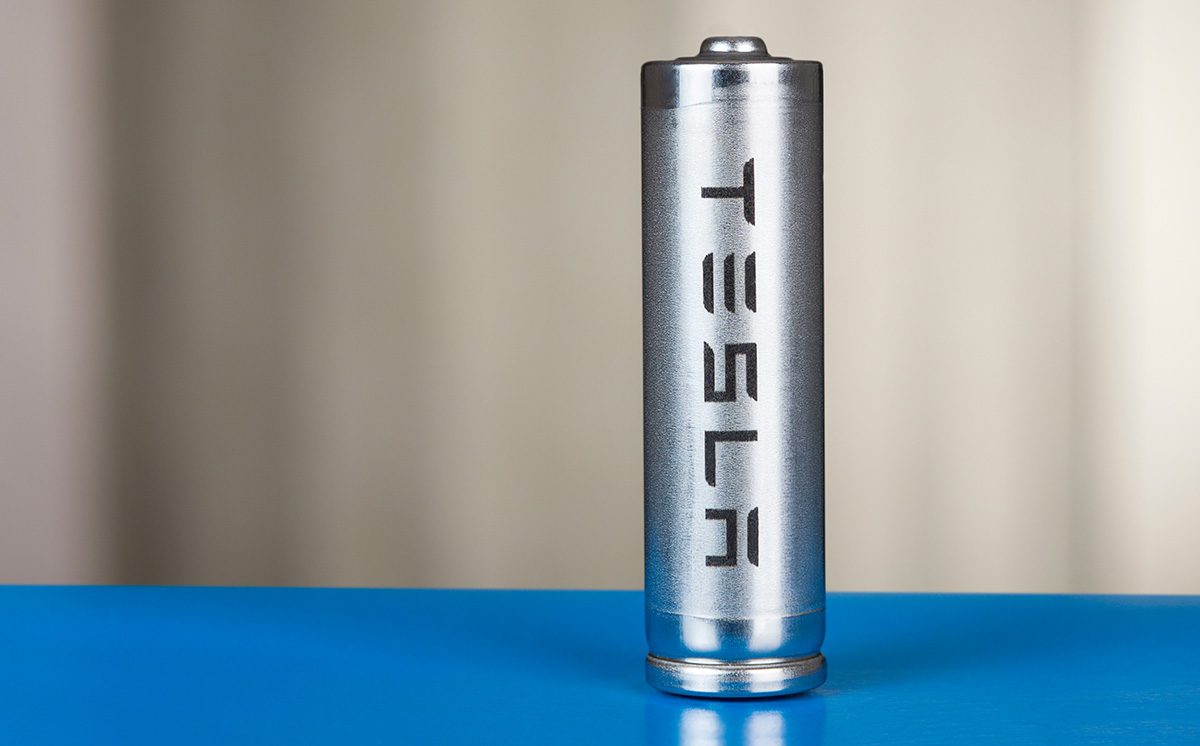
Forget About AI and Robots: Tesla is Quietly Building a Complete EV Battery Supply Chain
While headlines often focus on artificial intelligence and robotics, a significant development is unfolding behind the scenes in the electric vehicle (EV) sector. Tesla, a company that once dominated EV news with its innovation, is undertaking a strategic move to establish a comprehensive battery supply chain within North America.
For nearly two decades, Tesla’s pioneering work in the EV space was a constant fixture in the industry press. Despite persistent skepticism, the company achieved remarkable growth. However, a shift in focus appeared to occur around the time of the COVID-19 pandemic, with the company’s innovation engine seemingly slowing and leadership diverting attention to other ventures.
Recent uninspiring earnings reports and a perceived pivot away from core EV business towards AI and robots have led some to question whether the company that largely defined the modern EV industry has lost its edge or passed the baton to competitors.
A Strategic Resurgence in Battery Production
Contrary to these perceptions, evidence suggests Tesla is doubling down on its foundational strengths. Christopher Chico, writing for the Battery Chronicle blog, highlights that Tesla is “quietly building the most complete battery supply chain in the West.” This ambitious undertaking includes operating its own lithium refinery, a cathode manufacturing facility, and two cell factories capable of producing different battery chemistries.
Gigafactory Texas: A Hub for Advanced Battery Manufacturing
The company has been producing its advanced 4680 cells at Gigafactory Texas since 2022. In 2023, Tesla initiated a significant expansion, filing for a $716 million project that incorporated cathode manufacturing capabilities. Early reports indicate that cathode production has already commenced, with an estimated annual capacity of around 10 gigawatt-hours (GWh).
This production leverages a dry electrode process, a technology Tesla acquired with Maxwell Technologies in 2019. This method offers distinct advantages over the traditional wet slurry process. By eliminating toxic solvents, reducing energy consumption, and requiring less factory footprint, the dry process represents a more sustainable and efficient approach to battery manufacturing.
North America’s First Spodumene-to-Lithium-Hydroxide Refinery
Adding another crucial piece to its vertically integrated strategy, Tesla’s lithium refinery in Texas began operations in January. This facility is notable as the first of its kind in North America to process spodumene ore into lithium hydroxide. Employing an acid-free refining process, Tesla is also circumventing traditional methods often dominated by Chinese companies, further strengthening its domestic supply chain independence.
The Texas refinery is projected to contribute an annual capacity of 30 GWh for lithium refining, a critical component for battery production.
Gigafactory Nevada: Expanding LFP Cell Production for Energy Storage
Beyond the 4680 cells, Tesla’s Gigafactory Nevada is set to house an LFP (lithium iron phosphate) cell factory. This facility will utilize manufacturing equipment sourced from Chinese battery giant CATL. The company announced last July that the factory was nearing completion, with production slated to begin in early 2026.
The initial annual capacity for these prismatic LFP cells is expected to be 7 GWh. Significantly, these cells are primarily designated for Tesla’s energy storage products rather than its electric vehicles, indicating a potential strategic shift or expansion into the stationary storage market.
A Pivot Towards Energy Storage?
This focus on stationary storage could suggest a broader strategic pivot for Tesla. Data indicates that energy storage products are now the company’s fastest-growing business line, reportedly delivering nearly double the profit margin compared to its vehicle business. This diversification underscores Tesla’s evolving business model beyond just electric cars.
Contrasting Strategies in the Automotive Industry
Tesla’s aggressive vertical integration in battery production stands in stark contrast to the strategies of traditional automotive manufacturers, often referred to as the “Dinosaurs of Detroit.” Companies like General Motors, Stellantis, and Ford have recently scaled back or withdrawn from plans to build or invest in battery plants, signaling a different approach to electrification.
In China, BYD exemplifies a model of deep vertical integration. The company manufactures approximately 75% of its vehicle components in-house, including cells, cathode materials, electric motors, power electronics, and semiconductors. BYD also holds significant interests in lithium mining across Brazil, Africa, and China, showcasing a comprehensive control over its supply chain.
Tesla’s Ambitious, Yet Incomplete, Vertical Integration
Christopher Chico describes Tesla’s vertical integration strategy as “the most ambitious in the West.” While it represents a significant effort, it remains incomplete as Tesla does not currently own semiconductor or mining interests. Nevertheless, it positions Tesla as the “only Western company even attempting to match the Chinese model of full-chain ownership.”
The Strategic Imperative of Vertical Integration in the EV Era
Automakers historically outsourced numerous components, focusing primarily on engines and vehicle design. However, the EV era necessitates a re-evaluation of this approach. Batteries represent a substantial cost in EVs, making in-house production and control over margins a significant advantage.
Furthermore, the rapid pace of battery technology evolution makes vertical integration particularly beneficial. Original Equipment Manufacturers (OEMs) can achieve greater agility and quicker adoption of innovations by not being dependent on the slower ripple effects through complex external supply chains.
Geopolitical considerations also play a crucial role, as nations and companies seek to secure critical resources and manufacturing capabilities domestically to reduce reliance on foreign suppliers.
Potential Downsides and Future Outlook
Despite the strategic advantages, vertical integration is not without its risks. Chico points out that during periods of decreased demand, vertically integrated companies may face challenges managing high fixed costs associated with their extensive operations.
Ultimately, Tesla’s commitment to building its own battery supply chain can be viewed as a calculated bet on the continued growth of EV demand and the potential for sustained trade barriers that favor domestic production. As the global battery landscape evolves, Tesla’s strategic investments position it as a key player in the West, challenging the established dominance of Asian manufacturers.
In the complex and high-stakes global competition for battery dominance, while Asian companies hold significant advantages, Tesla remains a formidable contender actively shaping the future of EV and energy storage supply chains.