
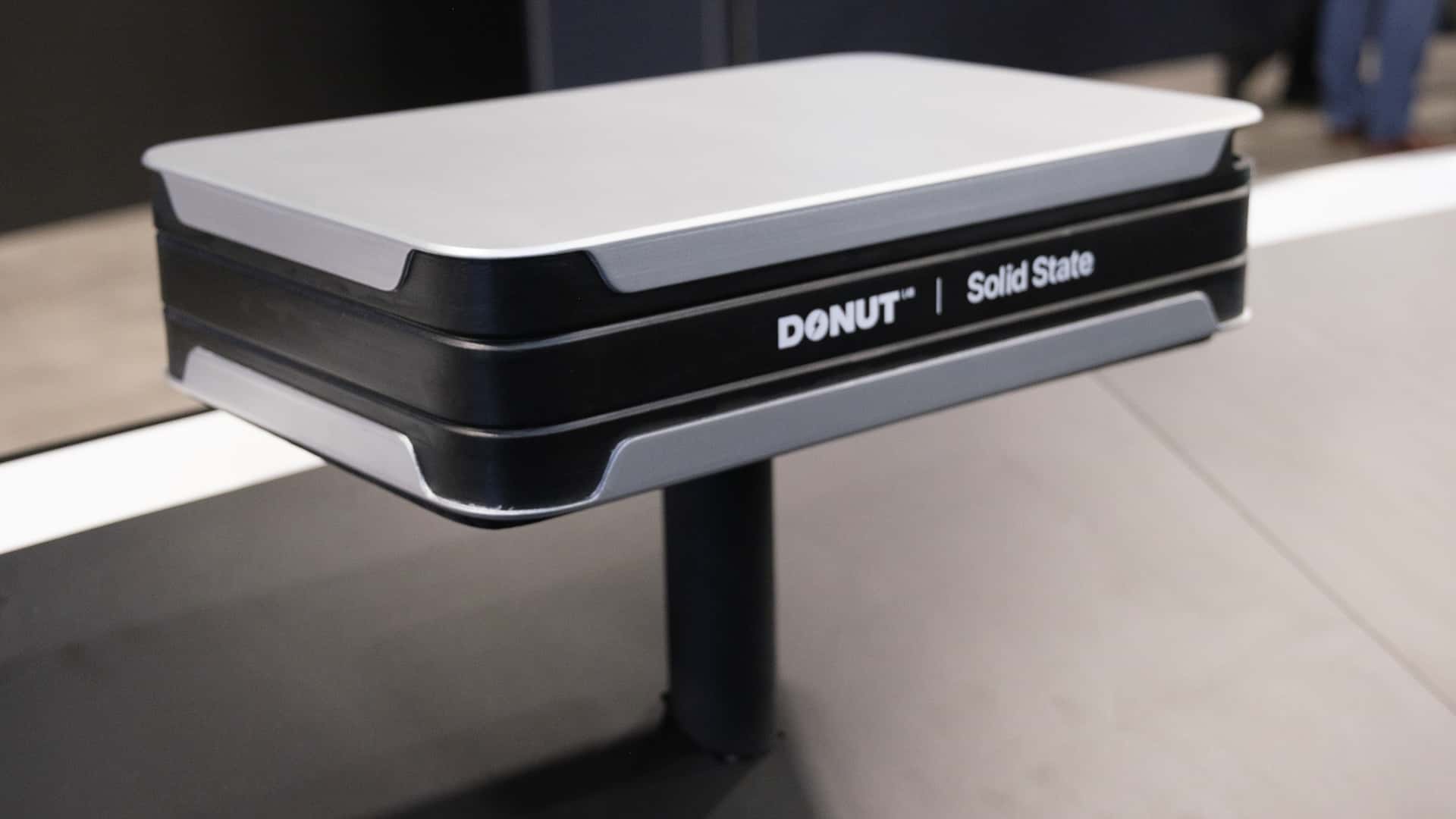
Finnish startup Donut Lab has released the findings of its third independent test, part of a series designed to validate its claims of developing the world’s first production-ready all-solid-state battery. This latest evaluation specifically addresses skepticism regarding whether the company’s battery technology is, in fact, a supercapacitor.
Addressing Supercapacitor Concerns
The startup’s third-party test, conducted by VTT Technical Research Centre of Finland, focused on “self-discharge performance.” This test was prompted by earlier industry reactions to Donut Lab’s battery specifications, unveiled at the Consumer Electronics Show in January. The claimed energy density of 400 watt-hours per kilogram, a lifespan of 100,000 cycles, and a five-minute charge time significantly raised eyebrows in the battery sector.
Concerns were amplified when internet research revealed a connection between Donut Lab and Nordic Nano, a renewables company that had previously advertised a supercapacitor with an identical energy density figure for solar and storage applications. Although the relevant report has since been removed from Nordic Nano’s website, the association fueled speculation.
Battery vs. Supercapacitor: Key Differences
Understanding the distinction between batteries and supercapacitors is crucial. Both devices store energy, but they employ different mechanisms. Batteries store energy through chemical reactions within their cells, a process that allows them to hold a charge for extended periods.
Supercapacitors, on the other hand, store energy electrostatically in an electric field. This design enables extremely rapid charge and discharge cycles, making them suitable for applications requiring quick bursts of power. However, supercapacitors are known to lose their charge relatively quickly when left idle.

Donut Lab’s Self-Discharge Test Results
To demonstrate that its technology functions as a battery rather than a supercapacitor, Donut Lab subjected its cell to a self-discharge test. Researchers charged the cell to 50% capacity and then allowed it to remain idle for 240 hours. Following this period, the energy remaining in the cell was measured.
The results showed a minimal voltage drop over the 10-day idle period. The cell retained approximately 98% of its stored energy, a characteristic indicative of battery behavior, not that of a typical supercapacitor.
Expert Commentary and Lingering Questions
Donald R. Sadoway, Professor Emeritus of Materials Chemistry at the Massachusetts Institute of Technology, commented on the findings, stating, “Super capacitors can give great power bursts but only for a short time duration.” He added that, based on the self-discharge test, Donut Lab’s battery “does not appear to be one [a supercapacitor].”
However, Sadoway cautioned against widespread endorsement of Donut Lab’s broader claims. He found the provided report to be too generic, lacking the comprehensive detail necessary to substantiate the startup’s assertions of a significant technological breakthrough.
Previous Test Results and Industry Skepticism
Donut Lab has been releasing test data weekly, but critics and some battery scientists remain unconvinced about the solid-state nature of the technology. Previous tests included a demonstration of the cell’s ability to fully charge in under ten minutes and its performance at temperatures up to 100 degrees Celsius (212 degrees Fahrenheit).
While the battery reportedly passed these lab-based assessments for a limited number of cycles, industry experts emphasize the need for scalability and long-term durability. “Lab-scale results only tell part of the story,” noted battery scientists interviewed by InsideEVs. They highlighted that real-world viability requires consistent performance at the pack level over thousands of cycles.
Professor Sadoway reiterated this sentiment, stating, “The report is too vague to be considered credible. Remarkable claims demand remarkable proof.” The ongoing validation process for Donut Lab’s solid-state battery technology continues to be closely watched by the industry, with many awaiting more definitive evidence to support the company’s ambitious declarations.