
In a significant political development within Germany’s core automotive industry region, the Green Party has secured a narrow victory in the state of Baden-Württemberg. This region, home to automotive giants such as Mercedes-Benz, Porsche, and Bosch, recently held a state election that saw the Greens narrowly edge out Chancellor Friedrich Merz’s conservative CDU party.
Greens Clinch Victory Amidst Economic Concerns
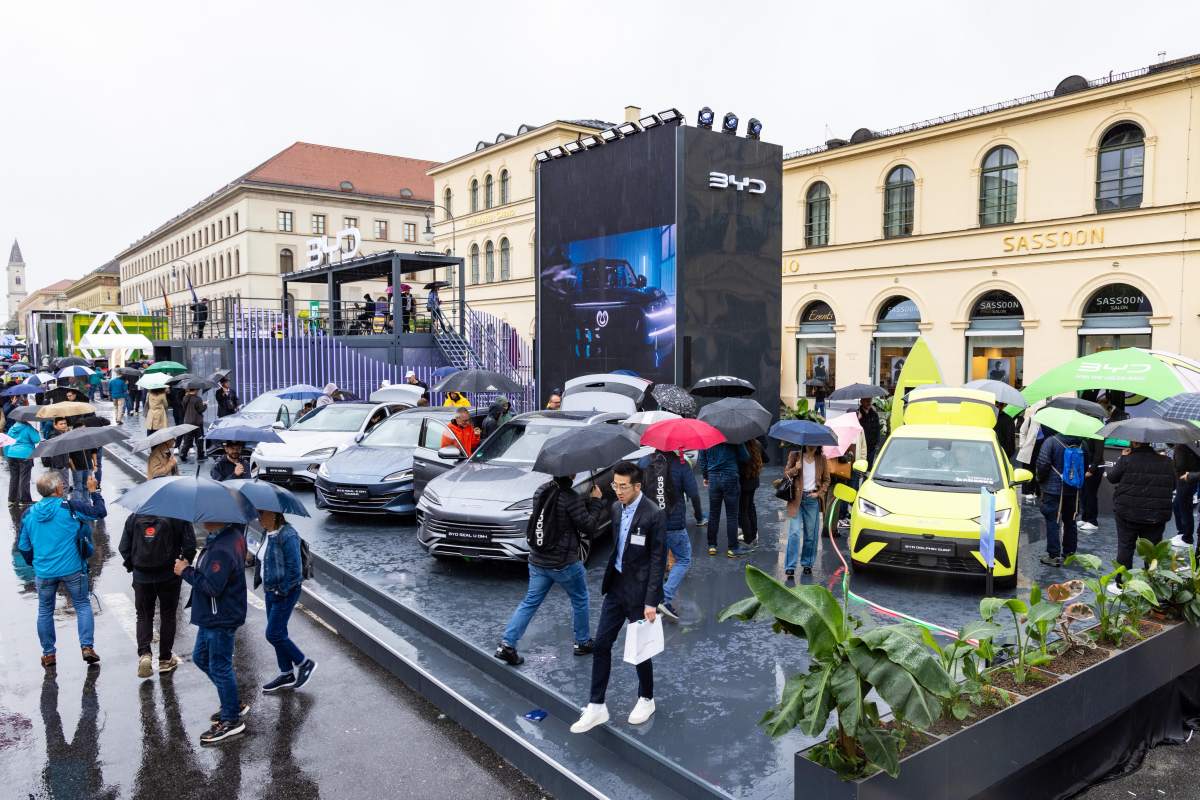
The election campaign in Baden-Württemberg was largely dominated by discussions surrounding the region’s growing economic challenges. A key factor contributing to these concerns is the increasing competition from Chinese electric vehicles (EVs). Following the win, the victorious Green party candidate, Cem Özdemir, urged his party colleagues in Berlin to focus on integrating climate action with economic prosperity.

Election Results and Shifting Political Landscape
Preliminary results indicated that the Greens garnered just over 30 percent of the vote, placing them slightly ahead of the CDU. The far-right populist Alternative for Germany (AfD) secured approximately 19 percent of the vote, while the Social Democrats (SPD) received just over five percent.
This surprise win for the Greens, following a close contest in the final weeks of the campaign, occurred despite a general conservative trend compared to the previous state election five years ago. During this period, the CDU saw an increase of nearly six percentage points, and the AfD doubled its vote share. Conversely, the Greens experienced a drop of two percentage points, and support for the SPD was halved.
Nevertheless, the outcome represents a setback for the unpopular Chancellor Merz. His significant campaigning efforts in the state highlighted voter dissatisfaction with his leadership, particularly coming a year after the country’s federal elections.

Balancing Climate Action with Economic Realities
While national political trends played a role, local factors and the prominence of key figures were decisive in this structurally conservative region. Baden-Württemberg is characterized by its strong industrial traditions, a commitment to fiscal prudence, and a distinct rural identity that extends beyond its capital, Stuttgart, and other urban centers.
When voters were asked about the most influential issues shaping their decisions, the economy ranked highest at 29 percent. Social security followed at 17 percent, with climate and energy issues accounting for 16 percent.
The winning Green candidate, Cem Özdemir, a former federal agricultural minister, adopted a moderate stance during the campaign, consciously avoiding overtly progressive rhetoric. Similarly, the CDU candidate, Manuel Hagel, steered clear of strong conservative positions, making it challenging for voters to discern clear policy distinctions between the two.
This strategic approach by both candidates mirrored the legacy of the long-serving and highly popular former Green premier, Winfried Kretschmann. Known for his pragmatic approach and his tendency to prioritize the state’s interests over strict party ideology, Kretschmann is now stepping down.
During the campaign, Özdemir actively sought to differentiate himself from the federal Green Party’s platform. He voiced opposition to substantial EU fines for automakers failing to meet bloc emission targets and even expressed reservations about the proposed strict phase-out of combustion engines by 2035.
Voters perceived the 60-year-old Özdemir as more likeable, competent, and credible than his 37-year-old CDU opponent, Hagel. The latter faced public scrutiny shortly before the vote when a video clip of him struggling to explain the greenhouse gas effect during a school visit and engaging in a verbal exchange with a teacher went viral.
A Pragmatic Approach to Green Policies
In response to a question about potential lessons the federal Green Party could learn from his electoral success, Özdemir shared his perspective with public broadcaster Phoenix. “It’s not true that people no longer want climate action or biodiversity,” he stated. “Rather, the way we implement it is perhaps the issue. If you unite climate action and the economy, you can find a lot of support.”
Özdemir further elaborated, “Especially businesspeople are often our allies because many of them have started to earn good money with saving energy, energy efficiency, and using fewer resources. So let’s promote the issue together.”
Throughout the campaign, the Greens highlighted the economic opportunities inherent in the transition to climate neutrality. In contrast, the conservative parties warned against imposing excessive climate targets that could burden the economy.
This article was originally published by Clean Energy Wire and is reproduced with permission.