
Chinese automotive giant BYD has introduced a groundbreaking 1,500 kW ultra-fast charging system, designed to work in tandem with its latest “Blade Battery 2.0.” This development promises to significantly reduce charging times for electric vehicles, potentially eliminating a key barrier to widespread EV adoption.
Revolutionary Battery Technology Promises Extended Range
The new Blade Battery 2.0, unveiled by BYD, is engineered to offer an impressive range exceeding 1,000 kilometers (km) based on China’s CLTC rating system. While this figure is expected to translate to approximately 725 km (around 450 miles) under the more stringent US EPA testing protocols, it represents a substantial leap in EV capability.

Significantly, BYD claims this new battery generation is also more cost-effective than its predecessor, further enhancing the economic appeal of electric vehicles. This combination of extended range and reduced cost positions BYD’s latest battery technology as a significant advancement in the EV market.
Ultra-Fast Charging: A 10-Minute Recharge
Complementing the enhanced battery, BYD’s new “flash charging” system is designed for unprecedented speed. The company states that this system can deliver up to 1,500 kilowatts (kW) of charging power. This capability allows for a substantial recharge, taking a Blade Battery from 10% to 70% in a mere five minutes, and reaching 97% charge in just nine minutes.
This rapid charging capability addresses one of the primary concerns for potential EV buyers: charging time. The prospect of charging an EV battery nearly as quickly as refueling a gasoline car could fundamentally alter consumer perceptions and accelerate the transition away from internal combustion engine vehicles.
Addressing Skepticism with Scale and Performance
While claims of revolutionary battery technology often invite skepticism, BYD’s position as the world’s largest EV manufacturer lends significant weight to its announcements. The company has indicated that the new battery is slated for integration into at least 10 production models, including notable vehicles such as the Yangwang U7, Denza Z9GT, Seal 07, and Sealion 06.
The 1,500 kW charging speed is not entirely without precedent for BYD. It represents a 50% improvement over the company’s 1,000 kW “Super E-platform” unveiled the previous year. This continuous innovation highlights BYD’s commitment to advancing charging infrastructure and capabilities.
Expanding Charging Infrastructure
BYD reports that it already has 4,239 “flash chargers” in operation. The company has ambitious plans to expand this network significantly, aiming to install a total of 20,000 such chargers by the end of the current year. While it remains unclear if all new installations will support the full 1,500 kW capacity, even a 1,000 kW output would represent a charging speed nearly triple that commonly available in Western markets.
Innovative Overhead Design for Enhanced Accessibility
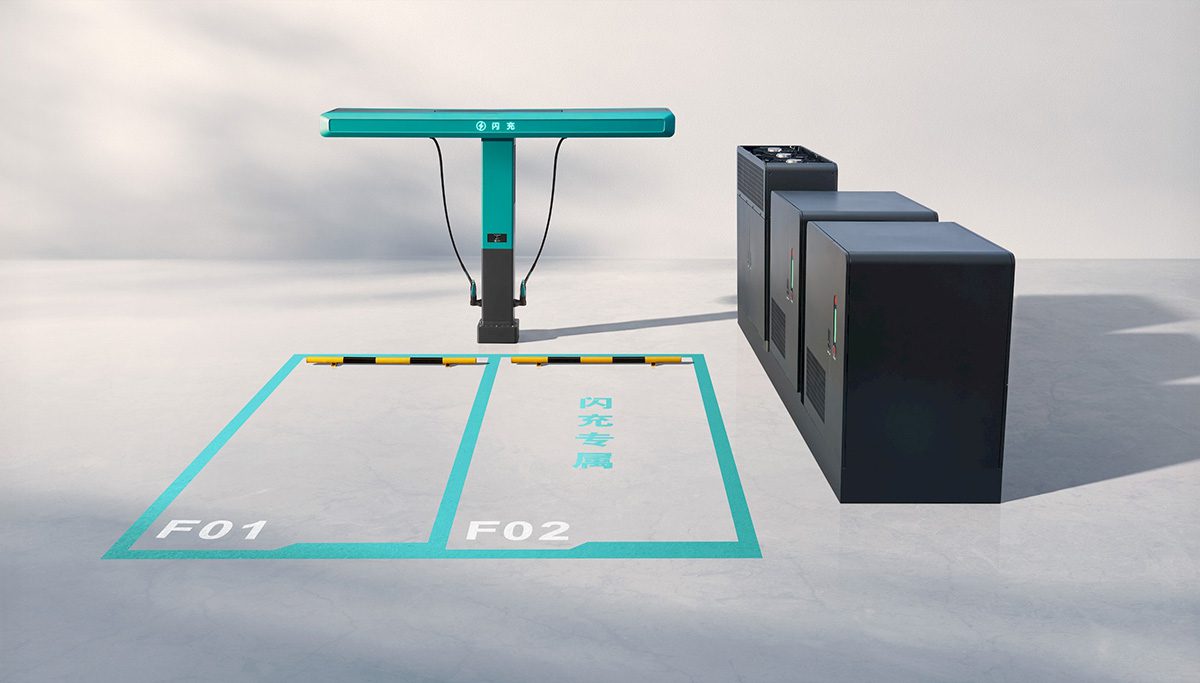
Beyond the raw power, BYD’s flash chargers feature a distinctive overhead design. This innovative approach aims to improve the usability and security of charging connections. The cables are suspended from a sliding rail on a T-shaped overhead rack, allowing drivers to easily plug in from either side of the vehicle.
This overhead configuration also facilitates pull-through charging, beneficial for vehicles towing trailers or for larger trucks. Furthermore, by keeping the cables off the ground, the design mitigates the risk of damage and wear, contributing to the longevity and reliability of the charging equipment.
The combination of the long-range Blade Battery 2.0 and the high-power flash charging system marks a significant step forward for BYD and the broader electric vehicle industry. These advancements have the potential to make EVs more practical and appealing to a wider audience, accelerating the global shift towards sustainable transportation.