
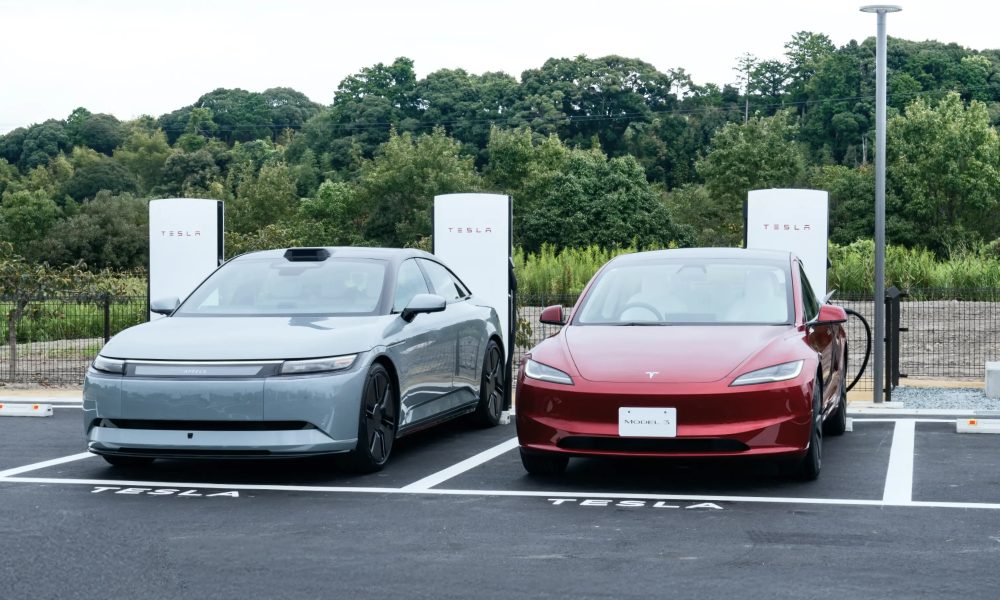
In a significant development reflecting the ongoing turbulence within the global electric vehicle (EV) sector, Sony Honda Mobility (SHM) has officially announced the discontinuation of its highly anticipated AFEELA electric vehicles project. The joint venture, formed by two industrial giants, Sony and Honda, confirmed on March 25, 2026, its decision to halt the development of both the AFEELA 1 luxury sedan and a planned SUV model.
The move marks the latest casualty in a challenging market, adding the AFEELA project to a growing list of ambitious EV initiatives that have struggled to gain traction against established players. Once touted as a formidable challenger, or even a ‘Tesla Killer,’ the AFEELA now symbolizes the harsh realities confronting new entrants in the fiercely competitive electric mobility landscape.

The Ambitious Vision Behind AFEELA Electric Vehicles
Launched with considerable fanfare in 2022, the Sony Honda Mobility AFEELA electric vehicles project represented a bold foray into the premium EV segment. The collaboration aimed to synergize Honda’s renowned engineering prowess and manufacturing capabilities with Sony’s cutting-edge expertise in entertainment, artificial intelligence (AI), and digital experiences.
The vision for the AFEELA was clear: to create a tech-forward luxury EV that seamlessly integrated advanced autonomous driving systems, immersive in-cabin displays, and even the novelty of PlayStation integration. These innovative features garnered significant media attention, leading many industry observers to label the AFEELA as a potential ‘Tesla Killer’ capable of challenging the market leader’s dominance in software and connectivity.
With an anticipated price point around $90,000, the AFEELA 1 sedan was slated for limited production at one of Honda’s facilities in Ohio, with initial deliveries targeted for late 2026. The vehicle was positioned not just as a mode of transport, but as a mobile entertainment hub and a showcase of future mobility, designed to appeal to tech-savvy consumers seeking a premium electric experience.

Honda’s Strategic Reassessment and SHM’s Viability
The abrupt halt in the AFEELA project directly stems from a broader strategic reassessment by Honda regarding its electrification strategy, announced on March 12, 2026. This review led to the shelving of several upcoming EV programs by the Japanese automaker, citing a confluence of factors including slowing consumer demand for electric vehicles, escalating development and manufacturing costs, and rapidly shifting global market conditions.
For Sony Honda Mobility, this corporate realignment by one of its parent companies proved fatal. SHM issued a statement indicating that it could no longer rely on critical Honda technologies and manufacturing assets, which were fundamental to the AFEELA’s development and production roadmap. This withdrawal of essential support left “no viable path forward” for the nascent EV brand.
The immediate consequence for early adopters and prospective buyers of AFEELA electric vehicles has been the full refunding of reservation fees for those in California. The broader future of the entire Sony Honda Mobility joint venture is now under comprehensive review, casting a shadow over the initial ambitions of both Sony and Honda in their collaborative EV endeavor, as reported by Bloomberg.
The Evolving Global EV Landscape
The decision by Honda and, subsequently, SHM, underscores the increasingly complex and competitive nature of the global EV market. What was once seen as an unstoppable surge towards electrification has encountered headwinds, with factors such as high interest rates impacting consumer purchasing power and a more cautious approach emerging among buyers.
Furthermore, the cost of developing and scaling EV platforms remains extraordinarily high, requiring massive capital investments. Legacy automakers and new startups alike are grappling with the intricacies of battery supply chains, software development, and efficient manufacturing at scale, all while navigating intense competition from a growing number of established players and agile newcomers.
The Growing Graveyard of ‘Tesla Killers’
The narrative of the ‘Tesla Killer’ has been a persistent theme in the automotive industry for over a decade, yet very few, if any, have managed to truly dethrone the American EV pioneer from its dominant position, particularly in the premium and high-tech segments. The discontinuation of AFEELA electric vehicles is the latest entry into this expanding list of ambitious projects that ultimately fell short.
Many companies, fueled by significant investment and bold promises, have attempted to replicate Tesla’s success or carve out their own niche, only to be confronted by the immense challenges of mass-producing electric vehicles and building comprehensive ecosystems. The path to market leadership in the EV space demands not just innovation, but also robust execution, substantial capital, and resilient supply chains.
Lessons from Prior Challengers
-
Fisker Ocean: In the late 2010s, Fisker’s second attempt at an automotive venture, the Ocean SUV, garnered attention with its stylish design and promises of innovative features like a solar roof. However, the company ultimately filed for bankruptcy in 2024, plagued by persistent production delays, escalating quality control issues, and significant financial shortfalls that prevented it from delivering on its initial promises.
-
Faraday Future FF 91: This luxury sedan saw billions of dollars poured into its development, positioning itself as a hyper-tech rival to Tesla with unmatched performance and advanced features. Despite the massive investment and considerable hype, Faraday Future delivered fewer than 100 vehicles before largely fading from public prominence, unable to transition from concept to widespread production.
-
Lordstown Motors Endurance: The electric pickup truck from Lordstown Motors generated massive pre-order buzz and significant excitement on Wall Street. However, its trajectory imploded following investigations into exaggerated range claims, the eventual sale of its factory, and a subsequent bankruptcy filing, highlighting the perils of over-promising and under-delivering in a capital-intensive industry.
-
Lucid Motors Air: Often cited as a legitimate ‘Tesla slayer’ due to its superior range and ultra-luxury positioning, the Lucid Air sedan has, despite strong critical reviews, struggled with sluggish sales and consistently missed growth targets. While not a failure, its journey underscores the difficulty of translating technological superiority into market volume and consistent profitability.
-
Rivian R1T and R1S: Rivian’s electric trucks and SUVs initially enjoyed widespread acclaim and a blockbuster Initial Public Offering (IPO). However, the company has faced significant challenges in scaling production, encountering supply chain bottlenecks, and grappling with profitability woes that have tempered its early momentum and prevented it from significantly eroding Tesla’s market share.
These instances collectively illustrate that a compelling product alone is often insufficient. Success in the EV market demands a robust manufacturing infrastructure, deep pockets for sustained investment, and the ability to navigate regulatory hurdles and rapidly evolving consumer preferences.
Market Realities and Tesla’s Enduring Advantage
The quiet demise of Sony Honda Mobility AFEELA electric vehicles further accentuates a stark reality within the electric vehicle sector. Tesla’s first-mover advantage, cultivated over more than a decade, remains a formidable barrier for new and established competitors alike. This advantage is multi-faceted, encompassing a mature software ecosystem, an extensive and proprietary charging infrastructure, and a powerful global brand loyalty that is difficult to replicate.
For years, Tesla invested heavily in these areas, building a holistic EV experience that goes beyond just the vehicle itself. Competitors, while catching up in vehicle hardware, often find themselves playing catch-up in software integration, charging network accessibility, and the overall digital user experience, all of which are increasingly critical for consumer adoption.
The market is also witnessing a shift from early adopters to a broader, more cost-conscious consumer base. This transition amplifies the importance of affordability, reliability, and widespread service networks – areas where established automakers typically excel, but where EV startups often face significant hurdles in scaling quickly and efficiently.
The Future of EV Innovation and Market Consolidation
The challenges faced by the AFEELA project and its predecessors signal a likely period of consolidation and strategic recalibration across the EV industry. As market realities force tough choices, companies are increasingly scrutinizing their investment portfolios and streamlining their product development efforts to focus on viable, scalable projects.
While innovation remains a key driver, the story of Sony Honda Mobility AFEELA electric vehicles serves as a potent reminder that groundbreaking ideas must be paired with robust operational execution, deep financial reserves, and a clear understanding of market dynamics to truly succeed. The landscape of electric mobility is maturing, and only those with a sustainable business model and the ability to navigate complex industrial challenges will thrive.
The growing list of ‘Tesla Killers’ relegated to the automotive graveyard underscores that while competition is fierce, the path to unseating an established market leader requires more than just innovative features; it demands an integrated strategy capable of overcoming the inherent complexities of bringing desirable and affordable electric vehicles to a global audience.