
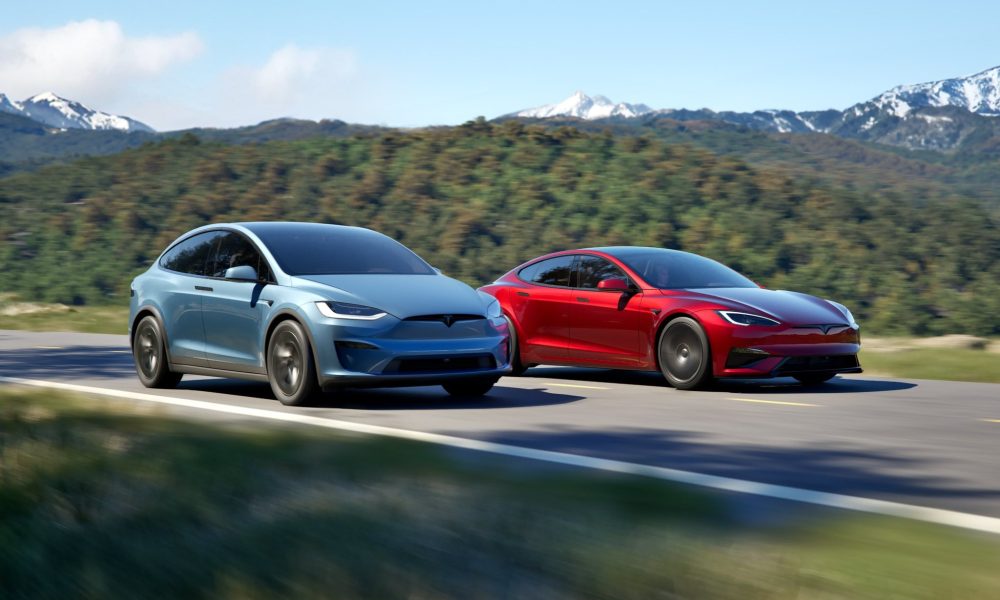
In a pivotal move marking a significant shift in its production strategy, Tesla has officially discontinued custom orders for its pioneering Model S sedan and Model X SUV. Effective April 1, 2026, prospective buyers can no longer configure these long-running flagship vehicles through the company’s website, being redirected instead to a limited inventory of pre-built models. This development signifies the beginning of an ‘honorable discharge’ for the two electric vehicles that once defined Tesla’s leadership in the premium EV segment.
Tesla Shifts Strategy: End of an Era for Flagship Models
Custom Orders Cease, Inventory Only
The cessation of custom orders for the Tesla Model S and Model X marks a definitive turning point for the electric vehicle manufacturer. Visitors to Tesla’s official website attempting to configure a new Model S or Model X will now find the custom order configurator unavailable. Instead, they are presented with a selection of pre-existing inventory vehicles. This means customers are limited to purchasing or leasing units that are already manufactured and in stock, rather than specifying their preferred paint, wheels, interior options, or performance upgrades.
The transition to an inventory-only sales model underscores Tesla’s commitment to streamlining operations and reallocating resources. This strategic realignment was first hinted at by CEO Elon Musk during the company’s Q4 2025 earnings call in January, where he articulated the vision for an ‘honorable discharge’ of these foundational programs. The move solidifies Tesla’s accelerating pivot toward next-generation technologies, particularly in the fields of artificial intelligence and robotics.
A Strategic Pivot Towards Autonomy and AI
The “Honorable Discharge” Explained
Elon Musk, Tesla’s Chief Executive, formally confirmed the change directly on X, stating: “Custom orders of the Tesla Model S & X have come to an end. All that’s left are some in inventory.” This declaration came alongside a promise for a commemorative event: “We will have an official ceremony to mark the ending of an era. I love those cars.” He further underscored the sentiment by sharing a throwback photo from the Model S production launch in 2012, highlighting the personal and historical significance of these models to the company’s journey.
The strategic rationale behind this ‘honorable discharge’ is rooted in Tesla’s long-term vision. Musk indicated that the decision was made to liberate valuable manufacturing capacity at the Fremont factory. This freed-up space is crucial for the accelerated production of the Optimus humanoid robot and for advancing the company’s ambitious autonomous vehicle initiatives. By centralizing resources on these emerging technologies, Tesla aims to redefine its core business beyond traditional automotive manufacturing, embracing a future driven by AI and robotics.

The Legacy of Innovation: Model S and Model X
Pioneering Luxury Electric Vehicles
Introduced in 2012, the Tesla Model S swiftly emerged as a game-changer in the automotive industry. It challenged conventional perceptions of electric vehicles by offering class-leading range, exhilarating acceleration, and a premium experience that rivaled established luxury sedans. Its success paved the way for the Model X SUV, which debuted in 2015, capturing attention with its distinctive falcon-wing doors and becoming one of the first all-electric SUVs on the market. Together, these vehicles were instrumental in proving the viability of electric propulsion in the luxury segment and cementing Tesla’s reputation as an innovator.
The Model S and Model X were not merely vehicles; they were statements. They demonstrated that electric cars could be fast, desirable, and capable of long-distance travel, effectively compelling traditional automakers to accelerate their own electric vehicle development programs. These flagship models served as the financial and technological bedrock, helping to fund and accelerate the development of Tesla’s more affordable, higher-volume vehicles like the Model 3 and Model Y, which subsequently broadened the company’s market reach.
Dwindling Sales and Production Inefficiency
Despite their foundational importance, the sales volumes for the Model S and Model X have progressively diminished in recent years. As Tesla intensified its focus on mass-market vehicles such as the Model 3 and Model Y, these original flagships began to represent a significantly smaller fraction of the company’s overall deliveries. This shift made continued custom production of the Model S and Model X increasingly inefficient, particularly as Tesla eyes even higher-volume endeavors in its future roadmap.
The decision to cease custom orders aligns with a broader industry trend of streamlining production for less popular models to optimize manufacturing lines. For Tesla, this optimization is directly linked to its pivot towards ambitious projects like robotaxis and next-generation vehicle platforms. The resources, both human and infrastructural, previously dedicated to bespoke Model S and Model X production are now being reallocated to support these forward-looking ventures, marking a deliberate strategic choice to focus on future growth drivers.
Implications for Prospective Buyers
Limited Inventory and Potential Incentives
With custom orders no longer an option, prospective buyers interested in a new Tesla Model S or Model X are now encouraged to act swiftly. The remaining inventory in the United States, which includes both new and nearly-new vehicles, may present unique opportunities. These vehicles could potentially come with attractive incentives, such as lifetime free Supercharging, the Full Self-Driving (Supervised) capability, and premium connectivity, depending on their specific configuration and the prevailing promotions. However, the exact pricing and availability of these units are subject to constant fluctuation.
Leasing options for select Model X units, for instance, have been cited as starting around $1,699 per month. It is important for potential customers to regularly check Tesla’s inventory listings as stock is expected to deplete. This inventory-only approach has already been implemented in various international markets, including Europe and China, over recent months, indicating a consistent global strategy for the Model S and Model X discontinuation.
Elon Musk’s Sentimental Farewell and Future Plans
An “Official Ceremony” to Mark the Transition
The promise of an “official ceremony to mark the ending of an era” is particularly noteworthy. Tesla has historically not held formal farewell events for its vehicles, making Musk’s announcement a unique gesture that underscores the profound significance of the Model S and Model X to the company’s history. Given Musk’s public statement and the shared throwback photo of him at the Model S launch, speculation suggests such a ceremony might take place at the Fremont factory, where these vehicles were initially brought to life.
Whether this event will be a public spectacle, a private gathering for employees, or a livestreamed broadcast remains to be seen. Regardless of its format, the ceremony is expected to provide a fitting tribute to these iconic models and acknowledge their pivotal role in establishing Tesla as a dominant force in the electric vehicle industry, ushering in the era of electric mobility on a global scale.
Factory Conversion for Optimus Production
The winding down of Model S and Model X production is directly tied to Tesla’s aggressive push into robotics. The manufacturing space at the Fremont factory previously utilized for these vehicles is now undergoing conversion to support the production of the Optimus humanoid robot. Tesla commenced Optimus Gen 3 production at its Fremont facility in January 2026, targeting an ambitious run rate of one million units annually. This conversion signifies a monumental shift in manufacturing focus for the company.
Furthermore, a dedicated Optimus factory is currently under construction at Gigafactory Texas, with plans for an annual capacity of 10 million units. The Gen 3 robot is designed with advanced capabilities, featuring 22 degrees of freedom per hand, operating on Tesla’s AI5 chip, and utilizing the same neural network architecture as the company’s Full Self-Driving technology. This dual-pronged production strategy for Optimus underscores Tesla’s commitment to leveraging its manufacturing expertise to scale its AI and robotics initiatives rapidly.
Continuing Support for Existing Owners
For the thousands of loyal customers who currently own a Tesla Model S or Model X, the company has affirmed its commitment to ongoing support. Tesla has indicated that it will continue to provide service, software updates, and necessary parts for these vehicles for the foreseeable future, ensuring that existing owners will still receive comprehensive post-purchase care. This pledge aims to reassure the current installed base of Model S and Model X owners, maintaining the longevity and functionality of their vehicles despite the halt in new custom production.
Tesla’s Unwavering Focus on the Future
The discontinuation of custom orders for the Tesla Model S and Model X is more than just a product cycle adjustment; it is a clear declaration of the company’s evolving priorities. By reallocating resources and manufacturing capacity, Tesla is unequivocally signaling its future direction: a relentless pursuit of advanced AI, autonomous technology, and large-scale robotics. While some enthusiasts may lament the loss of personalized flagship EVs, this transition is framed by the company as an essential step toward achieving its long-term vision of transforming mobility and industry through intelligence.
As the remaining inventory of Model S and Model X vehicles finds its final owners, the era of bespoke, premium Tesla sedans and SUVs manufactured to individual specifications quietly concludes. The company’s focus has decisively shifted toward pioneering the next frontier of technological innovation, where the lines that once built iconic electric cars will now forge the components of an autonomous, AI-driven future.