
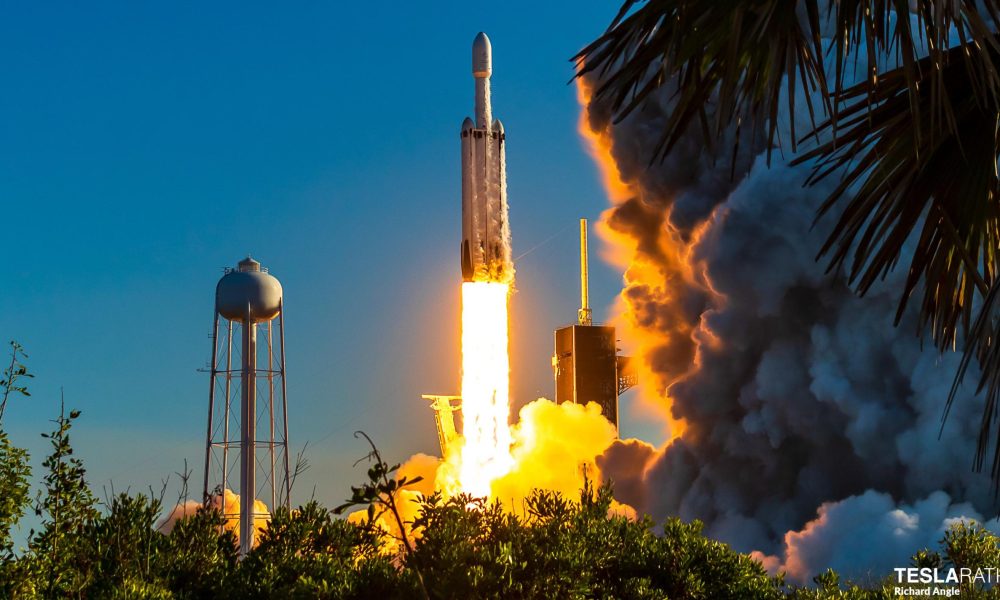
Elon Musk’s pioneering aerospace company, SpaceX, has confidentially filed its draft registration with the U.S. Securities and Exchange Commission (SEC) for an initial public offering (IPO). The ambitious move targets a monumental $1.75 trillion valuation and aims to raise $80 billion, positioning the potential public offering by SpaceX as the largest in history.
The confidential submission, first reported by Bloomberg, signals SpaceX’s intention to go public as early as June. Such a valuation would place SpaceX among the world’s most valuable corporations, surpassing nearly every S&P 500 company save for technology giants Nvidia, Apple, Alphabet, Microsoft, and Amazon.

This significant development underscores the company’s remarkable growth trajectory, driven primarily by the burgeoning success of its Starlink satellite internet service and the strategic merger with Musk’s artificial intelligence venture, xAI.
Navigating the Confidential Filing Process
SpaceX has opted for a confidential IPO filing process, a mechanism permitted by the Jumpstart Our Business Startups (JOBS) Act. This allows private companies to submit their draft registration statements to the SEC for review without immediate public disclosure.
The primary advantage of a confidential filing is the ability to work through SEC comments and make necessary revisions to the prospectus privately. This minimizes public scrutiny during the initial review phase and provides flexibility to adjust the IPO timeline based on market conditions and regulatory feedback.

With a target launch in June, market observers anticipate that the official details, including a formal prospectus outlining the company’s financials, business operations, and risks, will be made public in April or early May. Following the public release of the prospectus, SpaceX is required to observe a minimum 15-day waiting period before it can commence its investor marketing roadshow.
This structured approach ensures that all regulatory requirements are met and allows the company to fine-tune its public narrative before engaging with potential investors.
SpaceX’s Ambitious Public Offering
The projected $1.75 trillion valuation for the SpaceX IPO is not merely a number; it reflects a profound confidence in the company’s diverse and rapidly expanding portfolio. While SpaceX is globally renowned for its cutting-edge Falcon 9 and Starship rockets, which have revolutionized space transport, the core of this unprecedented valuation is anchored by its Starlink division.
Elon Musk himself has previously confirmed that a SpaceX IPO is on the horizon, a prospect eagerly awaited by investors keen to participate in the commercial space sector.
Starlink: The Core of SpaceX’s Valuation
Starlink, SpaceX’s ambitious satellite internet constellation, has emerged as a formidable revenue generator and a key driver behind the projected valuation. The service provides high-speed, low-latency broadband internet access, particularly to underserved rural and remote areas worldwide.
By the close of 2025, Starlink had amassed an impressive 9.2 million subscribers, demonstrating rapid adoption and market penetration. This subscriber base translated into over $10 billion in revenue for the year 2025, significantly contributing to SpaceX’s overall financial health.
Financial analysts project an even more robust performance for Starlink in the current year, with revenue figures potentially soaring to an estimated $24 billion by the end of 2026. This aggressive growth trajectory and the proven demand for its services underscore Starlink’s pivotal role in underpinning the massive $1.75 trillion valuation.
Strategic Merger with xAI Bolsters Prospectus
Further enhancing the valuation of the upcoming SpaceX IPO was the strategic all-stock merger with xAI, Elon Musk’s artificial intelligence venture, which was finalised in February. This integration brings advanced AI expertise directly into the SpaceX ecosystem.
The synergy between SpaceX’s vast data streams from its rocket launches, satellite operations, and Starlink network, combined with xAI’s artificial intelligence capabilities, promises to unlock new efficiencies, enhance operational intelligence, and potentially lead to new commercial applications. This merger is viewed as a crucial component that bolstered the overall valuation presented in the confidential filing.
Underwriting Giants and Retail Investor Access
The successful execution of an IPO of this magnitude requires the backing of leading financial institutions. SpaceX has reportedly lined up a syndicate of senior underwriters comprising some of the most prominent names in global finance: Bank of America, Goldman Sachs, JPMorgan Chase, and Morgan Stanley.
These investment banks will play a critical role in structuring the offering, marketing the shares to institutional investors, and facilitating the listing process. Their involvement lends significant credibility and market reach to the ambitious public offering by SpaceX.
Dual-Class Share Structure and Retail Participation
In a move designed to maintain long-term strategic control, SpaceX is reportedly considering a dual-class share structure for its IPO. This arrangement typically involves issuing two classes of shares, with one class (often held by founders and insiders) carrying more voting power per share than the other class (offered to the public).
Such a structure is common among technology and growth companies, allowing visionary leaders like Elon Musk to retain control over the company’s direction even after going public. This ensures that the company’s long-term vision is not easily swayed by short-term market pressures.
Adding another distinctive element to the SpaceX IPO strategy, the company plans to allocate up to 30% of shares to retail investors. This proportion is approximately three times the typical norm for major IPOs, which usually reserve a much smaller percentage for individual, non-institutional investors.
This significant allocation to retail investors reflects a broader trend of democratizing access to high-profile public offerings and aligns with Elon Musk’s often-stated commitment to involving a wider community in his ventures. It offers an unprecedented opportunity for individual investors to own a stake in one of the most transformative companies of our era.
Implications for the Space and Tech Industries
The impending SpaceX IPO is poised to have profound implications, not just for the capital markets but also for the burgeoning commercial space industry and the broader technology sector. A successful public offering of this scale would inject substantial capital into SpaceX, funding its ambitious projects, including further development of Starship, expansion of the Starlink constellation, and other exploratory missions.
Moreover, it would serve as a powerful validation for the commercial space sector, potentially attracting more investment and accelerating innovation across the industry. The valuation itself, largely driven by a non-traditional internet service, signals a shift in how groundbreaking technology companies are perceived and valued.
As the date for the public prospectus draws closer, the financial world and space enthusiasts alike will be closely watching the unfolding of what could indeed be a record-breaking moment in corporate history, reshaping the landscape of public markets and technological innovation.