
Key Takeaways
- Integrals Power has received UK government funding through the DRIVE35 Scale-up Feasibility Studies competition for Project CATMAN.
- The funding will assess the expansion of LFP and LMFP cathode active material production from a 20-tonne/year pilot to a 100-tonne/year demonstration facility, targeting 1,000 tonnes/year for commercial readiness.
- Integrals Power’s LMFP technology offers 20% higher energy density than conventional LFP, maintains LFP’s safety and cost benefits, and is free of cobalt and nickel.
- Independent testing by QinetiQ confirmed over 1,500 charge-discharge cycles with nearly 80% capacity retention, while Cranfield University demonstrated strong cold-temperature performance.
- This initiative is critical for establishing a domestic UK cathode supply chain, addressing recent Chinese export restrictions and impending EU Battery Passports and UK-EU rules of origin.
- The move aims to transform domestic cathode supply from a competitive advantage into a regulatory necessity for the UK automotive sector.
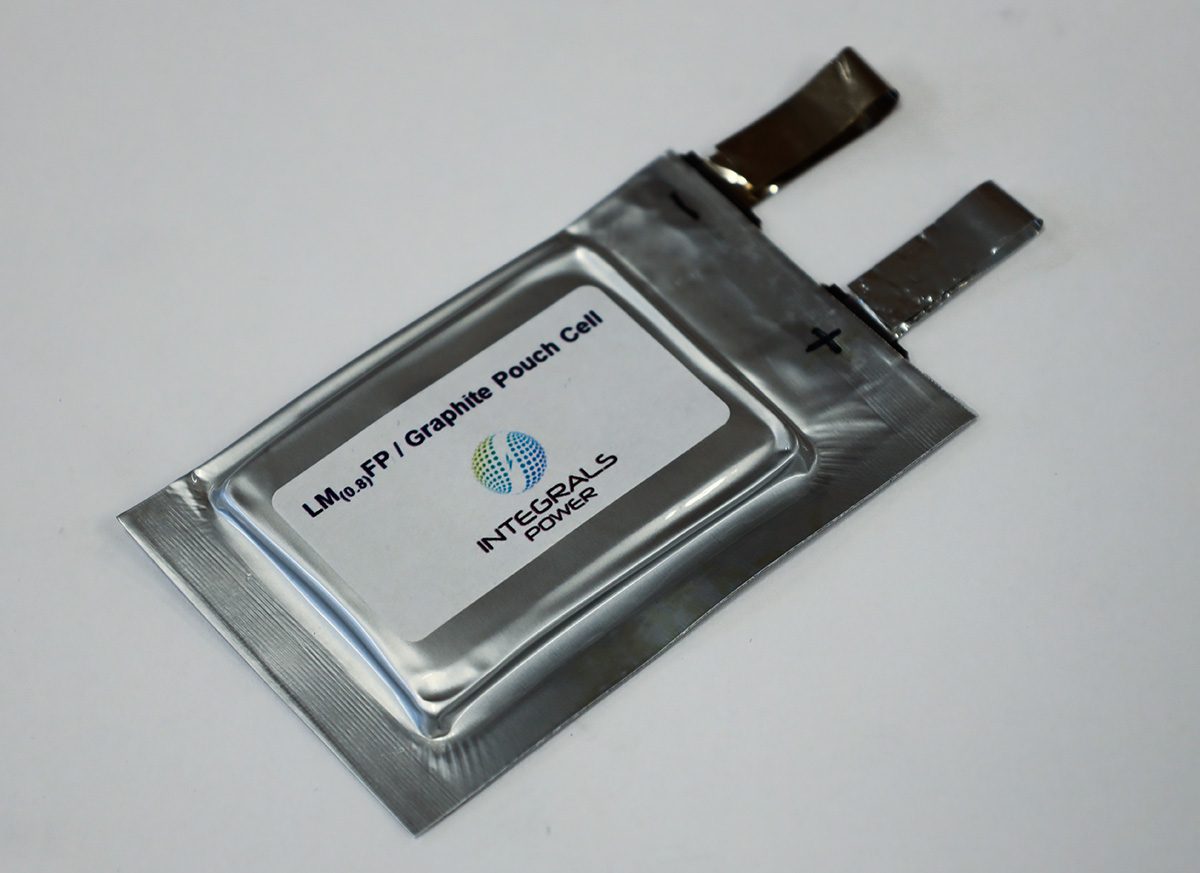
Integrals Power, a key innovator in battery technology, has successfully secured crucial funding from the UK government. This investment, granted under the DRIVE35 Scale-up Feasibility Studies competition, is earmarked to significantly advance the production capabilities of its Lithium Iron Phosphate (LFP) and Lithium Manganese Iron Phosphate (LMFP) cathode active materials.
The initiative, internally dubbed Project CATMAN, is designed to map a comprehensive manufacturing pathway. The ultimate goal is to scale up Integrals Power’s existing 20-tonne per year UK pilot line to a 100-tonne per year demonstration facility, laying the groundwork for a full engineering readiness package for a 1,000-tonne per year commercial production line. This strategic move underscores the UK’s commitment to fortifying its domestic supply chain for electric vehicle (EV) batteries.

UK Government’s Strategic Investment in Advanced Manufacturing
The DRIVE35 competition is a critical component of the UK government’s broader Advanced Manufacturing Sector Plan. This ambitious plan commits an impressive £4 billion towards automotive research and development (R&D) and scale-up initiatives, spanning a period up to 2035. The Department for Business and Trade, in collaboration with the Advanced Propulsion Centre UK and Innovate UK, is responsible for delivering this vital program.
This concerted effort highlights a national push to foster innovation and establish a robust, independent manufacturing base for future industries. The funding for Integrals Power is not merely an investment in a single company, but a strategic step towards securing the UK’s position in the global EV market.
Project CATMAN: Scaling Up Cathode Production
The core objective of Project CATMAN is to transition from a successful pilot phase to large-scale commercial production. Integrals Power’s current 20-tonne per year pilot line has already proven its capability to produce both LFP and LMFP cathodes. The next phase, focusing on a 100-tonne per year demonstration facility, will be crucial for refining manufacturing processes and validating efficiency at a larger scale.
Ultimately, the detailed engineering readiness for a 1,000-tonne per year commercial line signifies a significant leap towards meeting the escalating demand for advanced EV battery materials. This progression is vital for integrating domestically produced cathodes into the UK’s rapidly expanding automotive supply chain.
Breakthroughs in LFP and LMFP Cathode Technology
Integrals Power’s proprietary LMFP material represents a notable advancement in battery chemistry. This innovative material incorporates an impressive 80% manganese content, which enables it to deliver 20% higher energy density compared to conventional LFP chemistries. Crucially, this enhanced performance is achieved while meticulously retaining the inherent safety profile, extended cycle life, and cost-effectiveness that LFP batteries are renowned for.
A significant advantage of Integrals Power’s LMFP technology, setting it apart from Nickel Manganese Cobalt (NMC) chemistries, is its complete absence of cobalt and nickel. The exclusion of these critical raw materials not only addresses ethical sourcing concerns but also helps mitigate price volatility and supply chain risks often associated with cobalt and nickel, which are essential components in many traditional EV batteries.
Rigorous Independent Validation and Performance Benchmarks
The performance claims of Integrals Power’s LMFP material have been subjected to rigorous independent scrutiny, affirming its potential impact on the EV battery landscape. QinetiQ, a renowned science and engineering company, conducted comprehensive cycle life testing. These tests demonstrated exceptional durability, exceeding 1,500 charge-discharge cycles at a 1C rate while maintaining nearly 80% capacity retention.
Further validation came from Cranfield University, which performed extensive cold-temperature testing. The results were particularly impressive, showing 85% retained capacity at -25 °C and 68% at -30 °C. Integrals Power asserts that these figures significantly outperform current LFP and LMFP benchmarks available in the market, highlighting the material’s robustness in extreme conditions and its suitability for diverse global climates.
Addressing Geopolitical Shifts and Regulatory Imperatives
The drive to establish a domestic cathode supply chain in the UK is propelled by significant global geopolitical and regulatory shifts. Currently, the vast majority of LFP and LMFP cathode production is concentrated in China. This concentration became a critical concern last year when China introduced export restrictions on these vital battery materials and their associated manufacturing processes, underscoring the vulnerabilities of a highly centralized supply chain.
Beyond supply security, future regulatory frameworks also necessitate localized production. From 2027, the European Union’s Battery Passports will come into effect, imposing stringent transparency and sustainability requirements on batteries entering the EU market. Concurrently, UK-EU rules of origin requirements for EV batteries will tighten, demanding that 65% of the cell value and 70% of the battery pack value originate within the UK or EU to avoid a prohibitive 10% tariff.
From Competitive Advantage to Regulatory Necessity
These impending regulations fundamentally shift the landscape for EV manufacturers. What was once considered a competitive advantage – having a local cathode supply chain – is rapidly transforming into a regulatory necessity. Companies unable to meet these origin requirements risk significant financial penalties and market access restrictions, making domestic production an imperative rather than an option.
The proactive steps taken by the UK government and Integrals Power are therefore crucial for ensuring the long-term viability and competitiveness of the UK’s automotive sector. By fostering local production of key battery components, the UK aims to mitigate supply chain risks, comply with future trade regulations, and position itself as a leader in sustainable EV manufacturing.
CEO’s Vision for UK Battery Independence
Behnam Hormozi, Founder and CEO of Integrals Power, articulated the profound significance of this funding for the UK’s aspirations in the EV sector. He stated, “Our LMFP material has already proven itself in independent testing by QinetiQ—now we need to prove the manufacturing process at scale, and that is exactly what this program will deliver. The UK has a genuine opportunity to establish manufacturing for these strategically important cell chemistries outside of China, and this funding is a critical step in enabling that to happen.”
Hormozi’s comments underscore the dual importance of both technological innovation and scalable manufacturing capability. The UK’s strategic goal is not just to develop advanced materials but to ensure they can be produced domestically at volumes competitive with global players, reducing reliance on external sources and fostering national self-sufficiency in critical technologies.
Broader Implications for the UK Automotive Industry
This investment in Integrals Power’s LFP and LMFP cathode production capacity has far-reaching implications for the entire UK automotive industry. A robust domestic supply chain for EV battery components is essential for attracting and retaining automotive manufacturing within the UK. It reduces logistical complexities, minimizes exposure to international trade disputes, and supports the creation of high-value jobs.
Furthermore, the development of advanced, cobalt- and nickel-free battery chemistries aligns with global sustainability goals. By reducing reliance on conflict minerals and enhancing the environmental footprint of EV batteries, the UK can strengthen its leadership in green technology and contribute to a more sustainable future for transportation.
Outlook for UK’s EV Battery Ecosystem
The funding secured by Integrals Power represents a pivotal moment in the development of the UK’s EV battery ecosystem. By supporting the scale-up of advanced cathode materials, the UK government is laying foundational infrastructure necessary for future gigafactories and EV production lines. This creates a synergistic environment where innovation, manufacturing, and policy converge to accelerate the transition to electric vehicles.
As Project CATMAN progresses, it will provide valuable insights into the complexities of scaling advanced battery material production, offering a blueprint for other companies and technologies within the UK. The success of this project could significantly bolster the UK’s claim as a hub for EV battery technology and manufacturing excellence.
Frequently Asked Questions
What is Project CATMAN?
Project CATMAN is Integrals Power’s initiative, funded by the UK government’s DRIVE35 competition, to assess and execute the scaling of its LFP and LMFP cathode active material production. It aims to develop a manufacturing pathway from a 20-tonne/year pilot line to a 100-tonne/year demonstration facility, with a future goal of a 1,000-tonne/year commercial line.
What are LFP and LMFP cathode active materials?
LFP (Lithium Iron Phosphate) and LMFP (Lithium Manganese Iron Phosphate) are types of cathode active materials used in lithium-ion batteries. They are known for their enhanced safety, longer cycle life, and cost-effectiveness compared to other chemistries like NMC. Integrals Power’s LMFP specifically offers higher energy density while remaining free of cobalt and nickel.
Why is a domestic UK cathode supply chain important?
A domestic cathode supply chain is becoming critical due to geopolitical factors, such as China’s export restrictions on battery materials, and impending regulatory changes. Future EU Battery Passports and UK-EU rules of origin will necessitate local content percentages to avoid significant tariffs, making localized production a strategic imperative for the UK automotive sector.
How does Integrals Power’s LMFP material compare to conventional LFP?
Integrals Power’s LMFP material, which contains 80% manganese, delivers approximately 20% higher energy density than conventional LFP. Crucially, it achieves this while preserving LFP’s strong safety profile, extended cycle life, and competitive cost structure. It also distinguishes itself by containing no cobalt or nickel, addressing critical raw material concerns.
What role do QinetiQ and Cranfield University play?
QinetiQ and Cranfield University have conducted independent testing to validate Integrals Power’s LMFP material. QinetiQ verified its impressive cycle life, exceeding 1,500 charge-discharge cycles with nearly 80% capacity retention. Cranfield University confirmed its superior cold-temperature performance, showing 85% retained capacity at -25 °C and 68% at -30 °C, surpassing current benchmarks.
What is the UK government’s DRIVE35 program?
DRIVE35 is a UK government competition under the Advanced Manufacturing Sector Plan. It is delivered by the Department for Business and Trade in partnership with the Advanced Propulsion Centre UK and Innovate UK. The program makes £4 billion available until 2035 to support automotive R&D and scale-up activities, aiming to strengthen the UK’s manufacturing capabilities in critical sectors.