
Key Takeaways / Summary:
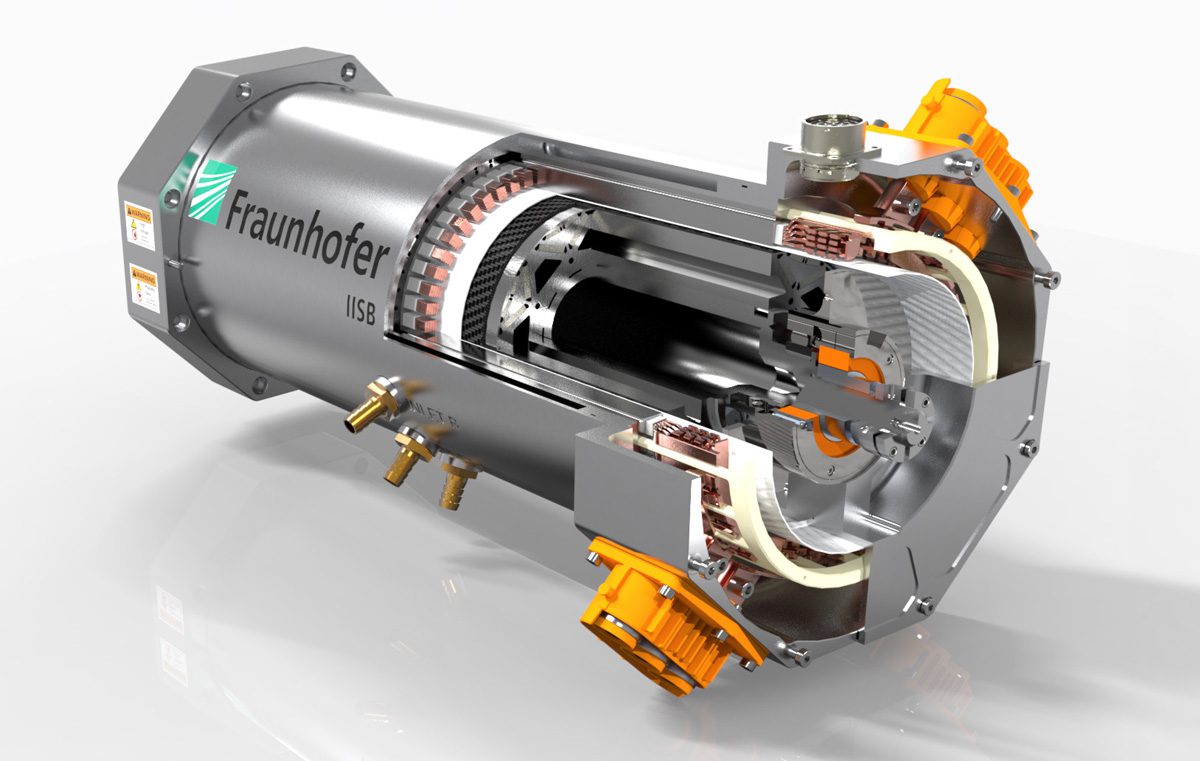
Fraunhofer IISB has achieved a significant milestone in electric aviation by developing a 750 kW permanent-magnet traction motor, boasting an unprecedented 8 kW/kg power density. This innovative **hairpin winding traction motor**, weighing just 94 kg, integrates advanced technologies such as thin-lamination electrical steel, direct oil-spray cooling, and a fault-tolerant multi-phase winding architecture. Designed for hybrid-electric regional aircraft, the motor is a core component of the Clean Aviation EU program’s Project AMBER, aiming for a substantial 30% reduction in CO₂ emissions for future regional air travel.

Revolutionizing Aviation Propulsion with High Power Density
In a major stride towards sustainable aviation, Germany’s Fraunhofer Institute for Integrated Systems and Device Technology (IISB) has unveiled a groundbreaking permanent-magnet traction motor. Engineered specifically for hybrid-electric regional aircraft, this motor delivers 750 kilowatts of power while achieving an exceptional power density of 8 kilowatts per kilogram. This development marks a critical step forward in making electric propulsion viable for larger aircraft.
The pursuit of high power density is paramount in aerospace applications, where every kilogram saved translates into increased payload capacity, extended range, or improved fuel efficiency. Fraunhofer IISB’s latest innovation, a 94-kilogram powerhouse, represents a significant leap in this critical metric, setting a new benchmark for future electric aviation systems.
Advanced Engineering Behind the Breakthrough
The remarkable performance of this new **hairpin winding traction motor** is attributed to the synergistic integration of several cutting-edge engineering solutions. These include the strategic use of thin-lamination electrical steel, an advanced hairpin winding design, and an innovative direct oil-spray cooling system. Each component plays a crucial role in managing the immense power output within a compact and lightweight package.

At the heart of the motor’s design is the application of NO15 electrical steel, a specialized thin-lamination grade measuring just 0.15 millimeters. This material choice is vital for mitigating eddy current and AC losses, which become particularly pronounced at the high rotational speeds characteristic of aviation applications. By minimizing these energy losses, the motor can operate more efficiently and contribute directly to its impressive power-to-weight ratio.
The Efficacy of Hairpin Windings
The motor’s stator incorporates a sophisticated 4×3 phase hairpin winding arrangement. Unlike traditional round-wire coils, hairpin windings, characterized by their rectangular cross-section, offer superior advantages. They enable a higher current density within the stator slots, effectively maximizing the power generation capability from a given volume. This design significantly contributes to the motor’s compact footprint and high power output.
Beyond electrical efficiency, hairpin windings also facilitate enhanced thermal contact with the stator core. This improved thermal pathway is crucial for dissipating the substantial heat generated during high-power operation, a fundamental challenge in designing powerful electric motors. The ability of the **hairpin winding traction motor** to manage its thermal load effectively ensures sustained performance and longevity, critical factors for aircraft systems.
Direct Oil-Spray Cooling: A Thermal Management Solution
To precisely manage the considerable heat generated by the high current densities and rotational speeds, Fraunhofer IISB engineers implemented a direct oil-spray cooling system. This advanced thermal management technique involves directly spraying coolant oil onto the motor’s heat-generating components, such as the stator windings. This method is significantly more efficient than conventional air or indirect liquid cooling, allowing the motor to maintain its rated power even at a coolant temperature of 65 °C.
The efficiency of direct oil-spray cooling is indispensable for achieving the target power density. It ensures that the motor operates within optimal temperature ranges, preventing performance degradation and enhancing reliability—a non-negotiable requirement for aerospace components. This innovative cooling approach underlines the holistic engineering effort in developing the **hairpin winding traction motor**.
Enhanced Fault Tolerance for Aerospace Safety
Safety and reliability are paramount in aviation. Recognizing this, the motor’s winding architecture is designed with four electrically decoupled sections, each independently driven by its own inverter. This innovative distribution of windings significantly improves fault tolerance. In the event of a failure in one section, the other independent sections can continue to operate, preventing a complete system shutdown. This redundancy is a critical safety feature, ensuring continued operation and enhancing the overall trustworthiness of the propulsion system.
Project AMBER: Paving the Way for Greener Skies
The development of this 750 kW permanent-magnet traction motor is a pivotal contribution to Project AMBER, an ambitious initiative under the Clean Aviation Joint Undertaking. Clean Aviation is a public-private partnership of the European Union, dedicated to accelerating the development and deployment of disruptive research and innovation solutions for sustainable aviation.
Project AMBER specifically targets the creation of a ~2 MW hydrogen fuel cell hybrid-electric propulsion system designed for regional aircraft. The architecture envisioned is a parallel hybrid system, seamlessly integrating Fraunhofer IISB’s advanced motor/generator with Avio Aero’s Catalyst advanced turboprop engine. This hybrid configuration combines the efficiency and environmental benefits of electric power with the proven reliability of traditional turboprop technology.
Leading aerospace companies like GE Aerospace are also integral to the consortium, bringing their vast expertise in aviation propulsion and system integration. The collaborative effort under Project AMBER aims to achieve at least a 30% reduction in CO₂ emissions at entry into service, compared to regional aircraft designs from the 2020 era. This ambitious target underscores the project’s commitment to decarbonizing air travel and fostering a more environmentally responsible future for regional mobility.
Comprehensive Development and Future Outlook
The entire development cycle of the advanced motor, from initial concept and Computer-Aided Design (CAD) to manufacturing, assembly, and rigorous validation, was meticulously executed at Fraunhofer IISB. This comprehensive in-house approach ensures that the motor meets the stringent quality and performance standards demanded by the aerospace industry. Adherence to these exacting aerospace standards from conception demonstrates the institution’s commitment to delivering flight-ready solutions.
This development signifies a substantial leap in electric motor technology for aviation. The compact, high-power **hairpin winding traction motor** not only addresses critical needs for power density and efficiency but also incorporates essential safety features. As Project AMBER progresses, the insights and technologies developed by Fraunhofer IISB will undoubtedly play a crucial role in accelerating the transition towards cleaner, more sustainable air transport for regional routes, promising a future where electric flight is not just a concept, but a commercial reality.
Frequently Asked Questions (FAQ)
What is a hairpin winding traction motor?
A hairpin winding traction motor uses specially shaped rectangular conductors, resembling hairpins, in its stator slots instead of traditional round wires. This design allows for higher current density and improved thermal contact, leading to more compact, powerful, and efficient electric motors particularly suited for high-performance applications like electric vehicles and aircraft.
Why is high power density important for aircraft?
High power density (kW/kg) is crucial for aircraft because it directly impacts performance, range, and payload capacity. Lighter, more powerful motors reduce the overall weight of the propulsion system, allowing for longer flights, more cargo or passengers, and greater fuel efficiency, which are critical for economic viability and operational flexibility in aviation.
What is Project AMBER?
Project AMBER is an initiative under the Clean Aviation EU program aimed at developing a ~2 MW hydrogen fuel cell hybrid-electric propulsion system for regional aircraft. It combines advanced electric motors, such as Fraunhofer IISB’s 750 kW unit, with turboprop engines to achieve significant CO₂ emission reductions and advance sustainable aviation technologies for regional air travel.
How does direct oil-spray cooling work in an electric motor?
Direct oil-spray cooling involves precisely spraying coolant oil directly onto the motor’s heat-generating components, like the stator windings and rotor. This method provides highly efficient heat transfer, quickly dissipating thermal energy and allowing the motor to sustain high power outputs while operating within safe temperature limits, which is vital for high-performance electric propulsion systems.
What CO₂ reduction target does Project AMBER aim for?
Project AMBER aims to achieve at least a 30% reduction in CO₂ emissions for regional aircraft upon entry into service, compared to aircraft designs from the 2020 era. This target reflects the project’s commitment to developing environmentally friendly aviation solutions and contributing to the decarbonization goals of the aviation industry, fostering more sustainable air travel.