
Key Takeaways:
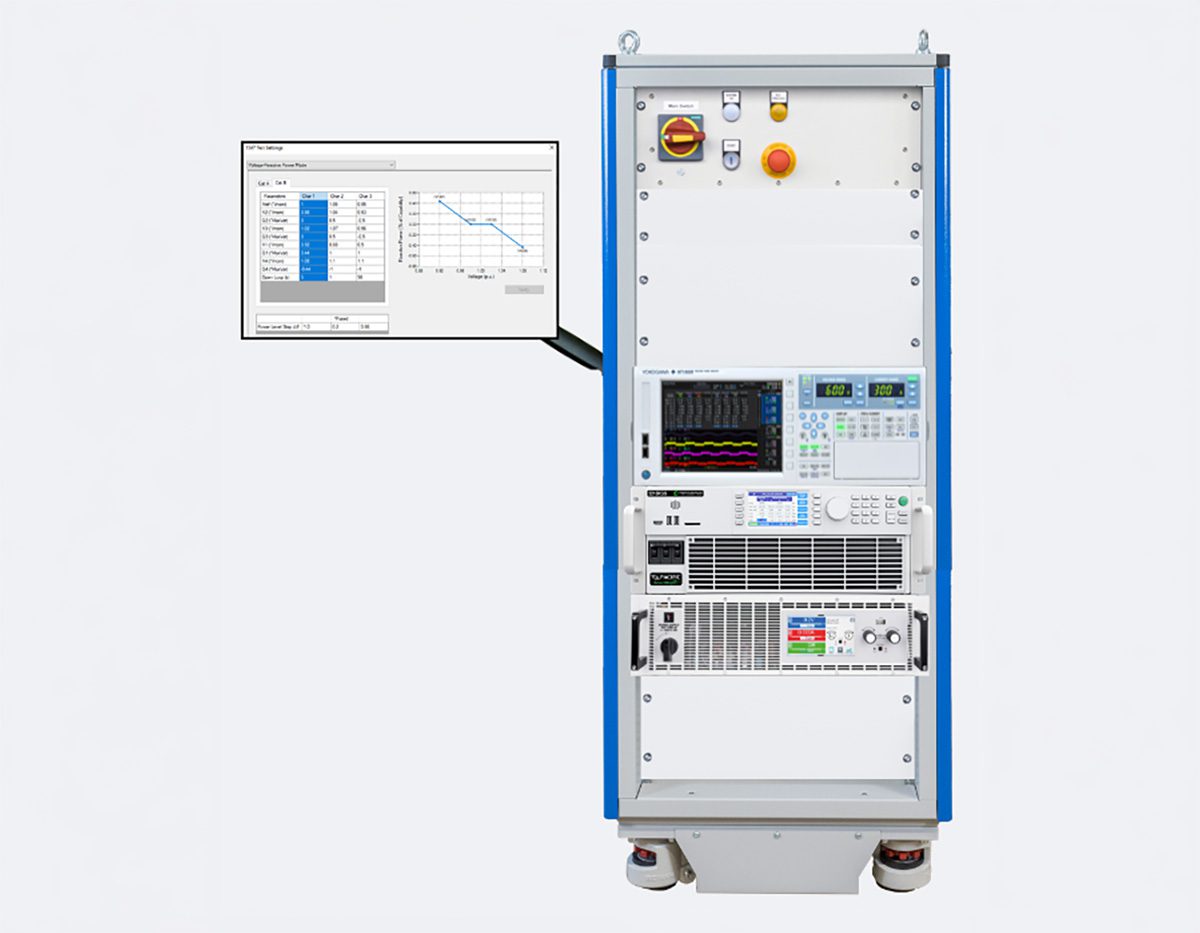
- Pacific Power Source has launched the SmartTS-PV Inverter Test System, an integrated platform designed to automate compliance testing for solar inverters, vehicle-to-grid (V2G) systems, and other distributed energy resources.
- The system addresses critical certification requirements under IEEE 1547.1, UL 1741 SB, and EN50549, which are essential for grid-tied devices.
- Developed in collaboration with QualityLogic and Tektronix Elektro-Automatik, SmartTS-PV significantly reduces the time required for complex grid support function testing.
- It slashes traditional manual testing, estimated at 8-12 weeks by IREC, to approximately 32 hours of actual test time, accelerating market entry for new technologies.
- The integrated platform combines an AC grid simulator, DC power supply, measurement hardware, and automated pass/fail software to ensure precise, synchronized testing environments.
- This innovation is crucial for speeding up the adoption of renewable energy technologies and bidirectional charging solutions by streamlining their grid interconnection certifications.
Accelerating Green Energy: New System Streamlines Grid Interconnection Compliance

In a significant advancement for the renewable energy sector and electric vehicle infrastructure, Pacific Power Source has unveiled its SmartTS-PV Inverter Test System. This pre-integrated compliance testing platform is engineered to automate the rigorous certification processes for solar inverters, EV supply equipment (EVSE) with vehicle-to-grid (V2G) capabilities, and various other distributed energy resources (DERs) that connect to the utility grid.
The launch marks a pivotal moment for manufacturers and developers navigating the complex landscape of grid interconnection standards. The SmartTS-PV system specifically targets devices requiring certification under IEEE 1547.1, UL 1741 SB, or EN50549, international benchmarks crucial for ensuring grid stability and safety.
Understanding the Criticality of Grid Interconnection Standards
Grid-tied devices, from rooftop solar installations to advanced V2G electric vehicle chargers, must adhere to stringent standards to ensure they operate harmoniously with the existing electrical grid. These standards, such as IEEE 1547.1 and UL 1741 SB, dictate how these devices respond to grid events, manage power, and prevent unsafe conditions like ‘islanding’—where a DER continues to power a section of the grid isolated from the main utility source.
IEEE 1547.1 compliance testing is particularly vital, specifying the testing procedures for interconnecting distributed resources with electric power systems. It verifies functionalities like voltage and frequency ride-through, reactive power control, and anti-islanding mechanisms. Historically, achieving this compliance has been a laborious and time-consuming process, often creating a bottleneck for innovation and market deployment.
Addressing the Certification Bottleneck for Solar and V2G Technologies
The validation process for grid-tied devices, especially those with advanced capabilities like bidirectional charging, is inherently complex. It involves intricate, sequenced grid support function testing that demands precise coordination between simulated grid events, the inverter’s response, accurate measurement capture, and protocol commands.
For instance, UL 1741 SB, an increasingly mandated standard for V2G-capable chargers, requires a similar level of exhaustive testing as IEEE 1547.1. Manufacturers have long grappled with the weeks, if not months, required to manually conduct these tests, leading to extended development cycles and delayed market entry for critical green technologies.
SmartTS-PV: An Integrated Solution for Automated Testing
Developed through a collaborative effort with industry specialists QualityLogic and Tektronix Elektro-Automatik, the SmartTS-PV Inverter Test System offers a comprehensive, pre-integrated platform. It is designed to alleviate the integration burden from inverter manufacturers and test labs by providing a synchronized testing environment automatically.
The system intelligently combines several critical components: an advanced AC grid simulator, a versatile DC power supply and load, high-precision measurement and data acquisition hardware, and QualityLogic’s sophisticated automated pass/fail software. This holistic approach ensures that all aspects of the testing process—from simulating grid disturbances to capturing inverter reactions—are perfectly aligned and executed.
Dramatic Reduction in Testing Time and Cost
One of the most compelling benefits of the SmartTS-PV system is its ability to drastically cut down the time required for IEEE 1547.1 compliance testing. Pacific Power Source and QualityLogic highlight that the automated system reduces what traditionally takes weeks of manual National Recognized Testing Laboratory (NRTL) testing to approximately 32 hours of actual test time.
This figure stands in stark contrast to the 8-12 week estimate provided by the Interstate Renewable Energy Council (IREC) for manual NRTL testing. Such a significant reduction in testing duration translates directly into faster product development cycles, reduced costs, and quicker market access for innovative solar and V2G solutions.
Steve Kang, General Manager of Smart Energy at QualityLogic, underscored this transformative impact. “QualityLogic’s test automation reduces what traditionally takes weeks of manual NRTL testing to approximately 32 hours of actual test time, with automatic pass/fail analysis against IEEE 1547 accuracy requirements,” Kang stated. He further added, “Combining that software with Pacific Power Source’s grid simulation hardware in one integrated platform removes the integration burden from inverter manufacturers and test labs and gets them to certification faster.”
Broadening the Scope of Beneficiaries
The SmartTS-PV system is poised to benefit a wide array of stakeholders across the energy ecosystem. Its target audience includes manufacturers of string, central, and hybrid inverters, crucial components in solar power systems. Additionally, energy storage developers, who play a vital role in grid resilience and renewable energy integration, will find the system invaluable for certifying their grid-tied solutions.
Independent test labs, utilities seeking to ensure grid compatibility of new DERs, and official certification bodies will also leverage this automated platform to enhance efficiency, accuracy, and throughput in their compliance verification processes. This broad applicability underscores the system’s potential to accelerate the adoption of advanced energy technologies globally.
Driving the Future of Smart Grids and Clean Energy
The introduction of automated compliance testing solutions like SmartTS-PV is fundamental to the rapid expansion of smart grids and the broader clean energy transition. By simplifying and accelerating the certification of essential technologies, it removes a critical barrier to innovation and deployment.
As countries worldwide commit to reducing carbon emissions and integrating more renewable sources, the demand for reliable, grid-compliant DERs and V2G systems will only intensify. Tools that expedite rigorous compliance without compromising safety or performance are therefore indispensable.
Pacific Power Source’s SmartTS-PV system is currently available, offering a timely solution for a market eager to deploy next-generation energy technologies with confidence and speed.
***
Frequently Asked Questions (FAQ)
What is the SmartTS-PV Inverter Test System?
The SmartTS-PV Inverter Test System is a pre-integrated, automated platform developed by Pacific Power Source to perform compliance testing for solar inverters, EVSE with V2G capabilities, and other distributed energy resources against international grid interconnection standards like IEEE 1547.1 and UL 1741 SB.
Which compliance standards does SmartTS-PV support?
The system is designed to facilitate certification under key international standards, including IEEE 1547.1, which outlines testing procedures for distributed resources, UL 1741 SB, relevant for V2G systems, and EN50549, a European standard for grid connection requirements.
How does SmartTS-PV reduce testing time for IEEE 1547.1 compliance?
By automating complex, sequenced grid support function testing, the SmartTS-PV system dramatically reduces the time needed for certification. It cuts down manual NRTL testing from an estimated 8-12 weeks to approximately 32 hours of actual test time, significantly accelerating product launches.
What components are integrated into the SmartTS-PV system?
The SmartTS-PV system comprises an AC grid simulator to mimic utility grid conditions, a DC power supply and load for device input/output, advanced measurement and data acquisition hardware, and QualityLogic’s automated pass/fail software for precise analysis and reporting.
Why is automated IEEE 1547.1 compliance testing important for V2G systems?
V2G systems require extensive validation to ensure they can safely and reliably interact with the grid, particularly when providing power back to it. Automated testing, especially for UL 1741 SB which governs V2G grid connection, is crucial for verifying functions like voltage ride-through and anti-islanding efficiently, accelerating their market adoption.
Who benefits from the SmartTS-PV Inverter Test System?
The system targets a broad range of entities, including manufacturers of solar inverters (string, central, hybrid), developers of energy storage systems, independent test laboratories, utility companies, and certification bodies, all of whom can streamline their compliance processes and hasten product deployment.
Is the SmartTS-PV system available now?
Yes, Pacific Power Source has confirmed that the SmartTS-PV Inverter Test System, developed in collaboration with QualityLogic and Tektronix Elektro-Automatik, is available for immediate use by interested parties.
What is the significance of the 8-12 week manual testing estimate from IREC?
The IREC estimate highlights the traditional burden and time commitment associated with manual grid interconnection compliance testing. The SmartTS-PV’s ability to reduce this to 32 hours demonstrates a profound efficiency gain, addressing a long-standing bottleneck in the renewable energy industry.