
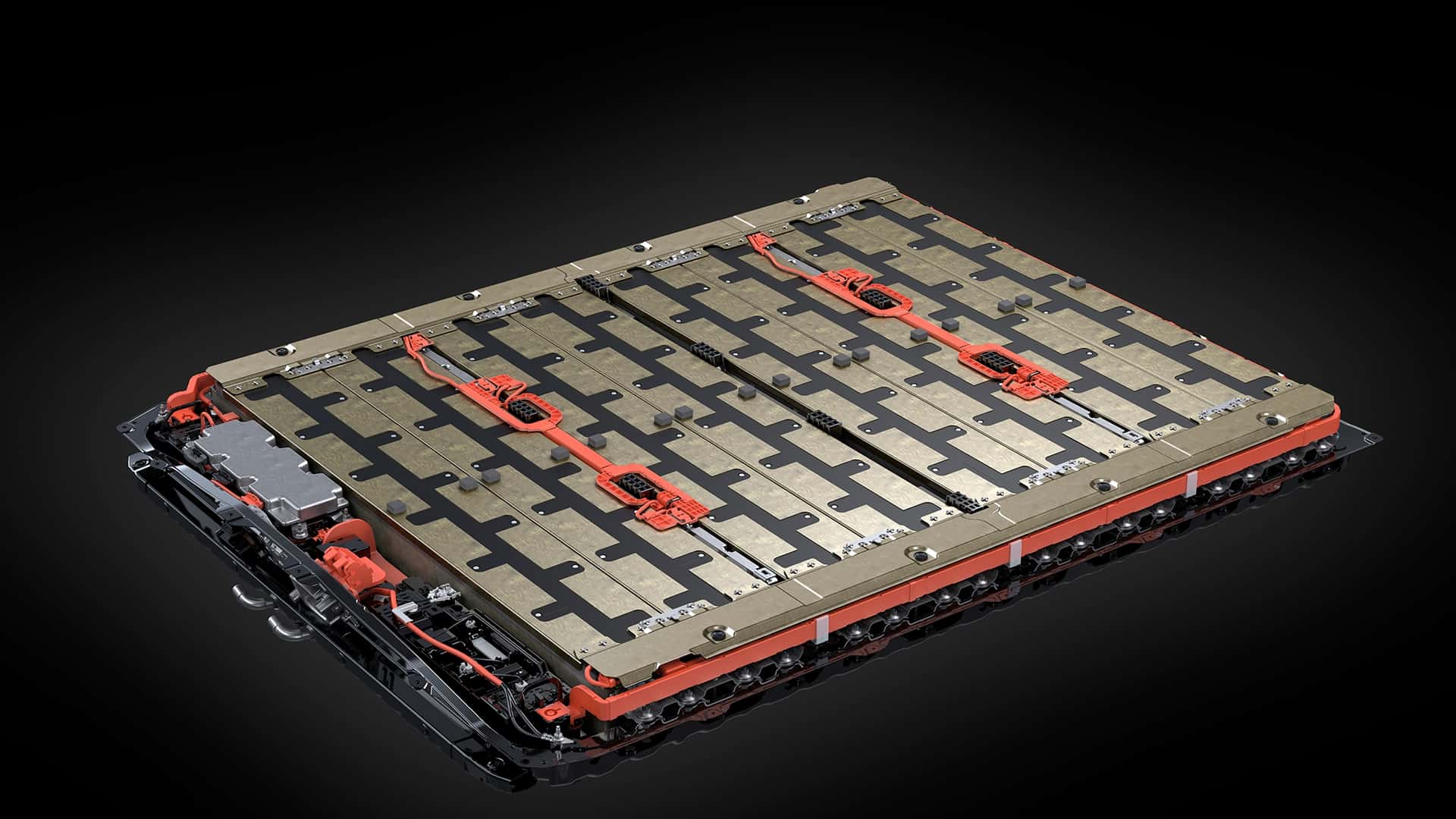
As electric vehicles (EVs) increasingly populate global roads, a central concern for consumers and manufacturers alike revolves around battery performance and, crucially, EV battery longevity. A groundbreaking study from Sweden now indicates that artificial intelligence (AI) could be the key to unlocking significantly extended lifespans for these crucial power units.
Researchers at Chalmers University of Technology have developed an AI-based charging methodology that promises to prolong an EV battery’s operational life by nearly a quarter. This innovation could translate into tens of thousands of additional miles for electric vehicles, offering substantial economic and environmental benefits.

Key Takeaways (TL;DR)
- Researchers at Sweden’s Chalmers University of Technology have unveiled an AI-powered charging method.
- This system can extend EV battery longevity by up to 23% by optimising fast-charging cycles.
- The innovation could add 70,000 to over 100,000 miles to a battery’s lifespan, translating to several years of extra utility.
- The AI uses reinforcement learning to dynamically adjust charging currents, mitigating stress on battery components during fast charging.
- While currently a lab-based simulation, this technology holds immense potential for future EV battery warranties, the used EV market, and sustainable electric mobility.
The Breakthrough: AI-Powered Battery Management
The ubiquity of artificial intelligence is no longer confined to sci-fi narratives; it is now an integral component in modern vehicles, powering everything from advanced driver-assistance systems to intuitive voice assistants. This latest development extends AI’s reach into the very core of electric mobility: the battery.
A new study, published in the esteemed academic journal IEEE, details an AI-driven charging method that specifically targets the common problem of accelerated battery degradation during frequent fast-charging. The researchers assert that this intelligent system can optimize the electrical current flow, thereby preserving the delicate internal chemistry of lithium-ion batteries.
Chalmers University’s Innovation
The pioneering work, led by a team at the Swedish Chalmers University of Technology, has demonstrated a significant leap in maintaining EV battery longevity. Their AI-based charging system dynamically adjusts its parameters, learning and adapting to the battery’s specific state and aging characteristics in real-time during fast-charging cycles.

This intelligent adaptation is a radical departure from conventional, fixed charging protocols, which often apply a standard current regardless of the battery’s internal health or unique degradation patterns. By personalizing the charging process, the AI system minimizes undue stress, a primary contributor to diminished battery performance over time.
Quantifying the Lifespan Extension
The findings from the Chalmers study are particularly compelling. The researchers reported that their AI-powered method could extend a vehicle’s battery life by as much as 23%. This figure represents a considerable enhancement, equating to nearly a quarter of the battery’s total potential lifespan.
To put this into perspective, consider the estimated lifespan of a typical Tesla battery, which ranges between 300,000 and 500,000 miles, influenced by factors like usage and charging habits. A 23% improvement on these figures would mean an additional 70,000 miles at the lower end, and potentially more than 100,000 extra miles for a longer-lasting battery. For average American drivers, who log approximately 13,476 miles annually according to the Federal Highway Administration, this could translate into several additional years of reliable use from their electric vehicles, significantly improving overall EV battery longevity.
The authors, Meng Yuan and Changfu Zou from Chalmers University’s Department of Electrical Engineering, articulated the core of their achievement in their study: “This work introduces the first explicit formulation of a lifelong battery fast charging problem.” They further elaborated, “The proposed method achieves a significant improvement in performance, where battery lifespan is extended to 703 equivalent full cycles… representing a 22.9% improvement over the standard baseline.”
Understanding Battery Degradation and the AI Solution
While modern EV batteries are engineered for durability and are designed to function effectively for many years without substantial degradation, certain charging practices can hasten their aging process. Fast charging, though convenient, is a known accelerator of battery wear and tear, directly impacting EV battery longevity.
The Challenge of Fast Charging
High-powered charging subjects the internal components of battery cells to considerable stress. This stress can manifest as ‘lithium plating,’ a phenomenon where lithium ions accumulate on the anode, rather than smoothly intercalating into its structure. This build-up reduces the battery’s capacity to store and release energy efficiently, leading to irreversible degradation.
Beyond lithium plating, excessive heat generated during rapid energy transfer can also strain the anode, cathode, and the electrolyte solution within the battery. These stressors collectively contribute to a gradual but inevitable decline in the battery’s overall health and its ability to maintain its original charge capacity. Managing these factors is paramount for maintaining optimal EV battery longevity.
How Reinforcement Learning Optimises Charging
To counteract these deleterious effects, the Chalmers researchers integrated ‘reinforcement learning’ into their AI-powered Battery Management System (BMS). Reinforcement learning is a sophisticated machine learning paradigm where an agent learns to make optimal decisions by performing actions and receiving feedback (rewards or penalties) from its environment, iteratively refining its strategy through trial and error to achieve the best possible outcome.
In the context of EV batteries, this means the BMS continuously monitors the battery pack’s intricate chemistry and its current state of health. During fast-charging cycles, the AI algorithm intelligently adjusts the electrical current and voltage in real-time. As the battery naturally ages and its internal characteristics change, the AI adapts its charging strategy, ensuring that critical components like the anode, cathode, and electrolyte are not subjected to undue stress.
This intelligent, adaptive approach ensures that the charging process is always tailored to the battery’s specific needs at any given moment, effectively mitigating the mechanisms that lead to premature degradation and thereby bolstering EV battery longevity without compromising charging speed. As the study authors noted, “The proposed approach maintains comparable charging efficiency while largely extending battery lifespan, demonstrating that lifespan enhancement can be achieved without compromising charging speed.”
Beyond the Lab: Real-World Implications and Future Outlook
While the initial results from the Chalmers University of Technology are derived from laboratory simulations, the implications of this AI-driven approach for the broader electric vehicle ecosystem are profound. The transition of such technology from controlled experimental settings to practical, real-world applications represents the next critical phase.
Benefits for Consumers and the Environment
For electric vehicle owners, an extension of EV battery longevity by 23% translates directly into tangible financial and practical advantages. Keeping an EV for several more years before requiring a costly battery replacement or a new vehicle purchase offers significant savings. It enhances the vehicle’s resale value in the burgeoning used EV market, addressing a key concern for potential buyers about second-hand battery health.
From an environmental perspective, extending the life of existing batteries means fewer new batteries need to be manufactured over the same period. This reduction in demand lessens the need for raw materials, many of which are finite and extracted through energy-intensive processes. Consequently, it contributes to a lower manufacturing-related carbon footprint, aligning with global sustainability goals and making electric mobility even greener.
Path to Commercialisation
The journey from a successful lab experiment to widespread commercial deployment involves several complex stages. Integrating such an advanced AI-powered BMS into existing vehicle architectures and manufacturing processes requires significant engineering effort, testing, and standardization. Cost-effectiveness will also be a major consideration for automotive manufacturers looking to adopt this technology at scale.
However, if proven effective and scalable in real-world driving conditions, this innovation could revolutionize how the automotive industry approaches battery warranties, influencing consumer confidence and the perceived long-term value of electric vehicles. It pushes the boundaries of EV battery longevity, making electric vehicle ownership more attractive and sustainable.
The Future of Electric Mobility
This development from Chalmers University underscores the critical role of advanced computational techniques in solving real-world engineering challenges. By leveraging artificial intelligence to intelligently manage battery charging, researchers are paving the way for a future where electric vehicles are not only efficient and eco-friendly but also boast unprecedented levels of durability and longevity.
As the electric vehicle market continues its rapid expansion, innovations like this will be instrumental in addressing key consumer concerns, accelerating adoption, and solidifying the environmental credentials of electric transportation. The pursuit of enhanced EV battery longevity remains a cornerstone of sustainable mobility, and AI appears to be a powerful ally in this ongoing quest.
Frequently Asked Questions (FAQ)
What is EV battery longevity and why is it important?
EV battery longevity refers to how long an electric vehicle’s battery maintains its capacity and performance. It’s crucial because it impacts the vehicle’s usable range, resale value, and the overall cost of ownership, as battery replacement can be expensive. Longer lifespan reduces environmental impact.
How does frequent fast-charging affect EV battery life?
Frequent fast-charging can accelerate battery degradation by stressing internal components. High currents and rapid energy transfer can cause lithium plating on the anode, reducing the battery’s capacity and overall efficiency, thereby diminishing its useful lifespan over time.
What is an AI-powered Battery Management System (BMS)?
An AI-powered BMS is a system that uses artificial intelligence, specifically reinforcement learning, to monitor and optimize battery charging. It dynamically adjusts the current and voltage based on the battery’s real-time state of health and chemistry to minimize degradation and enhance EV battery longevity.
How much can AI extend an EV battery’s life?
Researchers at Chalmers University of Technology demonstrated that their AI-based charging method could extend an EV battery’s lifespan by up to 23%. This translates to an estimated 70,000 to over 100,000 extra miles of usable range for the vehicle.
Is this AI battery technology available in current EVs?
Currently, this AI-powered charging method has been demonstrated in laboratory simulations. While the results are promising, it is not yet commercially available in production electric vehicles. Further development and real-world testing are required before widespread implementation.
Does this AI method slow down charging to preserve battery life?
No, the researchers explicitly stated that their proposed approach maintains comparable charging efficiency. The AI optimizes the charging process to extend EV battery longevity without compromising the speed at which the battery can be charged, which is a significant advantage.
What are the environmental benefits of extending EV battery life?
Extending EV battery life means fewer batteries need to be manufactured and replaced, reducing the demand for raw materials and the energy associated with their extraction and processing. This leads to a lower manufacturing carbon footprint and overall environmental impact, promoting sustainability in electric mobility.